

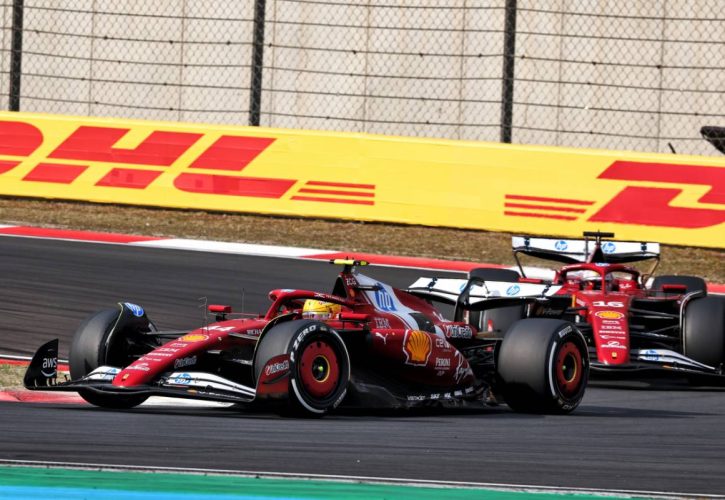


Ferrari team principal Fred Vasseur has admitted that Lewis Hamilton’s disqualification at the Chinese Grand Prix derailed the Scuderia’s early-season progress, forcing the team into compromises that blunted the pace of its SF-25.
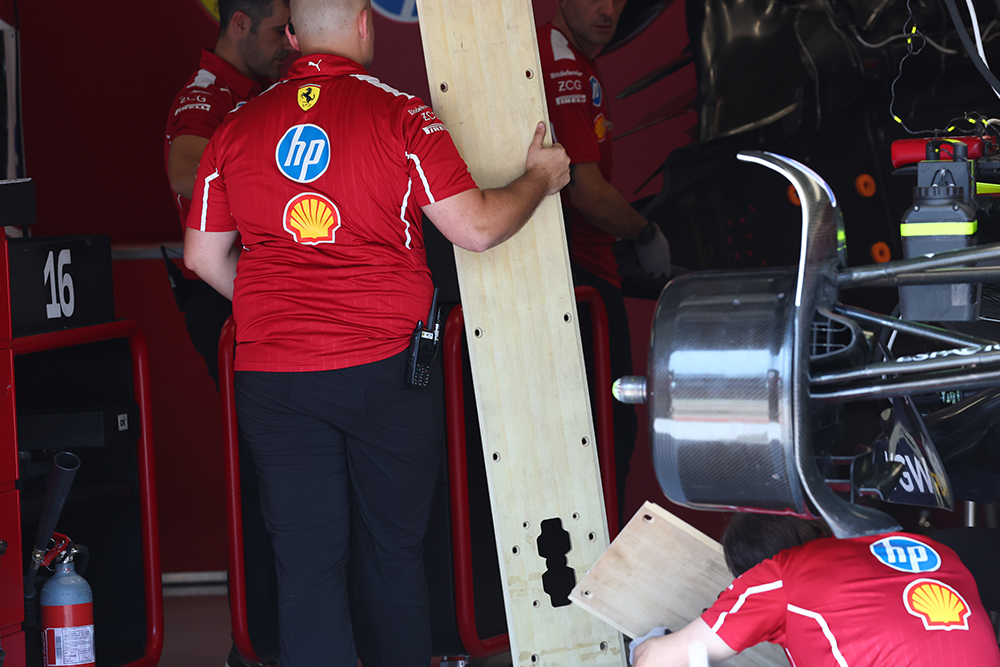
The seven-time world champion was sensationally thrown out of the Shanghai race after plank wear on his car exceeded the legal limit – just a day after he had taken a morale-boosting Sprint win.
The SF-25’s low ride height that optimized the car’s downforce proved unsustainable over the full Grand Prix distance. What followed, Vasseur says, set the tone for Ferrari’s struggles across the opening half of 2025.
Speaking to Auto Motor und Sport, the Ferrari chief explained the fallout from the early setback.
A forced rethink after Shanghai
“The disqualifications threw us off track a bit. We had to leave ourselves a safety margin in terms of ground clearance,” Vasseur explained.
“As we all know, these cars are extremely sensitive when it comes to ground clearance. Every millimetre is a position on the starting grid.
“If you don’t have full control over the vehicle height, it affects the car’s competitiveness.
“To solve the problem, you lose focus on other things. Preparing the tyres for qualifying, the warm-up laps, you name it.”
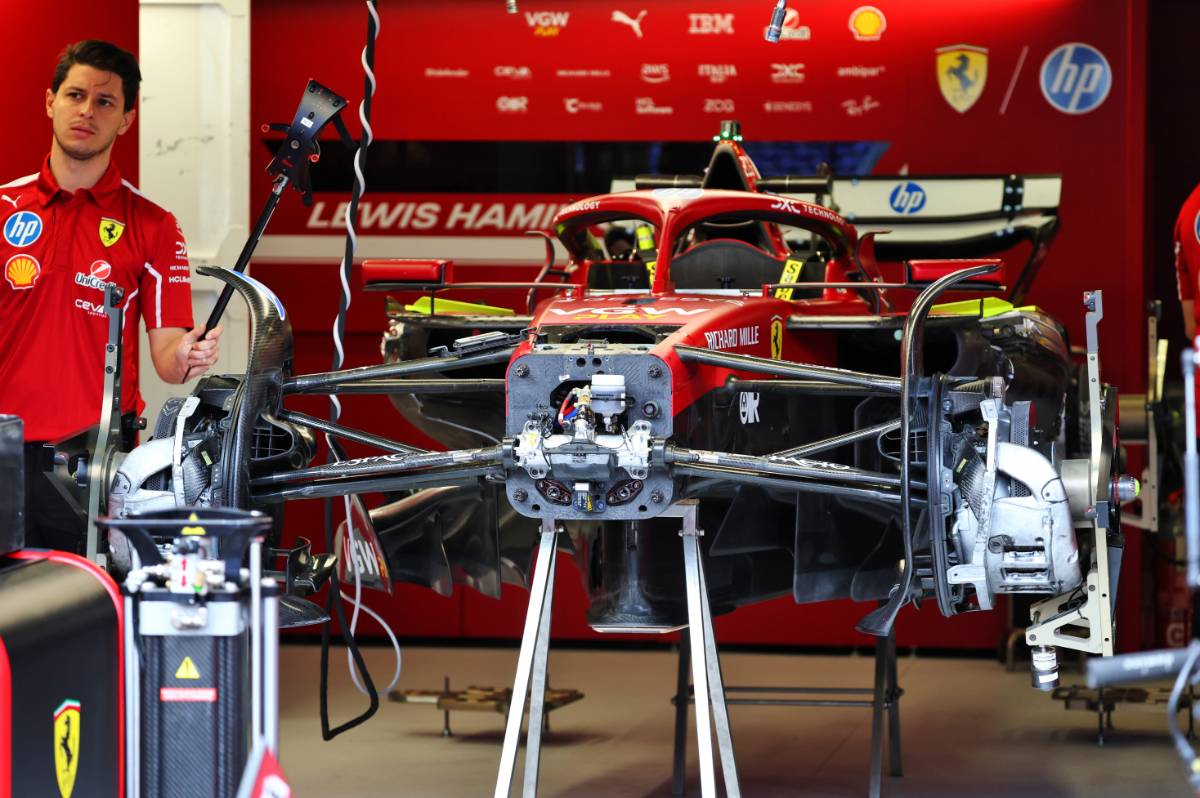
With Ferrari forced to run its cars higher to avoid further penalties, both Hamilton and Charles Leclerc saw their competitiveness suffer.
Despite sitting second in the Constructors’ Championship, the Italian outfit has to win a Grand Prix this season, while Hamilton is still searching for his first Sunday podium in red.
Upgrades bring signs of recovery
Vasseur acknowledged that, despite the setbacks, Ferrari has begun to claw back performance thanks to floor and suspension upgrades introduced ahead of the summer break.
“Over the last three or four weekends, we have been able to close the gap to two tenths,” he said.
“We had a lot of problems with the handling at the race track at the beginning of the season. There were quality issues, then the disqualifications. We lost our way a bit there.
“So much depends on the details and qualifying in Budapest was a good example. If you focus on the wrong things, you immediately lose a lot of ground.
“If Charles had been two tenths slower, he would have been sixth instead of first. It’s very difficult to know what’s important at any given moment in order to be fast.”
Leclerc’s pole position in Hungary offered a glimpse of what Ferrari is still capable of achieving when conditions align.
But as McLaren continues to set the standard in tyre management and outright pace, Vasseur admits the team remains in a constant balancing act between recovery, detail refinement, and long-term planning for the sweeping 2026 regulations.
Keep up to date with all the F1 news via X and Facebook