

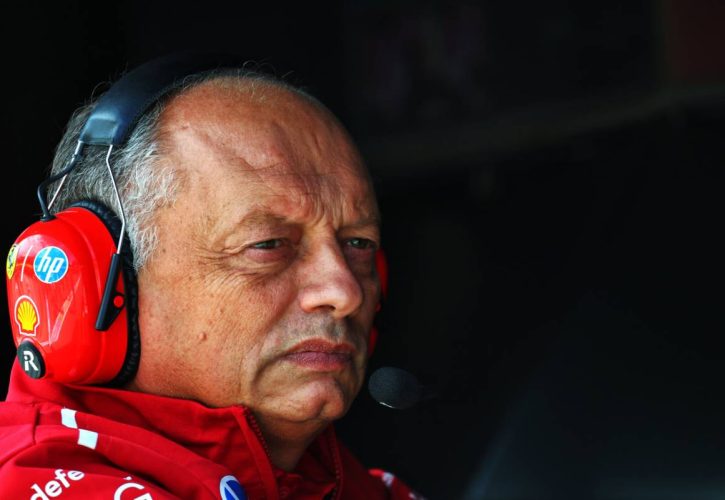


Ferrari team principal Frédéric Vasseur has outlined a bold, forward-looking vision for the Scuderia’s future – one built on confidence, innovation, and long-term strategy – while warning that Formula 1 itself must begin shaping its next era sooner rather than later.
Speaking on Bloomberg’s Power Players podcast, Vasseur described the sport’s upcoming 2026 regulation overhaul as both a golden opportunity and one of the sport’s greatest engineering gambles.
For Ferrari, it’s a rare chance to reset – and perhaps, to finally reclaim championship-winning form after a seventeen-year drought without a title.
“2026 is probably the biggest change in Formula 1 over the past 30 years. Today we start from a blank sheet, and we have to build our own project,” Vasseur explained. .
“We don’t know if our competitors are going in completely different directions. You have to trust your own choices and have the confidence to keep moving forward.
“It’s a challenge because we have absolutely no idea where the others are.”
A Blank Canvas and a Race Into the Unknown
The 2026 regulations will radically reshape F1’s technical landscape, introducing new aerodynamic and power unit frameworks designed to make the sport more competitive, efficient and sustainable.
But as Vasseur acknowledged, that clean slate cuts both ways – it levels the playing field, but it also heightens the uncertainty.
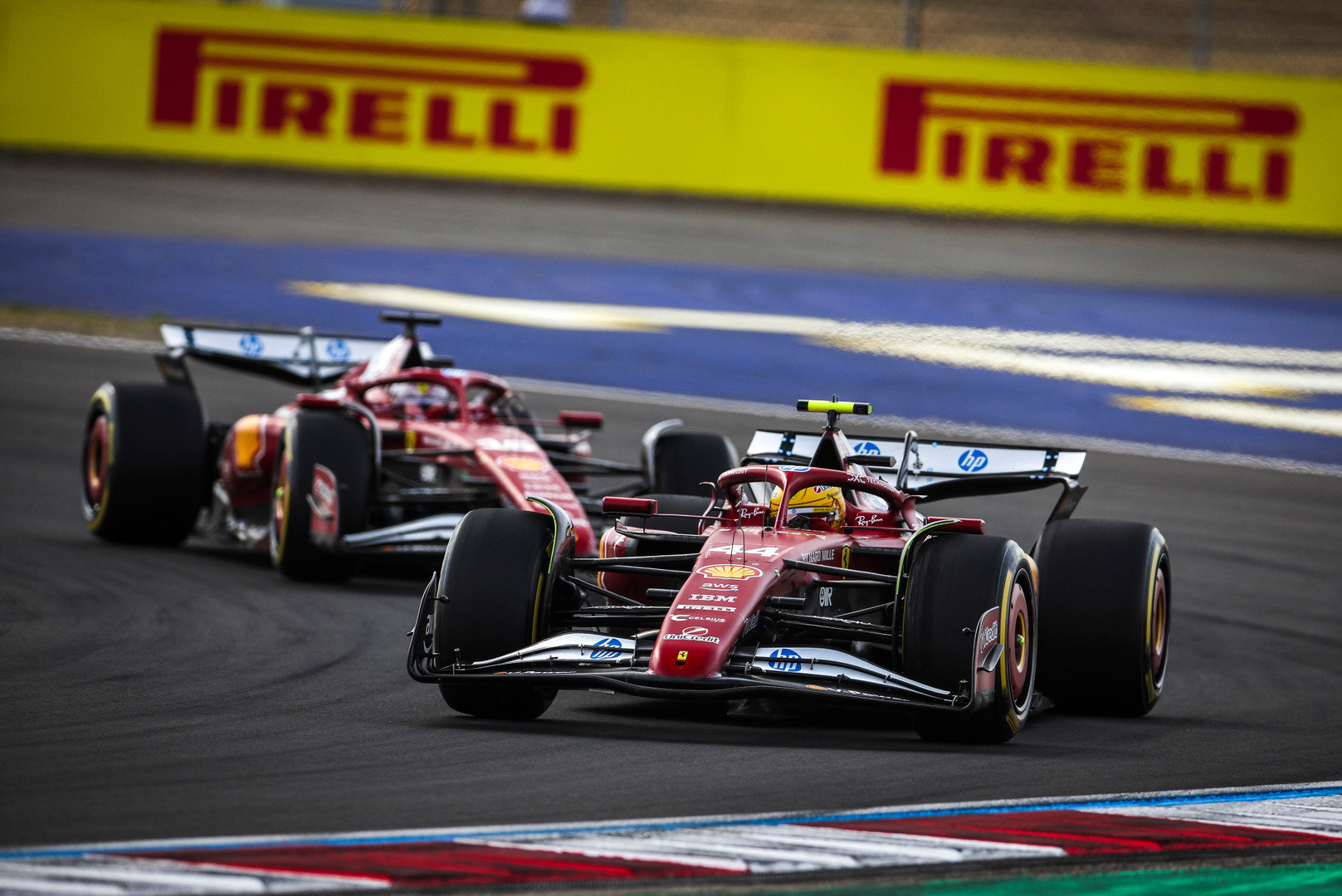
©Ferrari
Ferrari’s task, then, is to build a project robust enough to weather that unpredictability. With rival teams exploring divergent technical philosophies, success will hinge on conviction and continuity rather than short-term gains.
For Vasseur, that conviction comes from within Maranello’s walls – trusting Ferrari’s engineering instincts and resisting the temptation to second-guess what others might be doing.
Looking Beyond 2026: The Next F1 Frontier
Beyond the immediate horizon, Vasseur believes the next major challenge for both Ferrari and Formula 1 lies in how the sport defines its long-term technological path — particularly as the automotive world accelerates toward electrification.
“The challenge is to stay where we are in terms of success visibility and to keep promoting technology. The difficult thing is that we are now in the position of having to decide what the 2035 regulations will look like.
“I’d say we practically have to decide them now,” he explained.
.
That long-range vision underscores how the sport’s regulatory planning will shape its future relevance.
With discussions ongoing about whether to continue with hybrid systems or pivot back toward internal combustion engines powered by synthetic fuels, Vasseur believes the next decisions must balance technological progress with realism.
“It means it’s not easy to imagine what the car industry will look like in 2035. I think people are changing quite fast now, and that’s a real challenge,” he added.
Read also:
While Ferrari’s immediate goal remains to return to the top of the podium, Vasseur’s focus stretches further than next season’s results.
The Frenchman sees the 2026 reset not as a single-year revolution, but as the foundation for a decade of competitiveness – a future where Ferrari’s legacy and Formula 1’s technological identity evolve together.
In a sport where milliseconds and long-term strategy intertwine, Vasseur’s message is clear: Ferrari isn’t just chasing victory – it’s preparing for the next era of racing itself.
Keep up to date with all the F1 news via X and Facebook