

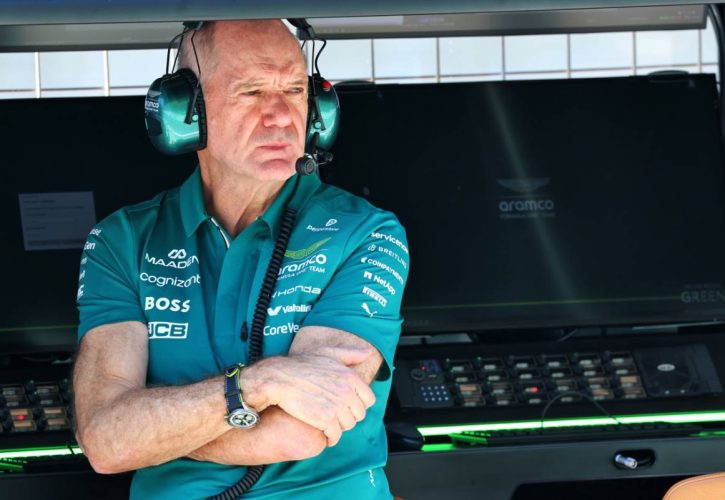


Adrian Newey has delivered his most candid assessment yet of Aston Martin’s difficult 2026 Formula 1 campaign, admitting deep-rooted operational problems left the team on the back foot while also revealing he has been dealing with health issues behind the scenes.
The Silverstone-based outfit entered the year surrounded by immense fanfare. A high-profile factory transition fueled by billionaire owner Lawrence Stroll, coupled with an exclusive works engine partnership with Honda, positioned Aston Martin as a prospective powerhouse.
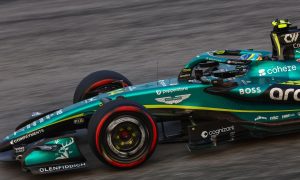
Instead, the reality on track has been a grueling wake-up call, with the AMR26 lagging far behind its rivals.
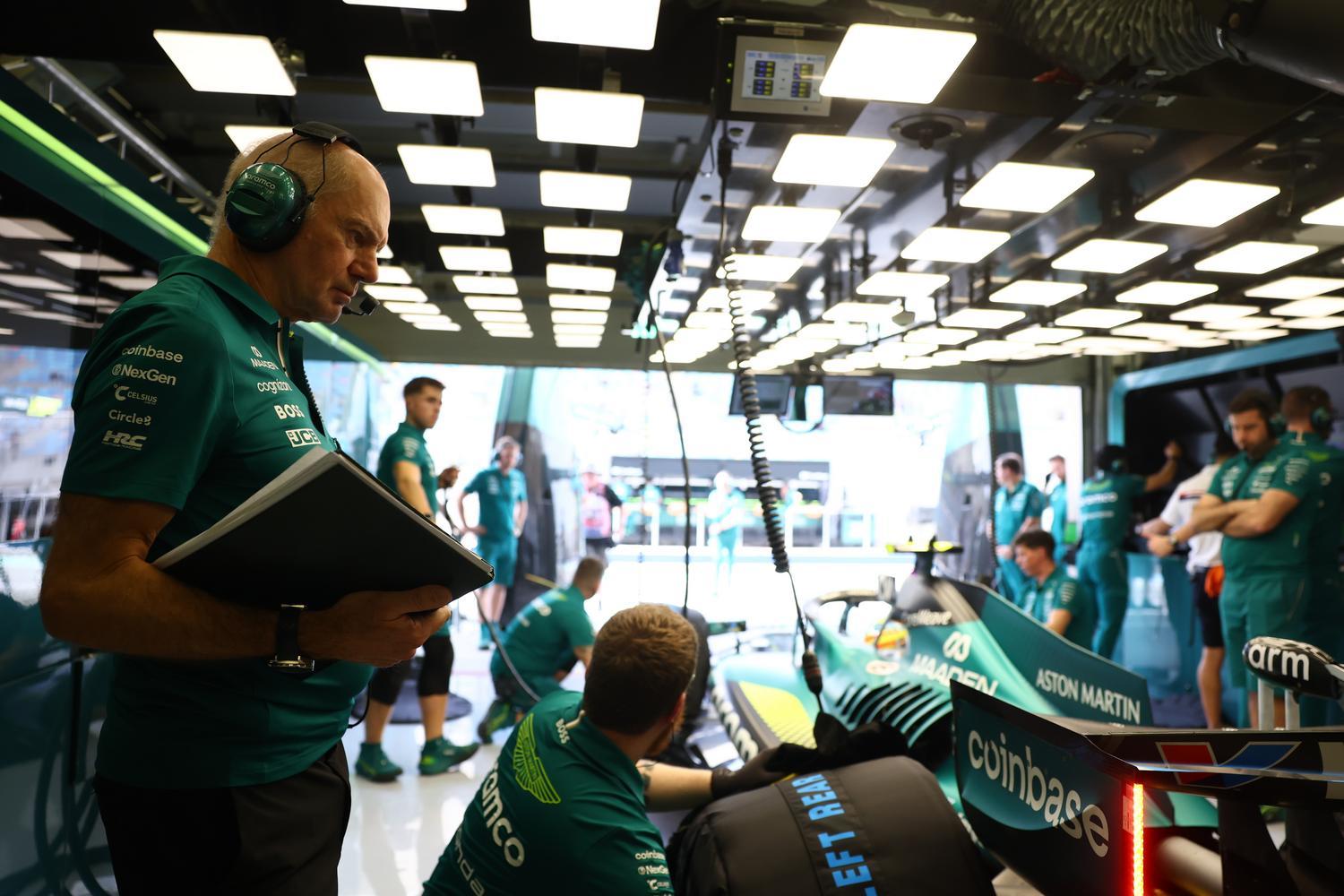
In a straightforward and unequivocal reflection published on the team's website, Newey revealed that the squad’s current sporting deficit is primarily a symptom of outdated internal infrastructure that failed to keep pace with the team's rapid expansion.
“We were relying on tools and processes that had been patched and bodged for years,” said Newey.
“You could trace some of them right back to the very early days of the Jordan team that was based here in Silverstone, long before Aston Martin returned to the grid. At some point, a system that’s just patch‑on‑patch stops being fit for purpose. That’s where we had got to.
“The result was a very frustrating car build. Parts weren’t being ordered at the right time – not because people weren’t doing their jobs, but because the underlying system was failing them.”
The weight and aero conundrum
The systemic organizational delays left Aston Martin playing catch-up from the moment the engineering team began package integration.
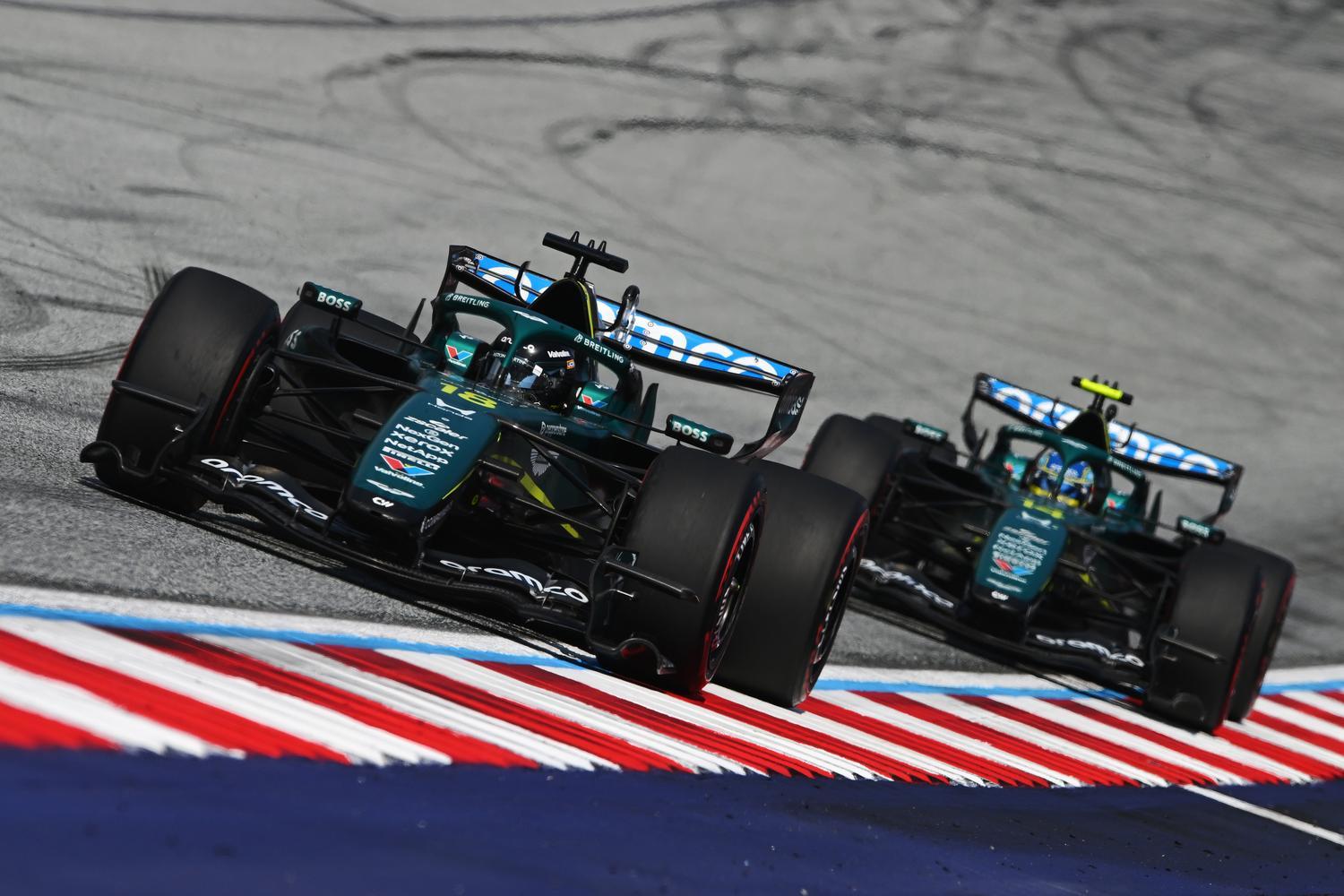
When the new Honda power unit was introduced to the chassis, severe vibration issues surfaced, forcing the technical department into an immediate damage-control mindset that severely compromised the car's physical optimization.
©Aston Martin
“On the chassis side, we’re quite a long way overweight,” Newey admitted.
“Some of that comes from integrating the power unit and dealing with vibration issues we’ve had to work through with Honda, but we also didn’t do as good a job as we should have on our side at saving weight.
“When you design in a rush, weight is the first thing that suffers because you don’t have the time to thoroughly optimise everything.
“Aerodynamically, we also took a bold direction – which was largely pushed by me – without the luxury of exploring multiple concepts in depth because time was against us.
“I wouldn’t say the direction we’ve taken is fundamentally wrong, but it has thrown up challenges we didn’t anticipate.”
Rather than frantically bringing incremental bodywork updates to a fundamentally compromised platform, the team elected to freeze performance development during the opening flyaway rounds to anchor down reliability.
©Aston Martin
That conservative approach will finally draw to a close at the Hungarian Grand Prix, where a heavily revised iteration of the AMR26 is slated to break cover.
“The main structural elements remain the same,” Newey detailed. “The chassis and gearbox architecture don’t fundamentally change. But we’ve taken weight out of both, which required re-homologating and crash-testing the forward chassis.
“The front suspension is unchanged. The rear suspension is slightly revised. We’ve developed a new nose and substantially revised aerodynamic surfaces.
“So, while the core structure is similar, it’s a big aerodynamic package coupled with significant weight reduction. The target is to get very close to the weight limit.”
Managing health and the Alonso factor
The upcoming mid-summer upgrade is carrying immense weight not only for the team's constructor standings but also for its driver lineup.
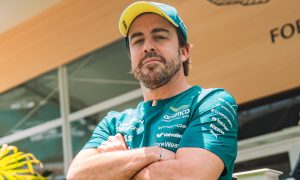
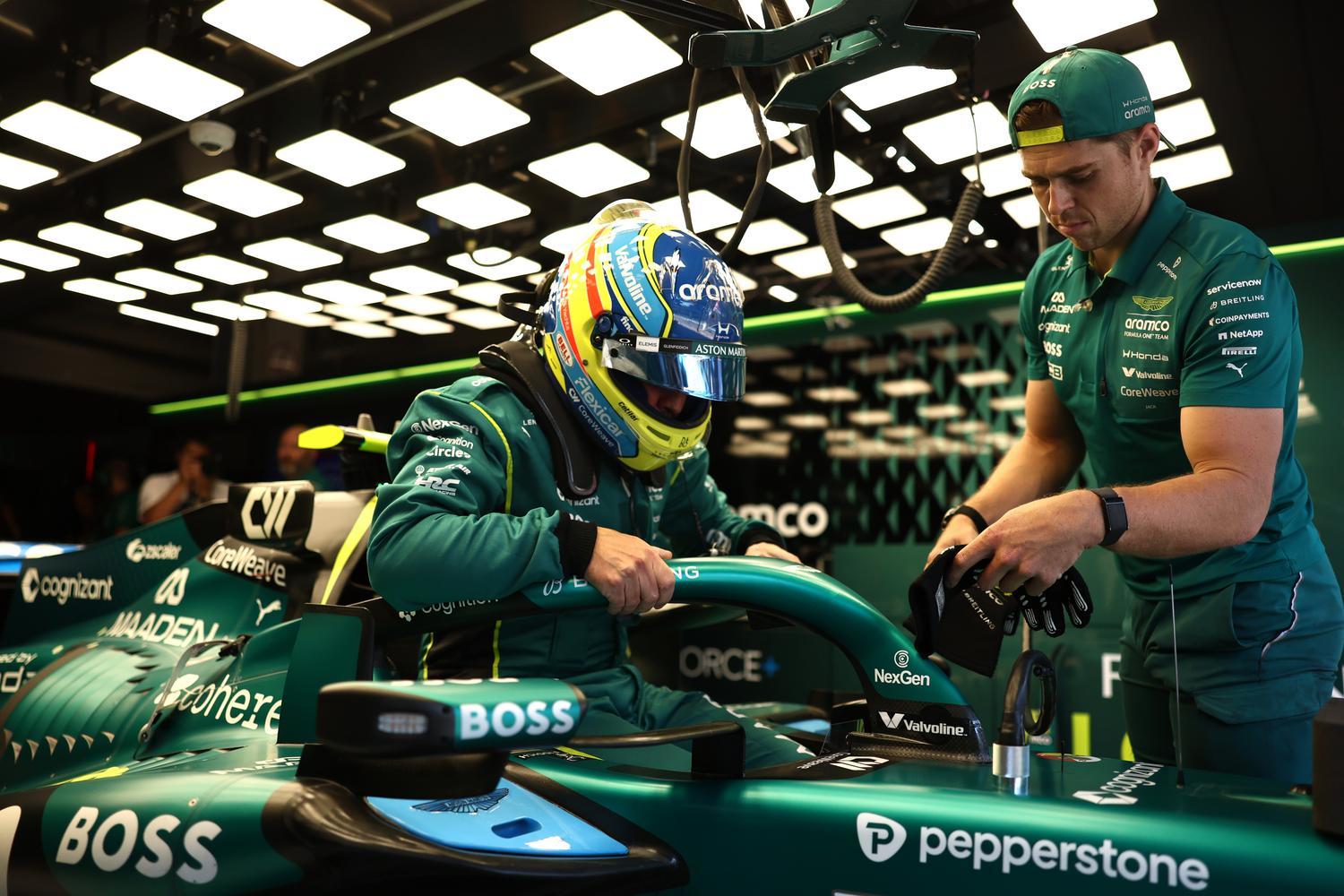
Alonso turns 45 next month, and his willingness to extend his legendary career into the next season hinges directly on whether the revised AMR26 proves to be a competitive racing machine.
©Aston Martin
“It’s very important,” Newey emphasized. “Fernando is really looking forward to the upgrade and, if it performs we hope he’ll be in the cockpit for another season.
“Given his experience, his feel for the car, his ability to guide development, he’s a tremendous asset. But he wants to see clear, tangible progress. If we can show that we’re moving decisively in the right direction, he’s absolutely committed to being behind the wheel.”
Compounding the intense pressure of steering the team through its technical crisis, Newey also disclosed that he has had to navigate personal physical adversity over the past twelve months, which occasionally threatened to disrupt his hands-on leadership style.
“I’m okay now, but it’s been a difficult period,” Newey acknowledged openly. “As I said earlier, it never rains but it pours.
“In truth, I was not 100 per cent last year. I had to balance health and work much more carefully. The team handled it incredibly well. I kept a very good relationship with the engineers and I don’t feel it caused too much of a blip.
“That’s a testament to how adaptable and supportive everyone here is.”
For Aston Martin, the coming weeks now represent a defining moment.
Newey believes the team's problems have been identified, the underlying systems are being modernised, and a substantially revised AMR26 is ready to prove that this season's struggles can still become the foundation for a more competitive future.
Keep up to date with all the F1 news via X and Facebook