



David Coulthard believes Formula 1 should finally consign engine-related grid penalties to history, arguing that a rule once designed to improve reliability has outlived its purpose.
The former Grand Prix winner has questioned the continued relevance of the sport’s power unit allocation system, which limits the number of engine components teams can use over a season before triggering grid drops.
Rather than discouraging failures, the regulation has evolved into a tactical game, with teams deliberately taking penalties at circuits where overtaking is easier in the hope of minimizing the damage.
For Coulthard, that's a clear sign the system no longer serves the purpose for which it was introduced.
‘A bygone era’
“I still think we should have a bit of a review of all of those penalties,” he told the Up To Speed podcast.
“I think it's going back to a bygone era where they were trying to encourage teams to be reliable. “Quickly, it's in everyone's interest to be reliable.”
With today's hybrid power units representing enormous investments in engineering and durability, Coulthard sees little value in a rule that artificially shuffles the grid rather than rewarding outright performance.
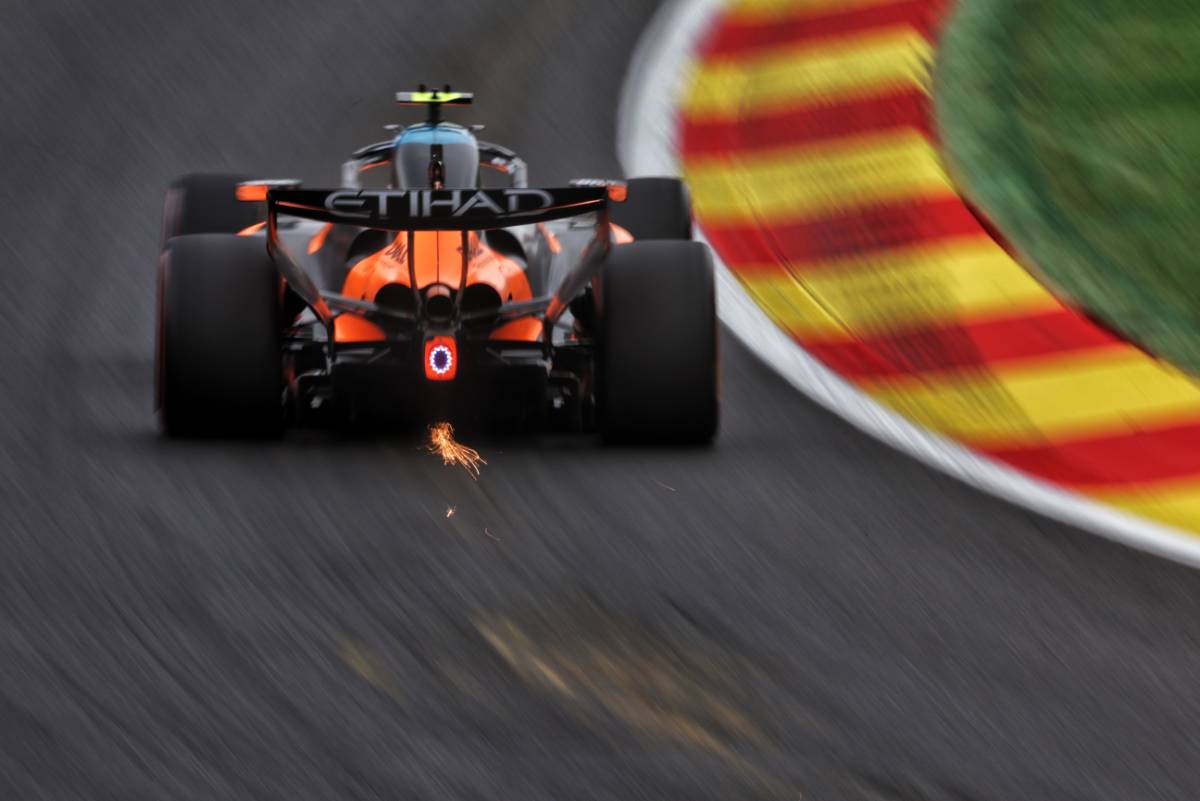
His comments come after another Belgian Grand Prix weekend in which engine penalties reshaped the starting order. Lando Norris and Isack Hadjar were both pushed back on the grid after exceeding their power unit allocations, lining up 13th and 21st respectively.
Yet neither driver's race was ruined. Hadjar gambled on an early switch to hard tyres and charged through the field to finish sixth, while Norris also recovered strongly despite missing the opportunity to pit under a Virtual Safety Car.
For Coulthard, their performances only reinforced the argument that these penalties often create artificial storylines rather than meaningful sporting consequences.
“It did give the opportunity for Hadjar who went with the early stop to hards and drove brilliantly thereafter,” he said.
“Lando Norris could arguably have stopped under the virtual safety car, he didn't, but nonetheless managed to pick up seventh place. So two strong races from those guys.”
Whether Formula 1's rule-makers are prepared to revisit the long-standing regulation remains to be seen.
But as teams continue to treat engine penalties as a strategic tool rather than a deterrent, Coulthard believes the time has come for the sport to ask a simple question: if reliability is already embedded in modern Formula 1, why keep punishing teams for chasing it?
Keep up to date with all the F1 news via X and Facebook