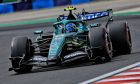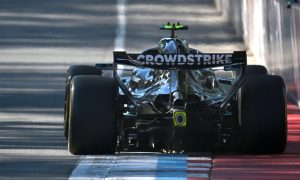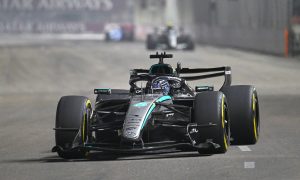


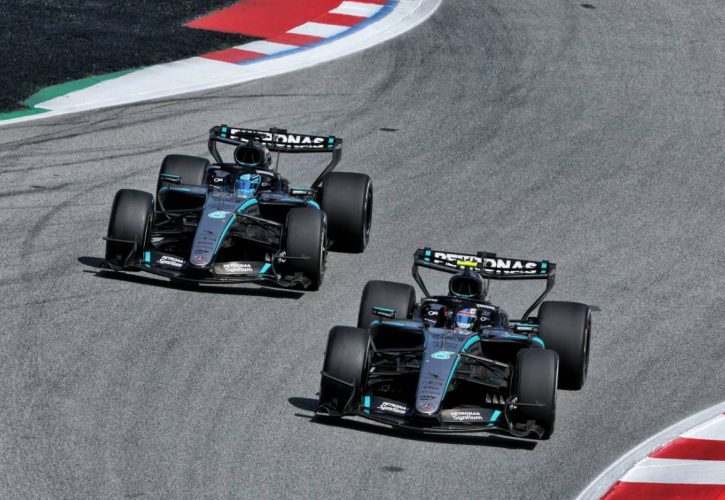


Mercedes has revealed that the power unit software flaw that affected George Russell’s deployment at the start of the Belgian Grand Prix was also present on Kimi Antonelli’s car but proved more detrimental to the Briton.
The glitch centered around the energy deployment protocols governing the power unit's software architecture. While the exact same code was running on Kimi Antonelli’s machinery, the Italian driver was utilizing a significantly fresher engine allocation.
Russell’s higher-mileage unit, coupled with the software error, produced a much sharper drop-off in deployment efficiency.
Mercedes Deputy Technical Director Simone Resta shed light on the technical hurdles the Brackley team faced while diagnosing the anomaly.
“As we all know, it’s a very complex new set of regulations with the power unit,” Resta said.
“It’s quite early days. We’ve just done 10 races so far, and there is a lot to learn. We are still learning a lot together, ourselves and our colleagues at HPP. We found a bug in our software, and we had to react to it.
“There was already something there at Silverstone, but the issue was more evident at Spa, which is one of the tracks with the highest lap time for power delta. We think we’ve finally understood it and nailed it coming into Budapest.”
Addressing why the shortfall manifested differently on opposite sides of the garage, Resta confirmed that both drivers had the flawed software loaded, but external variables exacerbated Russell’s struggle.
“The software is the same for all the cars, and it was there in every car, but it affected George more than Kimi,” he said.
“We also need to bear in mind that, when comparing their performance in the last few races, Kimi was on a fresher power unit, which is, of course, always a bit better than quite a used power unit. That will change in the next races when we start to have a fresher power unit on George’s side.
“So, there’s a bit of everything. There’s a bit of software, but there’s also Kimi being out of phase with George’s programme. You sum up everything when you look at the final result.”
Collaborative effort resolves technical hurdle
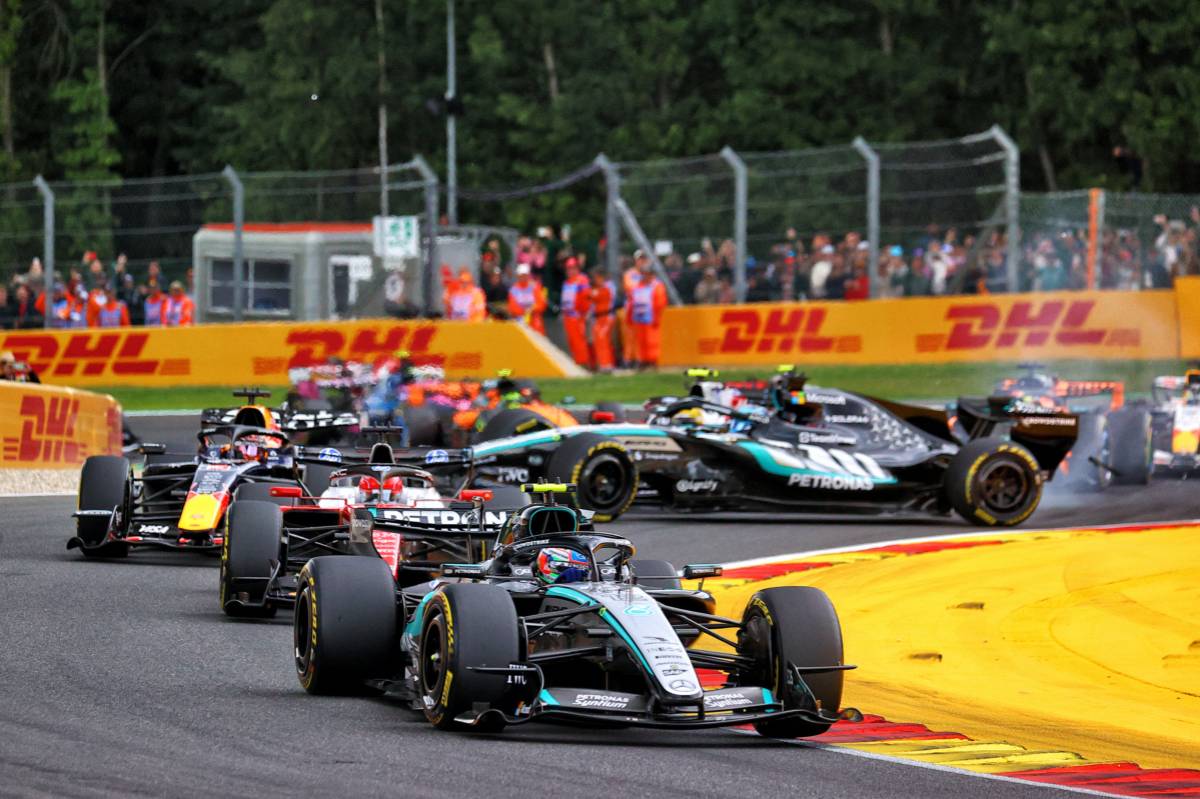
The operational setback proved costly for Russell at Spa-Francorchamps, where deficient top-speed deployment left him vulnerable on the Kemmel Straight during the opening lap, ultimately triggering a collision with Lewis Hamilton that sent him out of the race.
Despite the frustrating outcome on track, Mercedes praised Russell for his analytical feedback during the de-briefs, which proved crucial in helping engineers isolate the root cause within the control systems.
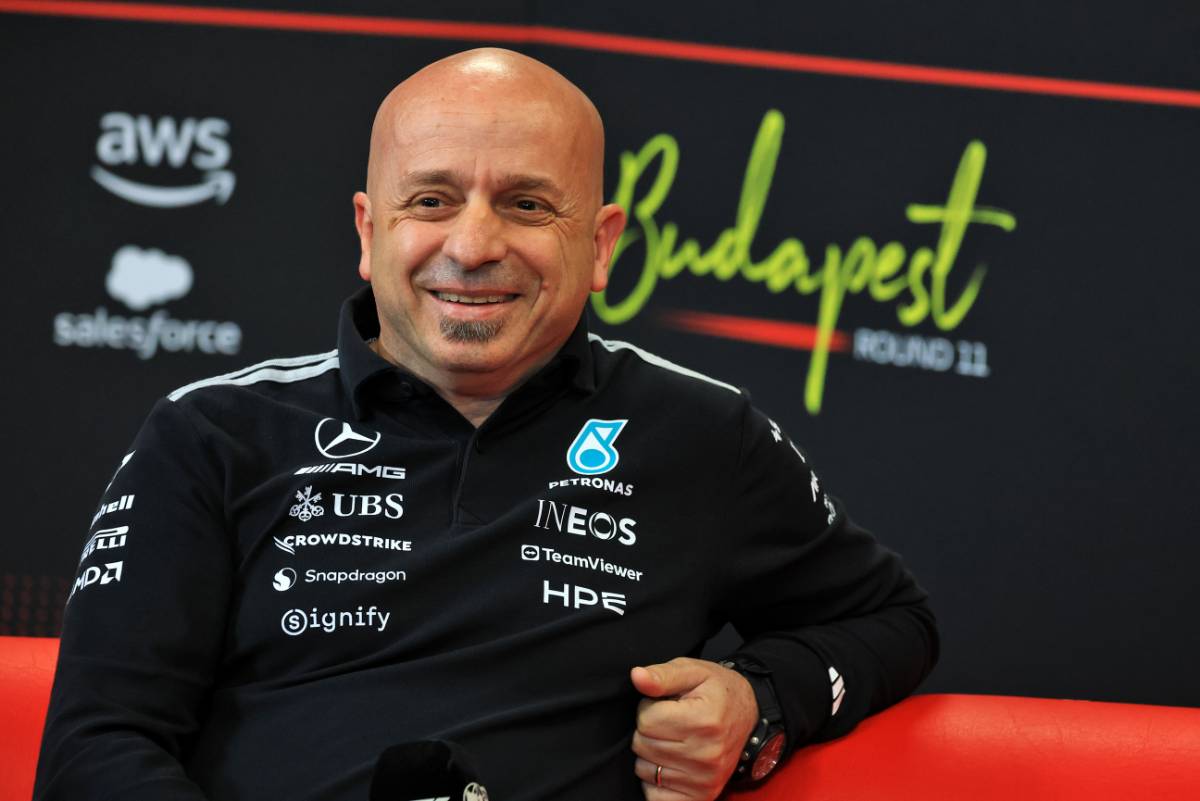
“First of all, as a team, we’re really thankful to George for having challenged us and highlighted an opportunity where we needed to focus,” Resta explained.
“He has been really good at understanding and highlighting things to us. We have finally been able to identify the solution and put a fix in place for this race. So, thanks to George for having done that for us, for the team.
“Of course, he’s quite pleased that we’ve been able to get to the bottom of it and sort it out. It has been good teamwork. It wasn’t the easiest thing. As I said, with the new regulations, there are still a lot of things to learn. But it’s a step forward.”
With the software patch deployed and a fresh engine scheduled for Russell in the upcoming cycle, Mercedes expects both drivers to compete on equal footing once again as the European season progresses.
Read also: Russell relieved as Mercedes identifies cause of deployment issues
Keep up to date with all the F1 news via X and Facebook