



Formula 1 has arrived in the Spanish capital for the inaugural Spanish Grand Prix at Madrid’s brand-new Madring street circuit.
Pole-sitter Lando Norris secured his third pole in four races, but with four different teams filling the top four grid slots, Sunday's contest promises high drama.
The fresh asphalt is already proving to be a wild card while the hybrid layout blends elements of Singapore, Miami, and Imola. Between heavy wall impacts during practice and narrow sightlines, the potential for Safety Cars or red flags is exceptionally high, making strategy the ultimate kingmaker today.
Positioned towards the end of Sector 1, right in the heart of the fast-sweeping, full-throttle Turn 4, the Speed Trap gave us our first glimpse into who is trimming wing for raw velocity at the Madring.
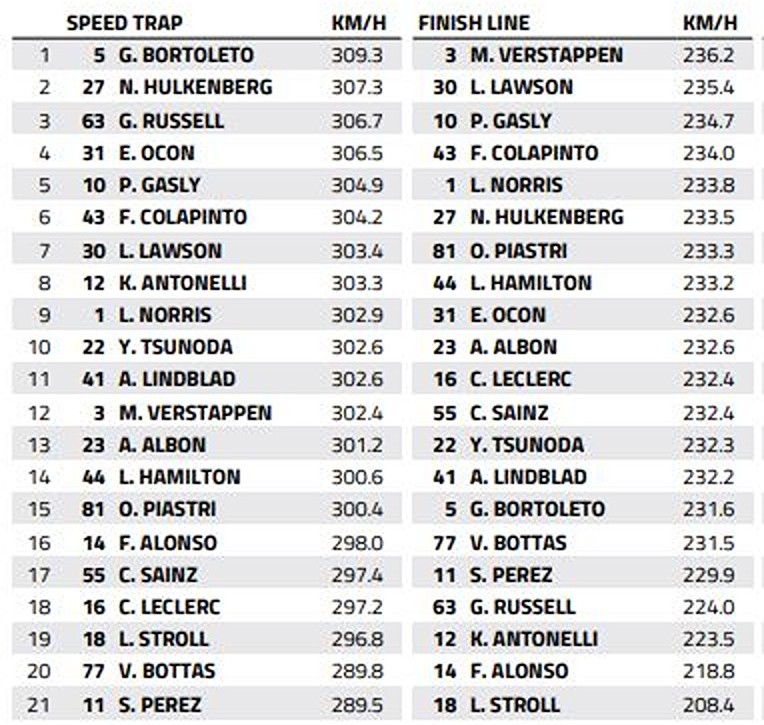
Gabriel Bortoleto topped the charts at 309.3 km/h, closely followed by Audi team-mate Nico Hülkenberg at 307.3 km/h and Mercedes' George Russell at 306.7 km/h. Esteban Ocon (306.5 km/h) and Pierre Gasly (304.9 km/h) also flashed high top-end speed for Alpine.
Interestingly, pole-sitter Lando Norris sat mid-pack at 302.9 km/h, prioritizing downforce over outright velocity. At the bottom of the table, Sergio Pérez brought up the rear with a modest 289.5 km/h, highlighting vastly different setup choices across the grid.
It’s worth noting that top speeds were nowhere near the 340 km/h mark predicted by Formula 1 ahead of the event, as aero settings went from theoretical on the sim to practical in the real world.
Strategy corner: The tyre options
Because overtaking looks extremely difficult around the Madring’s tight layout, track position will prove paramount this afternoon. However, strategists face a delicate balancing act due to severe rubber degradation.
Smooth tarmac combined with high grip has triggered severe graining on both left-side tyres across long runs.
“Differences between the teams are already becoming apparent in terms of who is able to manage the tyres more effectively over a stint,” noted Pirelli Chief Engineer Simone Berra.
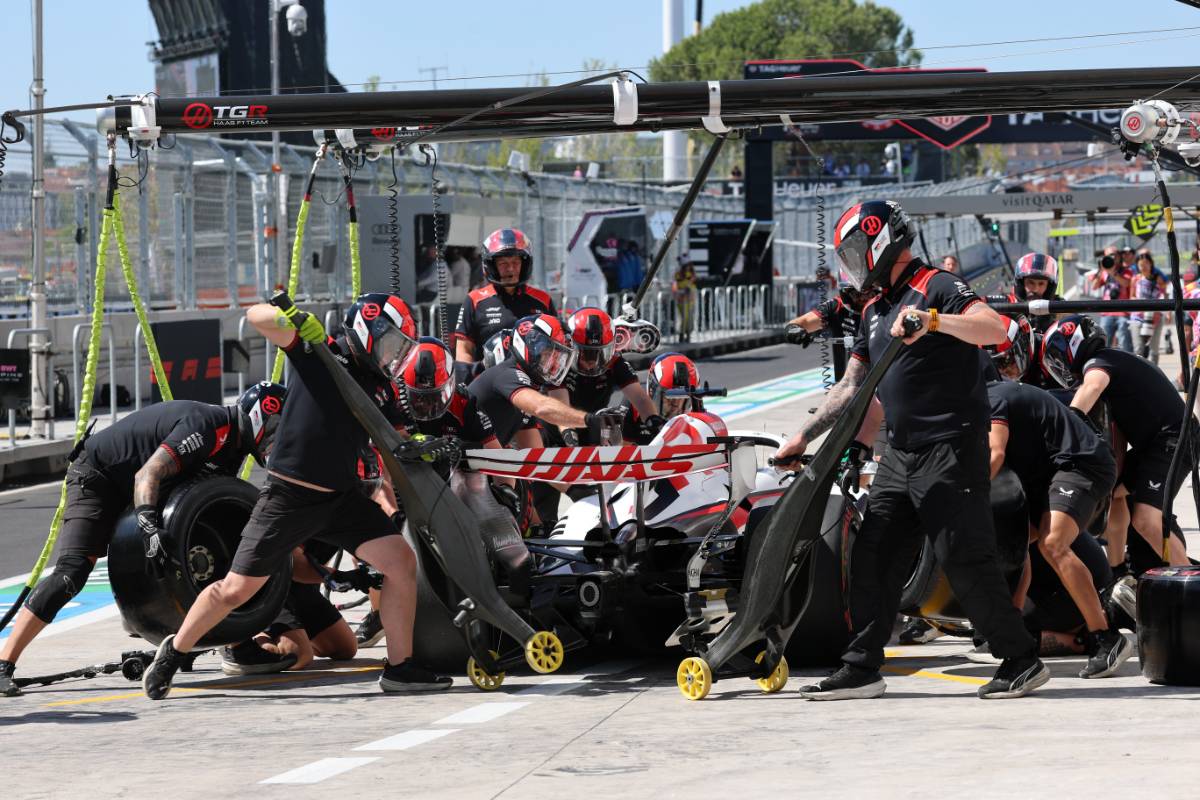
Pirelli expects the single-stop Medium-to-Hard strategy to be the benchmark, with the pit window opening between Laps 18 and 24. Yet, heavy graining could force teams onto a two-stop strategy.
“The decision maker between one- and two-stop could be the graining. If you don't have enough pace initially, and then also wear life, to complete the race with just single-stop, then of course you need to exploit the other stop to manage the race,” added Pirelli Motorsport boss Dario Marrafuschi.
A Medium-Hard-Hard two-stop strategy offers an identical theoretical race time, with windows at Laps 10-16 and 31-37. Meanwhile, starting on the Soft (C5) compound grants maximum launch grip into Turn 1, opening a Soft-Hard pit window between Laps 15 and 21.
For out-of-position runners like Oliver Bearman, a Hard-Medium "Hail Mary" stint pushing until Laps 36-42 offers the ultimate gamble – hoping an inevitable red flag or Safety Car delivers a free pit stop on Madrid's chaotic street layout.
With scorching track temperatures pushing 54°C and narrow barriers leaving zero margin for error, Sunday’s inaugural race at the Madring is bound to be a pressure cooker.
Whether driver skill tames the brutal tyre graining or a late red flag turns the order upside down, Madrid is set for a thrilling tactical showdown.
Keep up to date with all the F1 news via X and Facebook