

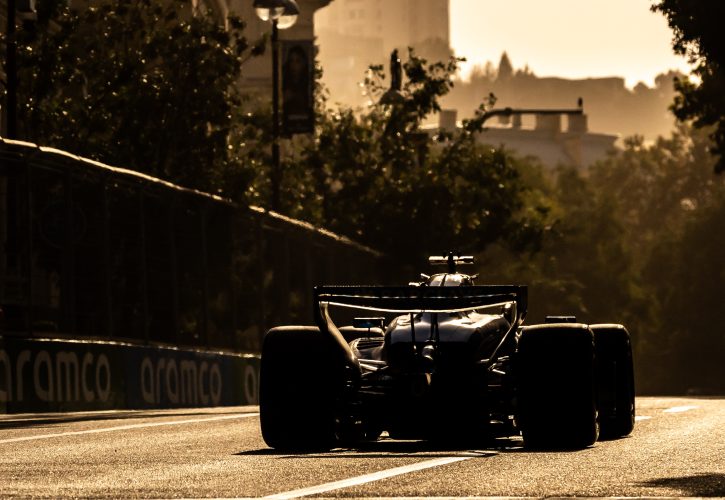


The streets of Baku host an unusual Saturday Grand Prix, and if qualifying is any indication, the entire field except for Mercedes is searching for answers.
George Russell decimated the opposition in Saturday's session, snatching pole position by an eye-watering 0.837s ahead of Ferrari’s Charles Leclerc.
On a 2026 grid where four manufacturers in the top four positions has become routine, such a massive chasm on the 15th qualifying session of the season sent shockwaves through the paddock – especially considering Leclerc in P2 was closer to Carlos Sainz in P9 than to the flying Russell.
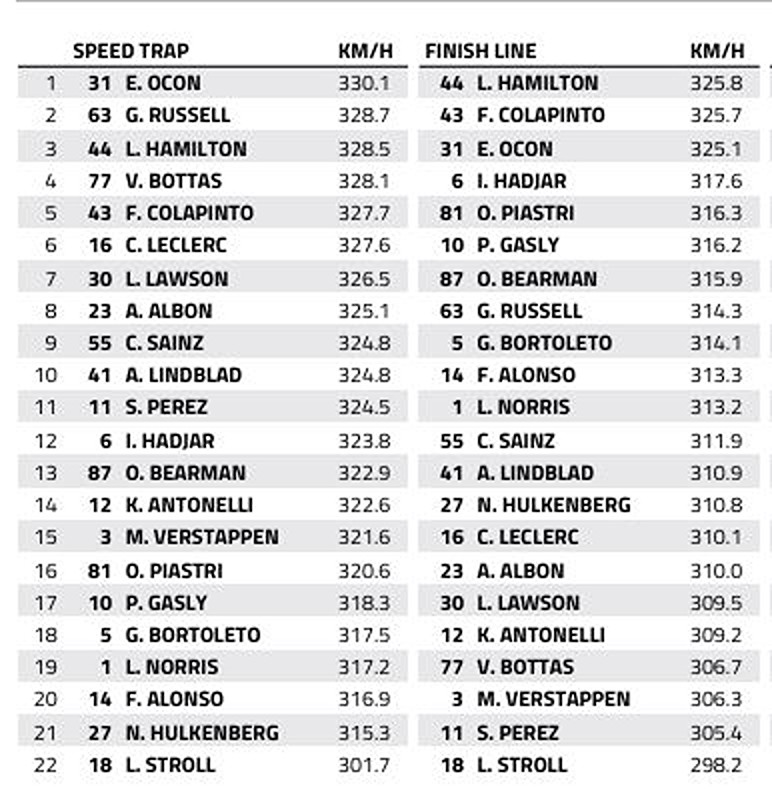
Baku’s speed trap – positioned at the end of the circuit’s punishing main straight – tells a fascinating story about downforce choices, aero efficiency, and engine performance.
Esteban Ocon topped the charts in his Haas at 330.1 km/h, but Russell was right behind him at 328.7 km/h. What makes Russell’s pole lap frightening for rivals is that he topped every single sector without needing to compromise straight-line efficiency.
Further down, Max Verstappen managed just 321.6 km/h (15th), proving that Red Bull’s best-in-class engine advantage couldn't overcome their aerodynamic drag choices.
Meanwhile, Honda-powered Aston Martin anchored the bottom of the order, with Lance Stroll a staggering 28.4 km/h off the pace at 301.7 km/h.
Championship leader Kimi Antonelli suffered a nightmarish session after clipping the wall in Q1, placing him down in P16 on the grid with a speed trap reading of 322.6 km/h.
But given the raw pace of the W17, Antonelli should have the firepower to cut through the field – barring his teammate upfront.
Strategy corner
With active aero and boosted energy deployment options coming into play alongside low overall degradation, Saturday's Grand Prix is shaping up as a tactical chess match centered around tire warm-up.
Pirelli’s step harder in tyre allocation leaves teams targeting a straightforward one-stop strategy using the C4 and C5 compounds. With low wear across the board, the prime choice for the top 10 is shifting toward starting on the Soft compound to combat the weekend-long warm-up issues.
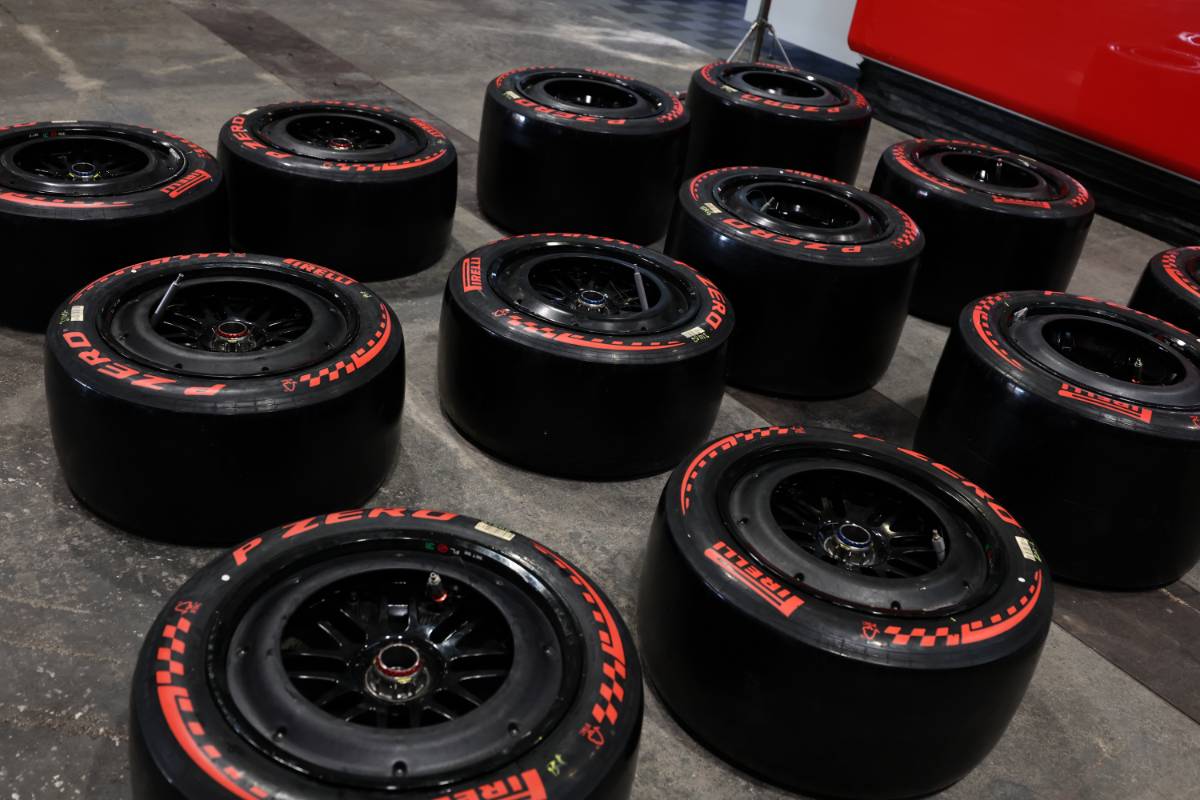
Getting energy into cold rubber on restarts or early laps has been treacherous, making a Soft > Medium run exceptionally attractive for front-row starters wanting to protect track position off the line.
Alternatively, those playing the longer game will opt for Medium > Soft, preserving late-race grip when fuel loads drop. For teams looking at a Hard tyre alternative, switching from either Mediums or Softs opens a pit window anywhere between Laps 16–27.
The safety car and wind factor
Baku's street walls always invite Safety Cars. And keeping aging Hard tyres behind a lSafety Car in chilly track conditions could be a nightmare.
Adding to the chaos is Baku’s signature element: wind. Gusts up to 30 km/h channeled through the city's building canyons have repeatedly caught drivers out, snapping tailwinds mid-corner and sending cars into run-off areas.
For Antonelli starting in P16, a standard deep-run on Hard tyres seems unlikely given the Mercedes' sheer pace advantage. A clean strategy on softer rubber should see the championship leader carve his way back into serious points.
While George Russell holds all the trumps heading into Saturday's race, Baku rarely delivers predictable outcomes.
Between the treacherous winds channeling through the city streets, the ever-present threat of a Safety Car, and the delicate game of tyre warm-up on the softer compounds, clean execution will be everything.
Keep up to date with all the F1 news via X and Facebook