


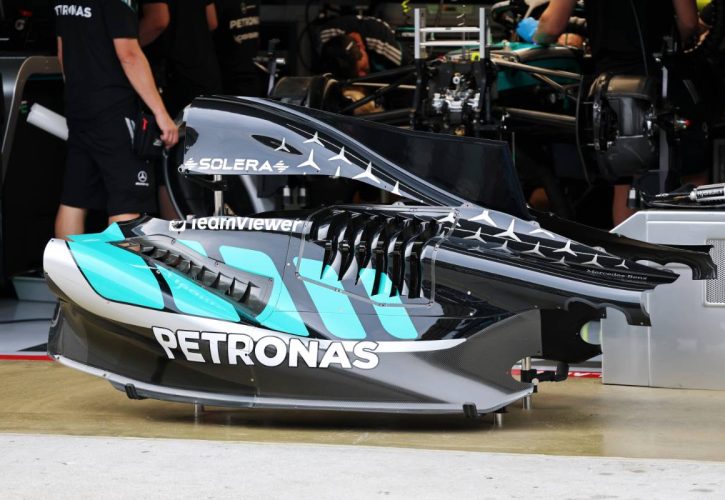


Mercedes has finally opened the development taps on its W17, bringing a substantial aerodynamic overhaul to Sepang for the Bahrain Grand Prix in Malaysia as the championship leader looks to maintain its advantage through the closing stages of the season.
The package marks the team’s first major intervention since the Canadian Grand Prix in May, an extraordinary development freeze considering Mercedes has nevertheless collected six victories from the first ten rounds and built a 160-point cushion over Ferrari in the constructors’ standings.
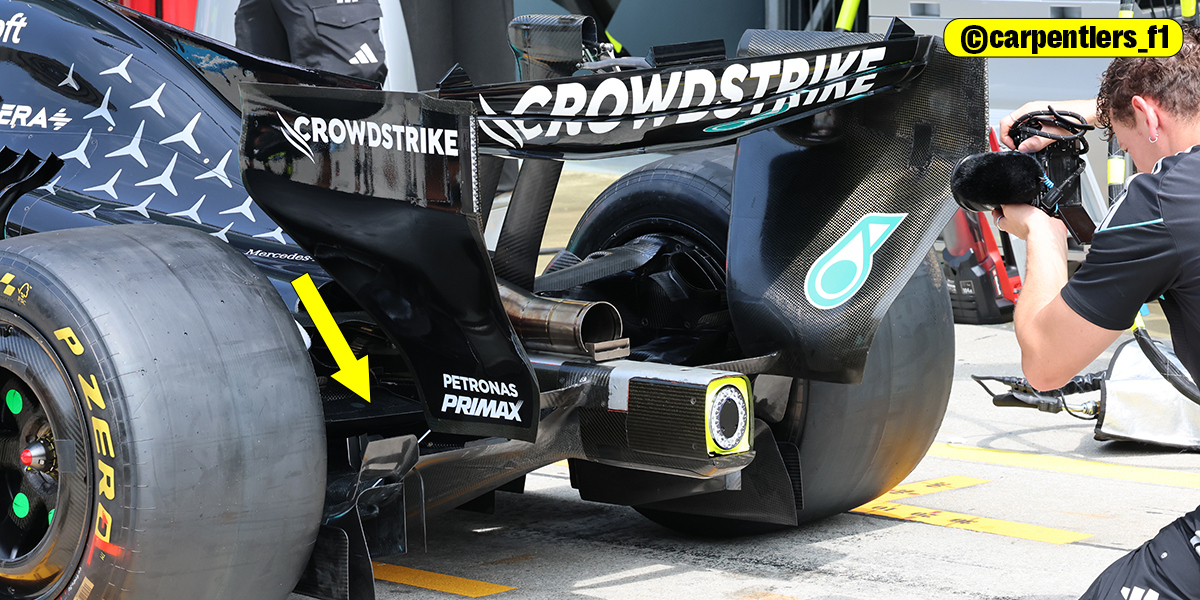
Rather than addressing one isolated weakness, Mercedes has attacked several areas of the W17 at once. Seven new components have been introduced across the floor, sidepods, rear bodywork and rear suspension, making this one of the most comprehensive updates seen on the car this year.
A major aerodynamic rethink
The floor receives some of the most significant attention, with Mercedes revising its leading edge, corner and floor board, alongside changes to the surrounding bodywork.
The objective is to improve the way pressure is managed around the floor and reduce airflow separation, helping the car maintain a cleaner and more consistent aerodynamic flow towards its rear.
That work continues further back.
Mercedes has revised its rear bodywork and suspension fairings, while additional winglets have been introduced to refine the airflow around the back of the car.
The rear bodywork itself has been slimmed down, while a larger side ramp has been added to help direct airflow across the rear section of the floor.
The sidepods have also received a conspicuous makeover, adopting a shape reminiscent of the concept seen on McLaren’s car. Given the heat and humidity expected at Sepang, Mercedes has added sizeable cooling gills to the sidepods to help extract heat from the tightly packaged bodywork.
The timing of the overhaul is significant. Mercedes has enjoyed a remarkably successful campaign without needing to substantially alter the W17, but rivals have continued to develop their cars and close some of the performance gap.
The team therefore arrives in Malaysia with an upgrade designed not simply to address a single shortcoming but to preserve its competitive edge for the remainder of the season.
And Mercedes is not finished yet. A further ADUO upgrade is expected later in the year, meaning the W17 still has more development potential in reserve despite having already won 11 of the first 15 races.
The immediate question at Sepang, however, is whether the first major evolution of the W17 can add another layer of performance to a car that has already been setting the pace for much of 2026.
Keep up to date with all the F1 news via X and Facebook