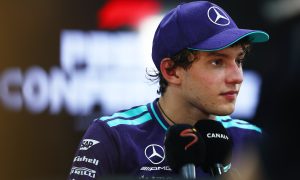


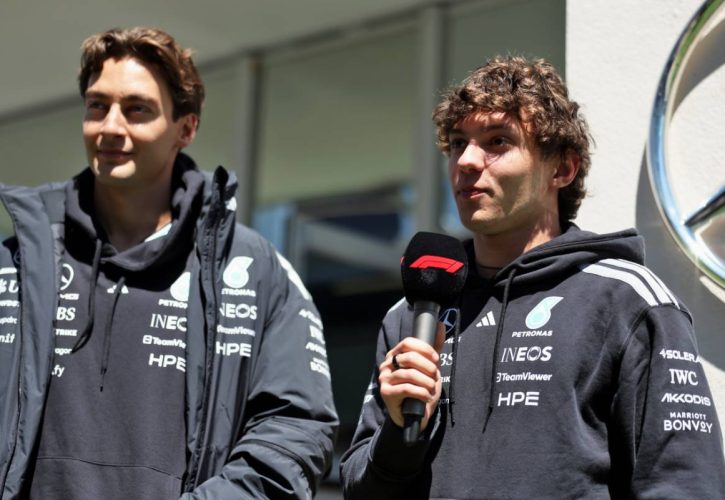


Mercedes arrived in Montreal with one clear priority: fix a weakness that has repeatedly complicated its races this season – poor starts.
After a campaign defined by strong race pace but costly losses off the line, both championship leader Kimi Antonelli and teammate George Russell have been forced into recovery drives far more often than expected.
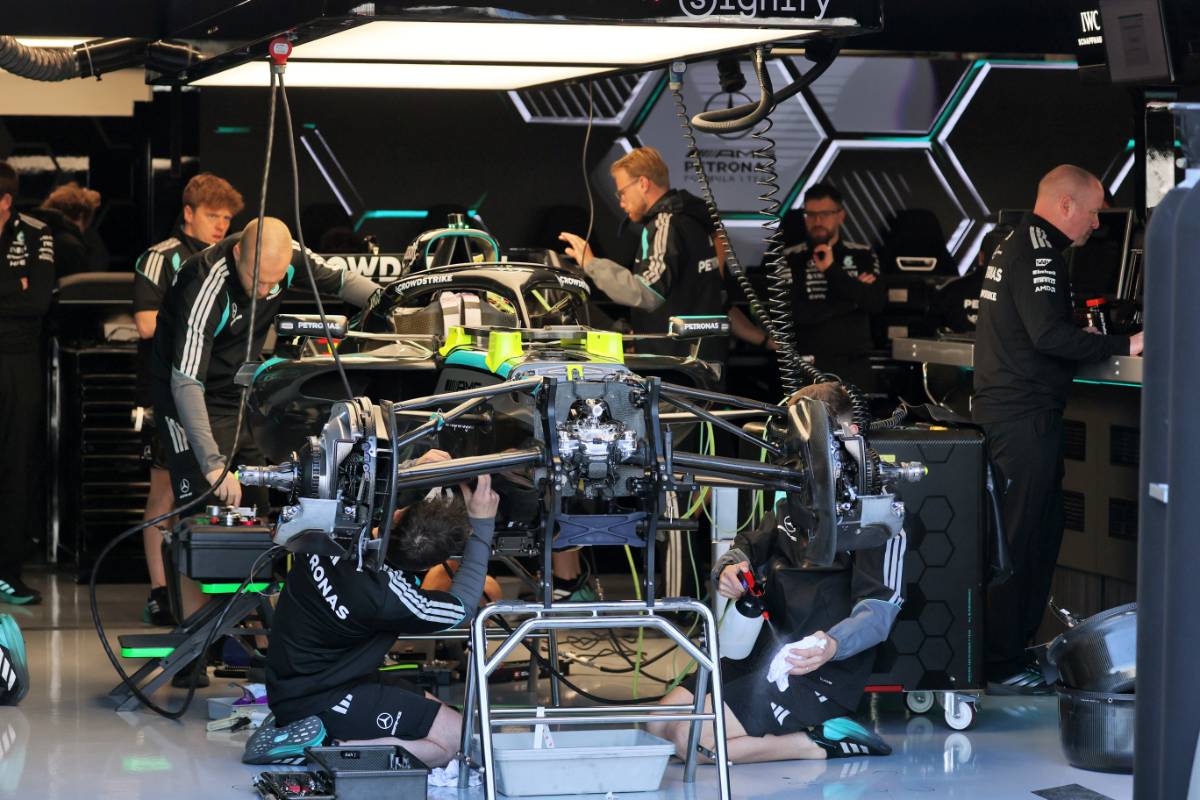
For the Canadian Grand Prix, Mercedes has responded with a significant technical overhaul targeting its launch performance, alongside a broader aerodynamic update package introduced after holding developments back in Miami.
The changes include software refinements, clutch system revisions, and a new driver-specific control component for Antonelli, all aimed at stabilising and improving consistency at race starts.
‘Bits and pieces’ and a big software push
Antonelli was candid about the scale of Mercedes’ push to close the gap in one of its clearest weak points.
“This weekend, obviously, we're bringing a lot of new things in the car, and definitely also there are a few bits about the starts,” Antonelli said on Thursday.
“We have a new clutch paddle on my side, just a different shape, just to help me to be a bit more consistent with the drops, and of course, the team has been working very hard on the software side as well, and also on the clutch side, just to try and find more performance, and also made the system a bit more robust.
“For sure, there's been a lot of work going on, because, for example, McLaren, they have the same PU as us, and they're starting very well, so there's definitely something that we're missing.
“But this weekend we are bringing a lot of changes, and we'll see already from [Friday] if it's going to be better or not.”
While acknowledging the challenge, Antonelli also expects Montreal’s layout and the characteristics of this year’s machines to deliver an engaging weekend of racing.
“This track usually offers decent racing,” he said. “So obviously this year the racing has seen a lot more overtakes, a lot more action, so I think it can be the same here.
“Of course, it might not be as easy as, for example, Miami, because Miami is a bit wider, you have a bit more opportunity to make moves.
“But I think it's still going to offer a lot of good action, and I think it's going to be even more fun. I think driving the car around here, obviously, it's a type of track where you have a lot of change of direction, not a lot of high-speed corners.
“So with the characteristic of this year's car, I think it's going to be more fun to drive, because the car is smaller, it's lighter, it's more agile, so it's going to be much more reactive as well in the change of direction, so I think it's going to be very interesting to see, but I think it's going to be fun weekend.”
Russell: ‘Starts a big focus for us’
Russell, meanwhile, underlined that Mercedes is fully aware of how critical the issue has become, but warned that improvements will not be instant.
“Well, obviously the starts are a big focus for us because that’s clearly our biggest weak point,” said the Englishman. “We know short-term is going to be difficult to make major gains, and we’re obviously trying as hard as we can to solve it short-term.
“But there are also some medium-term items that we need to make changes to and continue to improve.
“And, of course, race starts, we don’t get to practice very often. You can’t practice it on the simulator, really. Some races you cannot even practice in free practice the race starts. So, we’ll keep trying our best to improve.”
With Mercedes introducing its most focused start-related upgrade push of the season alongside a broader performance package, Montreal represents a key test of whether the W17 can finally convert qualifying strength into clean, competitive race launches.
For both drivers, the message is aligned: progress is expected, but certainty is not – and the stopwatch at lights out will tell the real story.
Keep up to date with all the F1 news via X and Facebook