



Silverstone Circuit – Britain’s very own temple of speed – is where it all began for Formula 1. Some 76 years on, drivers remain utterly in awe of its sweeping, flowing nature and relentless, high-speed corners.
Legendary sections like Maggotts, Becketts, and Abbey have firmly stood the test of time, while cars reach their V-max down the historic Hangar Straight.
However, conquering this circuit requires walking a tightrope. While a low-downforce setup allows a car to breeze through the speed trap at maximum velocity, it severely affects stability through the fast corners, inevitably forcing engineers to hunt for the ultimate setup compromise.
Adding to the headache this year is the complex puzzle of energy management, with depleted batteries and forced lifts off the throttle in certain corners potentially leaving a driver completely defenseless and starved of energy on the straights.
Ferrari’s shock turnaround
For much of the 2026 season, Maranello has echoed with persistent complaints regarding the straight-line deficiencies of the SF-26. Yet, Saturday’s qualifying session turned that pessimistic narrative completely on its head.
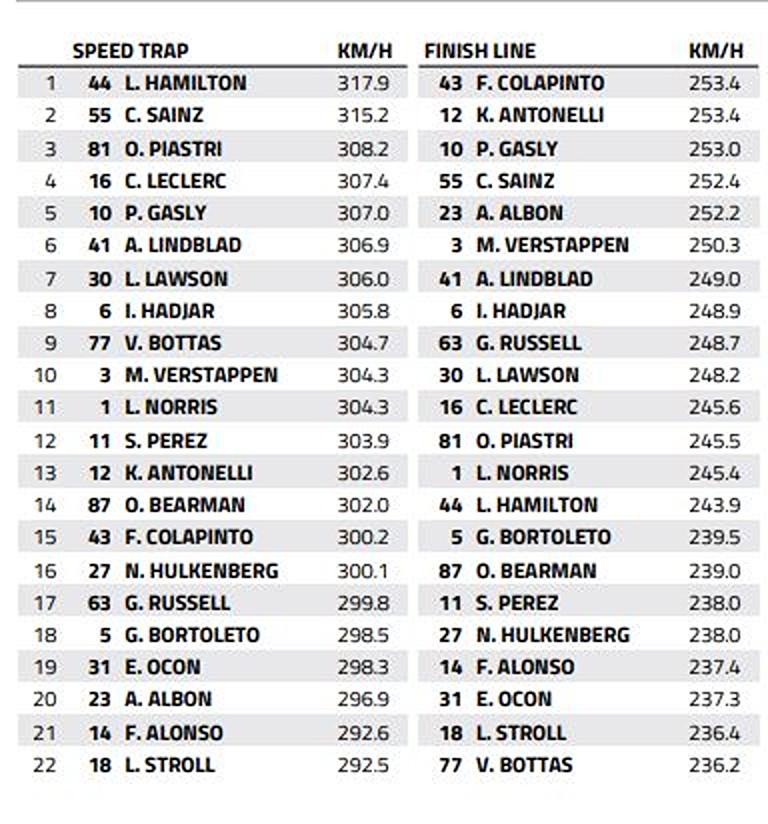
Looking at the top-speed trap sheets, the Scuderia delivered a jaw-dropping straight-line performance at one of Formula 1's most demanding venues. Lewis Hamilton spearheaded this surprise dominance, blistering through the speed trap at a session-topping 317.9 km/h. In stark contrast, Mercedes’ pole-sitter Kimi Antonelli clocked in at a comparatively paltry 302.6 km/h.
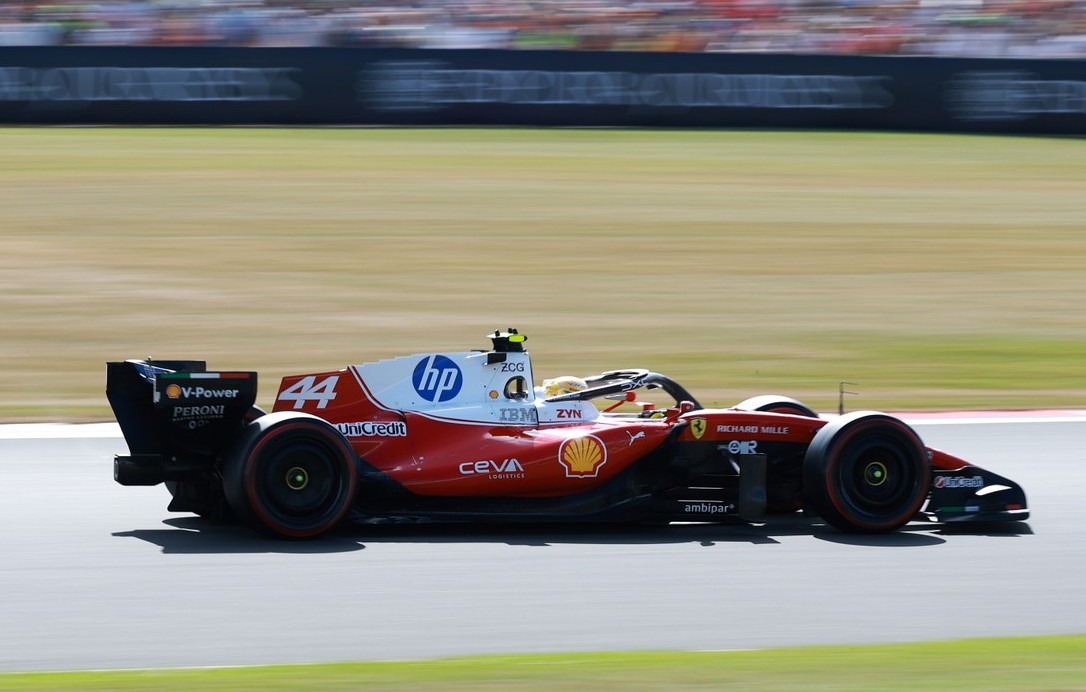
Ferrari's aggressive and heavily scrutinized technical upgrade path appears to have finally answered Maranello's prayers; the SF-26 is no longer dragging its heels – it is leading the charge.
On the deployment front, telemetry suggests that Hamilton and Leclerc were able to stay at full throttle longer than anyone else, maximizing their energy harvesting to unleash devastating power on the straights.
Tactical warfare and the tyre factor
Despite this straight-line revolution, a scarlet triumph at Silverstone remains a tall order given Mercedes’ formidable race pace. Hamilton suggested after qualifying that Ferrari will attempt to “play with the strategy” and “work as a team” to gain an upper hand over their Brackley-based rivals, though executing that masterplan may still require a bit of unforeseen racetrack chaos.
The chess match will also involve Pirelli’s hardest compound allocation (C1, C2, and C3) – slotted one step stiffer than in 2025 to cope with a circuit defined by extreme lateral energy and heavy left-side tyre loading.
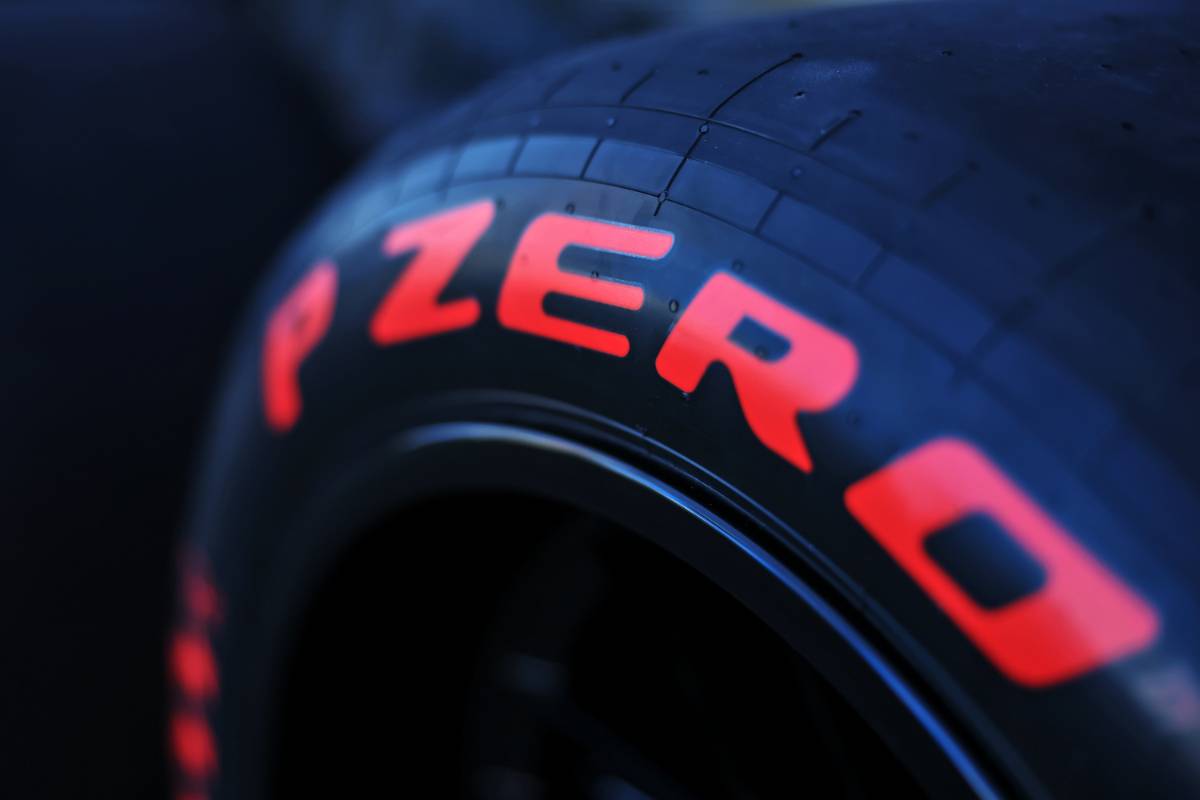
According to the sport's tyre supplier, the mathematical favorite is a one-stop strategy: starting on the C2 Medium and switching to the Hard between laps 24 and 30. Alternative variations include a Medium-to-Soft strategy with a later stop between laps 29 and 35, a Hard-to-Medium reverse strategy, or an aggressive Soft-to-Hard gamble.
Ultimately, Sunday's Grand Prix is shaping up to be a classic battle of conflicting strengths. Ferrari holds the straight-line trump card and tactical flexibility, while Mercedes possesses the raw cornering compliance and race pace advantage.
In a sport governed by the finest margins, the winner at Silverstone will be the driver that best manages the delicate dance between battery deployment and Pirelli rubber under the unrelenting pressure of Britain's high-speed curves. Would this be you, Kimi?
Keep up to date with all the F1 news via X and Facebook