



Formula 1 is set to overhaul the terminology used in its 2026 regulations package, as the FIA works to simplify technical jargon that officials believe is contributing to fan confusion.
Grand Prix racing’s brave new era is already packed with enough innovation to make an engineering textbook blush – fresh power units, a revised chassis, fully active aerodynamics, and the departure of the familiar DRS.
But as the sport’s regulators prepared the 2026 rules package, it hit an unexpected snag: the terminology itself was becoming a labyrinth. So the governing body has stepped in, determined to keep F1’s vocabulary as nimble as its future cars.
Cutting the Jargon Before It Cuts Into Clarity
The push for clearer language comes after months of shifting labels that left even die-hards scratching their heads. Terms like X-mode and Y-mode were scrapped early, only for their replacements – straightline mode and cornering mode – to be truncated into SLM before they too landed on the chopping block.
FIA single-seater director Nikolas Tombazis explained that the sport needs a verbal reset to ensure fans aren’t fighting through jargon just to understand what their favourite drivers are doing on track.
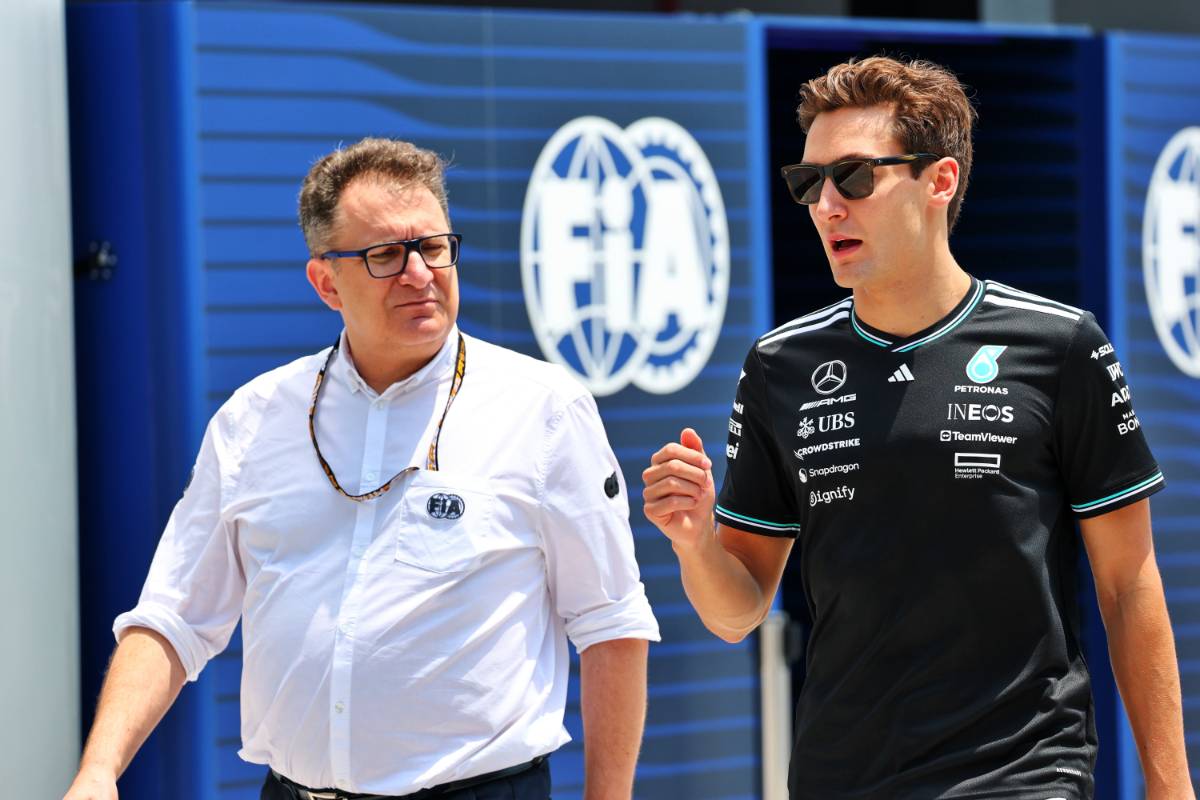
FIA Single-Seater Director Nikolas Tombazis with George Russell.
“We are revising some of the terminology because we want to make it clear and we want to make it simple for the fans to understand what’s happening,” Tombazis said.
“We want to have a unified terminology used by the teams when they speak to the drivers on the radio, but also by the commentators on TV, and also the same terminology in the regulations.
“So we are doing an exercise now to make sure that we create simple terminology.”
This push for unity spans teams, broadcasters and rule-makers — and is part of a broader effort to ensure next year’s technology doesn’t feel like a puzzle with missing pieces.
Goodbye MOM, Hello Overtake Mode
One of the most significant rebrands involves Manual Override Mode – the hybrid boost meant to replace DRS. Its acronym, MOM, was met with swift confusion and no shortage of quips, prompting officials to retire it before it ever hit a timed lap.
Its successor will likely be much more straightforward: overtake mode, a label that leaves little ambiguity about its purpose. A separate tag such as boost mode may accompany general battery deployment on straights.

©FIA
Active aerodynamics are also getting the simplicity treatment. Originally launched as X-mode and Z-mode, they were later recast as straightline and cornering modes.
But with every car expected to use identical high-downforce settings in corners and low-drag setups on straights, the FIA sees little point in naming the configurations separately at all.
Instead, the system will simply be known as active aerodynamics, reflecting what the mechanism does rather than inventing terminology for things it already does automatically.
Tombazis noted that the review is ongoing, with multiple voices still contributing to the final glossary.
“I don’t want to get into the exact [details of] what each one of these terms will be now, because we are also collaborating with some other stakeholders on that,” he said.
“But we are looking at that.”
Final Naming Coming Soon
The FIA and Formula 1 have spent the past months consulting teams, broadcasters and fan groups to ensure the final list of 2026 terms is easy to use and even easier to understand.
The goal is to have the new nomenclature locked in before year’s end, providing a clear and cohesive language for one of the sport’s most transformative seasons in decades.
If the 2026 cars promise to be lighter, faster and more efficient, the FIA hopes the rulebook will follow suit — with terminology that no longer needs a glossary of its own.
Keep up to date with all the F1 news via X and Facebook