



Two-time world champion Fernando Alonso has delivered another withering verdict on Formula 1’s 2026 regulations – and if his assessment stings, it’s because it cuts straight to the heart of what the sport has quietly lost.
What was billed as a revolutionary step forward now looks, through the Aston Martin driver’s eyes, like a baffling retreat from the very essence of elite racing. And nowhere was that more glaring than last weekend at Suzuka, a venue once synonymous with flat-out bravery.
Alonso, never one to dress up criticism in polite language, has zeroed in on the erosion of driver skill – particularly in the high-speed corners that used to define Formula 1’s danger and allure.
“It’s gone, I told you in Bahrain testing that the chef could drive the car, now, maybe not the chef, but 50% of the team members could drive Suzuka,” Alonso told reporters, alluding to the art of driving.
The season's opening rounds have confirmed the paddock's worst fears: energy management is now the primary objective inside the cockpit, while speed is a distant secondary concern.
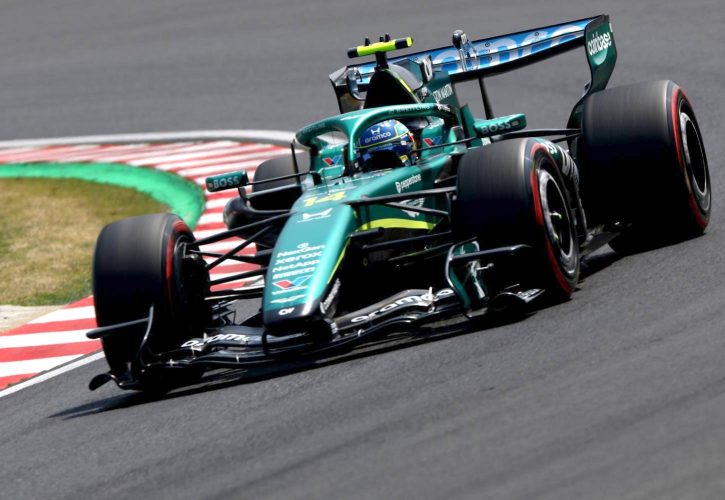
The absurdity reached its peak at Suzuka, where the daunting 130R became a scenic crawl to ensure the hybrid system didn't give up the ghost on the ensuing straight, and a corner now apparently manageable by a sizable chunk of the paddock.
‘Charging stations’ on track
In Alonso’s telling, Formula 1 hasn’t just changed – it has fundamentally misplaced its priorities.
“As I’ve said a few times already, the high-speed corners have now become the charging station for the car,” he said.
“So you go slow there and charge the battery in the high-speed, and then you have full power on the straights, so driver skill is not needed anymore, it is no longer a challenge in the high-speed corners.”
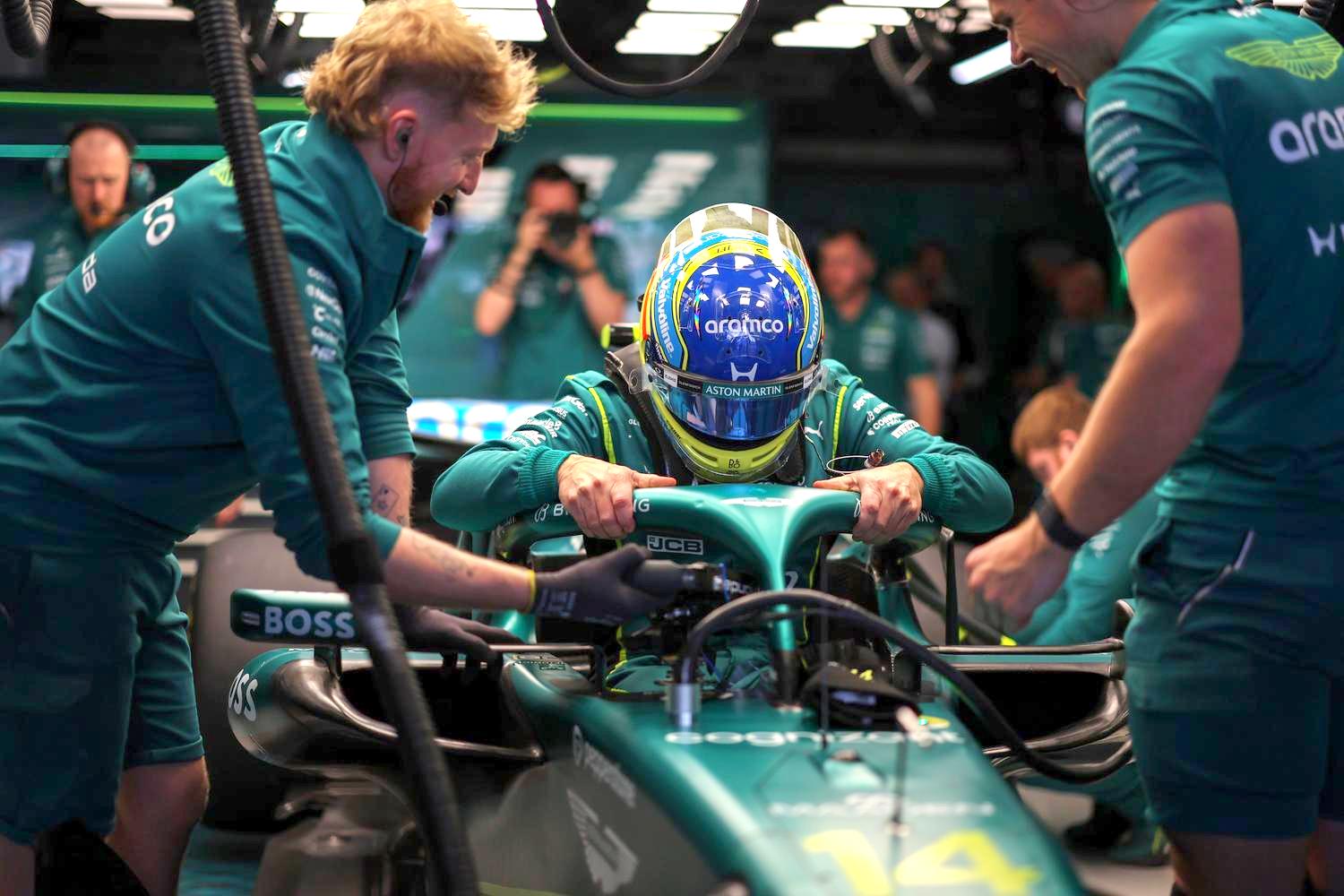
It’s a damning critique. Corners that once separated the fearless from the cautious are now, effectively, energy recovery zones – awkward pauses in the action where drivers harvest battery power instead of hunting lap time.
The early races have only amplified the issue, with energy management and “superclipping” dominating the narrative. Incidents like Oliver Bearman’s crash in Japan have even forced the FIA to take a closer look at whether this new formula is fit for purpose.
A fix… but not a cure
Ahead of next week’s high-stakes meeting between F1’s powerbrokers, Alonso isn’t optimistic that a simple tweak to the rules will restore what’s been lost — because the problem, as he sees it, is baked into the DNA of the regulations.
“It is difficult [to improve the cars] as it will always be biased on the straights and saving energy, so it would improve on the super-clipping and the de-rates,” he explained.
Read also:
“It is something which should be fixed, and it is very possible that a quick fix on the regulations will improve, but in terms of how much you will push the car to the limit, that will not be needed, ever, with these regulations.”
That word – ever – hangs over the sport like a warning. Because if Alonso is right, Formula 1 hasn’t just taken a wrong turn; it has rewritten its own identity.
Therefore, the uncomfortable question remains: if high-speed corners are now just “charging stations,” what exactly is left for the drivers to prove?
Keep up to date with all the F1 news via X and Facebook