

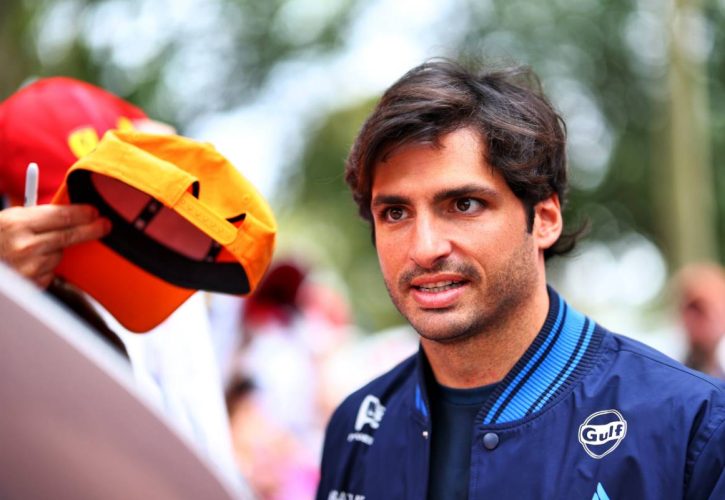


The Spanish Grand Prix’s future home is still surrounded by construction barriers, deadlines and heavy machinery – but for Carlos Sainz, the Madring circuit already feels alive.
With fresh asphalt now laid around the IFEMA fairgrounds in Madrid, the Carlos Sainz Jr. became the first F1 driver to complete a lap of the sport’s newest venue, taking a 450bhp Ford Mustang GT around the 5.4km layout that will host F1 from 2026.
And if Sainz’s first impressions are anything to go by, Madrid’s new street-meets-purpose-built hybrid circuit may be preparing to deliver far more speed – and far more spectacle – than many initially expected.
An F1 car at ‘its absolute best’
From the opening sector, Sainz immediately identified a circuit that could reward aggressive racing and clever energy management in equal measure.
The opening Turn 1-2 chicane already stands out as a likely overtaking hotspot, but the Williams driver quickly noted how the long acceleration zone toward the Turn 5-6 sequence could turn battery deployment into a tactical weapon across a lap.
Then comes the real personality shift.
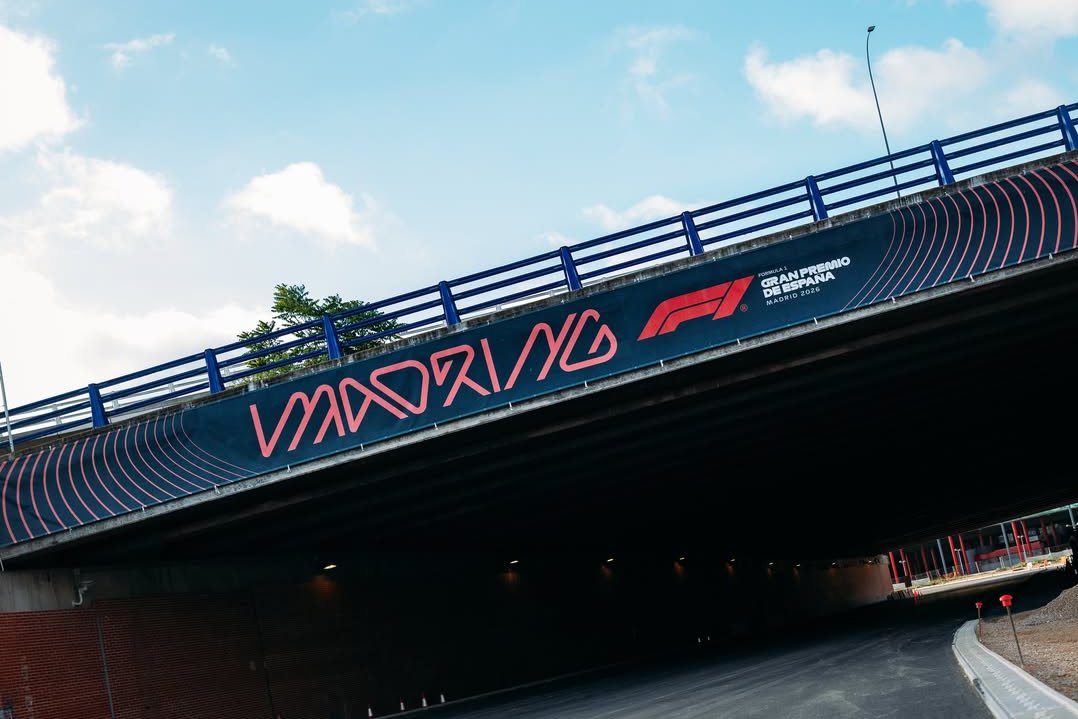
Once the track transitions away from public roads and into the purpose-built section beyond Turn 9, the Madring begins to reveal its more ambitious side – sweeping, high-speed corners designed specifically to let modern Formula 1 machinery stretch itself properly.
For Sainz, that’s where the circuit starts to deliver its biggest thrill.
He described the latter part of the lap as the section “where we’ll enjoy a Formula 1 car at its absolute best”.
‘You’ve created quite a cocktail’
If the Madring has a signature moment, it is undoubtedly “La Monumental” – the dramatic bullring-inspired banking at Turn 12 that instantly separates the circuit from the rest of the calendar.
With a staggering 24% gradient and a partially blind entry, the corner already has drivers talking long before a Formula 1 car has turned a wheel there.
And Sainz was clearly impressed.
“We’ll go in flat out, though we might lift off a bit in the middle to get the front end to grip," Sainz predicted.
“This is what impressed me the most. I thought La Monumental would just have banking, but suddenly it’s not only banked - it’s also blind. You’ve created quite a cocktail.”
The first full lap of Madring! 🤩
Carlos Sainz takes the honour of driving the first laps of the new track in Spain! 🇪🇸#F1 #SpanishGP pic.twitter.com/fDnlKW2b8T
— Formula 1 (@F1) May 16, 2026
That combination of speed, banking and compromised visibility could quickly make the corner one of Formula 1’s standout modern challenges — especially in qualifying trim.
But the lap doesn’t settle down afterwards.
Drivers immediately plunge into another overtaking opportunity at Turn 13 before entering the fast-flowing Valdebebas esses, a sequence Sainz compared to legendary corners seen at Circuit de Spa-Francorchamps and Silverstone Circuit.
The final sector then tightens dramatically again beneath the motorway, where a tricky 117-degree left-hander at Turn 20 threatens to punish any lapse in precision.
Read also:
According to Sainz, the outside wall there “could take us all by surprise”.
Madrid secured the rights to host the Spanish Grand Prix for a 10-year period between 2026 and 2035, marking a major shift in Spain’s Formula 1 future.
At the same time, Circuit de Barcelona-Catalunya will remain part of the championship through a separate rotational agreement, ensuring the sport retains ties to both Spanish venues in the coming years.
But as construction continues around Madrid, one thing is already becoming clear: this is not a cautious, conservative addition to the calendar.
If Sainz’s first lap is any indication, the Madring is aiming to arrive loudly.
Keep up to date with all the F1 news via X and Facebook