

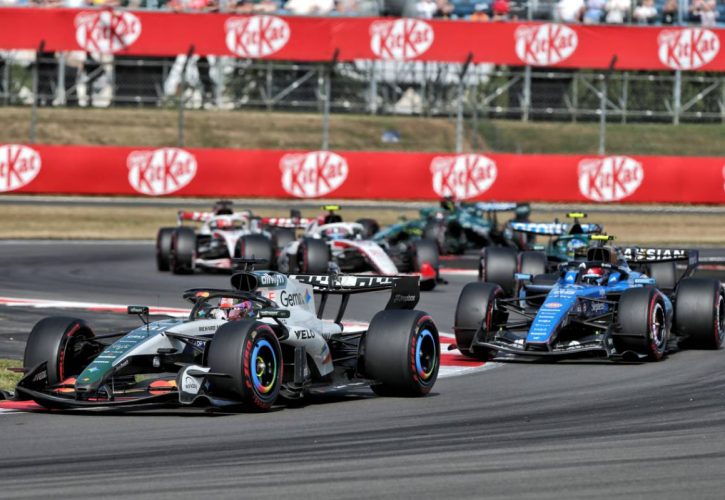


Oscar Piastri believes the varying power unit deployment strategies used by drivers on the frantic opening lap of the British Grand Prix ultimately led to the “carnage” that ruined his afternoon at Silverstone.
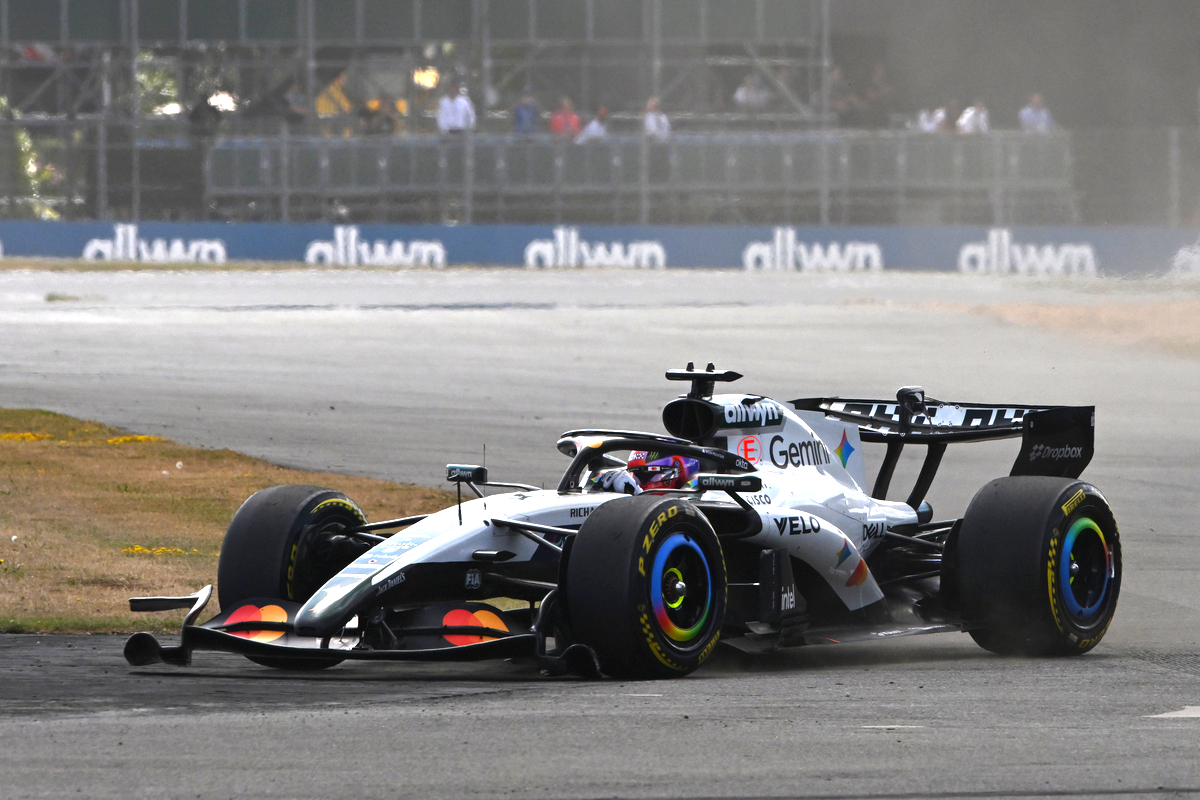
The McLaren driver saw his race compromised from the outset after sustaining front-wing damage in a midfield squeeze, forcing an early pit stop that dropped him to the back of the field.
Although he fought back, Piastri could recover only to 11th by the chequered flag.
Explaining how the incident unfolded, Piastri said the decisive moment came as the field accelerated towards Turn 6.
“I got sandwiched on the way into Turn 6, basically, on the straight to Turn 6,” he said. “I broke my front wing and had to box, and that was it.”
The unscheduled stop effectively ended any realistic hopes of a strong result, with the Australian spending the remainder of the race trying to salvage points from the rear of the order.
Power deployment the culprit of ‘multi-class’ race
Formula 1's revised power unit regulations for this season place greater emphasis on electrical energy deployment, allowing drivers to choose when to release the additional power around the lap.
While the system has added another strategic dimension, Piastri believes it also creates dramatic closing-speed differences when the field is tightly packed.
©McLaren
Reflecting on the opening exchanges at Silverstone, he described the situation as uniquely difficult for drivers attempting to judge the cars around them.
“There wasn't really that much of a pack,” he said. “Lap one on these kind of circuits is just carnage, it's almost like a multi-class race start.
“I was trying to overtake Lindblad, and I seemed like I had more power than him. Lawson then passed me, who seemed like he had even more power than me, and it's just a mess.
“You're trying to judge your speed to the car in front of you, look at the car behind you, but to be honest, I'm surprised that that doesn't happen more often.”
Read also:
Piastri's assessment highlights an emerging consequence of Formula 1's evolving hybrid regulations, with drivers now managing significantly different electrical deployment profiles even during the opening lap.
At a high-speed circuit such as Silverstone, those contrasting power modes can produce rapidly changing closing speeds, making an already congested start even more unpredictable – a scenario the McLaren driver believes was laid bare in the "carnage" that unfolded before the race had properly settled.
Keep up to date with all the F1 news via X and Facebook