

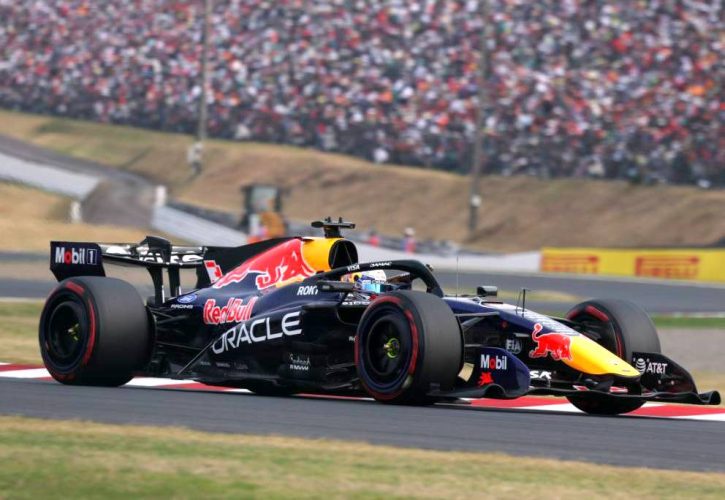


Red Bull team principal Laurent Mekies has made it clear: Formula 1 must rediscover the essence of flat-out qualifying – and the sooner, the better.
With the sport's new power units deriving nearly 50% of their muscle from electrical energy, the art of the qualifying lap has shifted from pure adrenaline to calculated conservation.
Drivers are now forced to lift and coast mid-lap to ensure they have maximum power in the sector where it matters most – and that’s a far cry from the qualifying heroics of old.
The paddock consensus
While the "strategic" nature of the new racing has its defenders, the reception to this diluted version of qualifying has been cold. Mekies, however, insists that the sport’s power players are already working on a fix.
Speaking after the Japanese Grand Prix, the Frenchman revealed that a rare moment of total agreement has swept through the pit lane.
“If there is one thing we all agree [on] – all teams, FIA, F1 and the drivers – it is that we all would like to see qualifying to be flat-out qualifying, or as close as possible to flat-out qualifying,” Mekies stated.
“So, it's the first thing we are, as a sport, trying to focus on.”
The hope is that by stripping away the need for energy management on Saturdays, the Sunday show will naturally follow suit.
“And then, what will happen then is that once you improve or once you get to an extent to have flat-out qualifying, you will automatically have a race with potentially a bit less gaming,” Mekies explained.
“The level of gaming in the race you can probably adjust. And there are very different opinions up and down the pitlane on that level. But I think the most important is that we get closer to flat-out qualifying, and that's what as a sport we try to achieve when we meet.”
Sorting the future ‘properly’
While Max Verstappen has cheekily suggested that changes could be forced through midseason under the guise of "safety," Mekies is advocating for a more measured, structural approach.
With the 2026 season already in full swing, the Frenchman believes the real opportunity for a permanent fix lies just over the horizon.
Read also:
“Personally, I think the focus should be on how to sort it properly for ’27,” Mekies added, cautioning against a knee-jerk reaction that might disrupt the current competitive balance.
“Because we are still in time to do enough if we want to address that for ‘27 and have enough flat-out qualifying in ‘27. And then I'm sure there is a number of small things that we can do in ’26.”
As F1 navigates this high-voltage era, the message from the Red Bull boss is clear: the fans want to see drivers at the limit, not managing batteries.
The challenge now is ensuring that by 2027, the "gaming" stays in the simulator and the raw speed returns to the track.
Keep up to date with all the F1 news via X and Facebook