

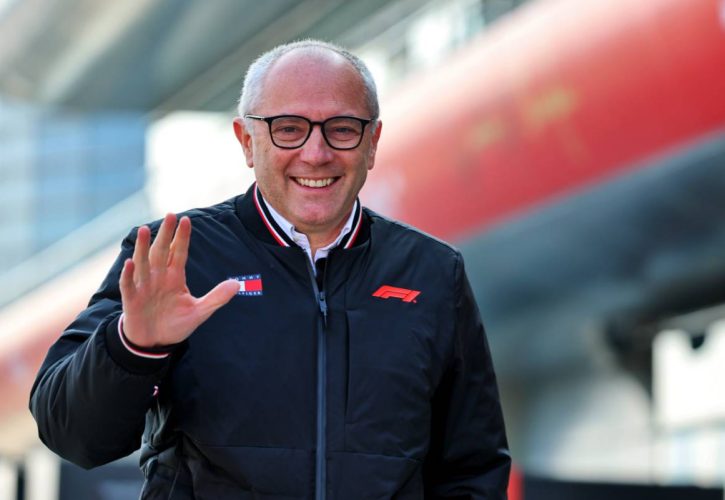


Stefano Domenicali has urged caution from Formula 1’s most influential voices, acknowledging Max Verstappen’s criticism of the sport’s new regulations while warning the four-time world champion about the impact his words can carry.
Grand Prix racing finds itself walking a tightrope. On one side, a new technical era still finding its footing; on the other, a chorus of drivers – led by its most prominent figure – questioning whether the sport has drifted too far from its roots.
At the centre of that tension sits Domenicali, tasked not only with steering Formula 1 through change, but also managing the growing volume – and impact – of criticism from within.
The weight of Verstappen’s words
The early rounds of the season have exposed the challenges of Formula 1’s new rules – energy management complexities, altered racing dynamics, and moments where drivers are forced to compromise rather than attack.
Domenicali insists those concerns are not falling on deaf ears. His dialogue with drivers, including Verstappen, has been ongoing and candid.
“My conversations with them are definitely very open and they know that I do care about their opinions. I want them to be involved,” Domenicali said.
“But of course, there is sometimes a sort of a gameplay that you have to have. If you speak to the drivers at the top, they are always very happy because they are winning. The others can be frustrated, also because they love a different way of racing, which I respect a lot.”
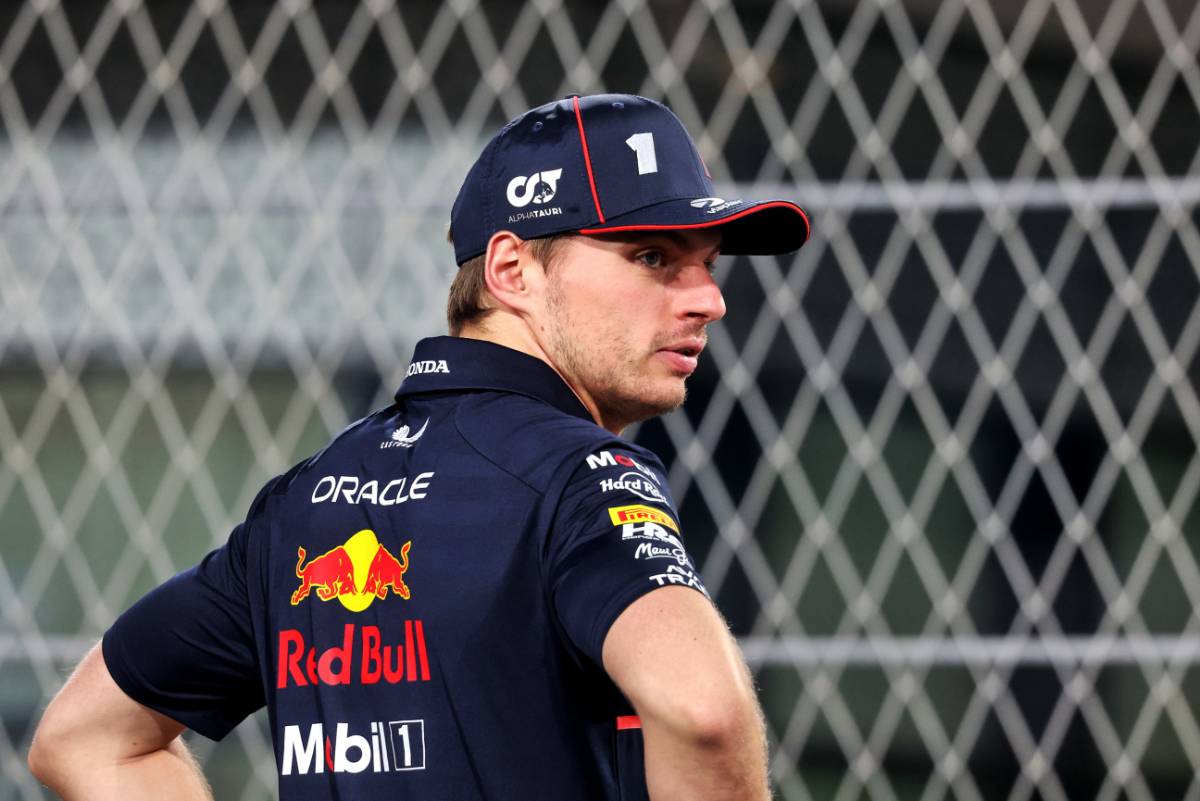
Behind the scenes, Formula 1 and the FIA are already exploring adjustments – particularly around energy deployment and qualifying – to refine a package that, while technically ambitious, has sparked unease among purists and drivers alike.
Yet for Domenicali, the conversation cannot exist in a vacuum. It must account for the scale of the platform the drivers occupy.
“What I said to them is: ‘Listen, guys, don't forget that what we are doing is because we did the right things together. So be respectful of a sport that gave to all of us an incredible opportunity to grow, to have a lot of money, and to develop a personality in the world that in other sports you may love better, they cannot give it to you’,” he continued.
“I think that's what I told them, and I think that has been acknowledged.”
That message is particularly pointed when directed – implicitly or otherwise – at Verstappen, whose stature amplifies every word he speaks.
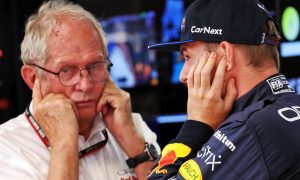
“I think that with Max, we have spoken many, many times since the beginning,” Domenicali insisted.
“So we understand that I understand his comments and he understands the bigger picture. Even today he has been in a meeting where he was very keen to give suggestions.
“So, you know, I don't want to fall into the trap of trying to create an antagonism because that's not me. It’s not the way that we want to see that.
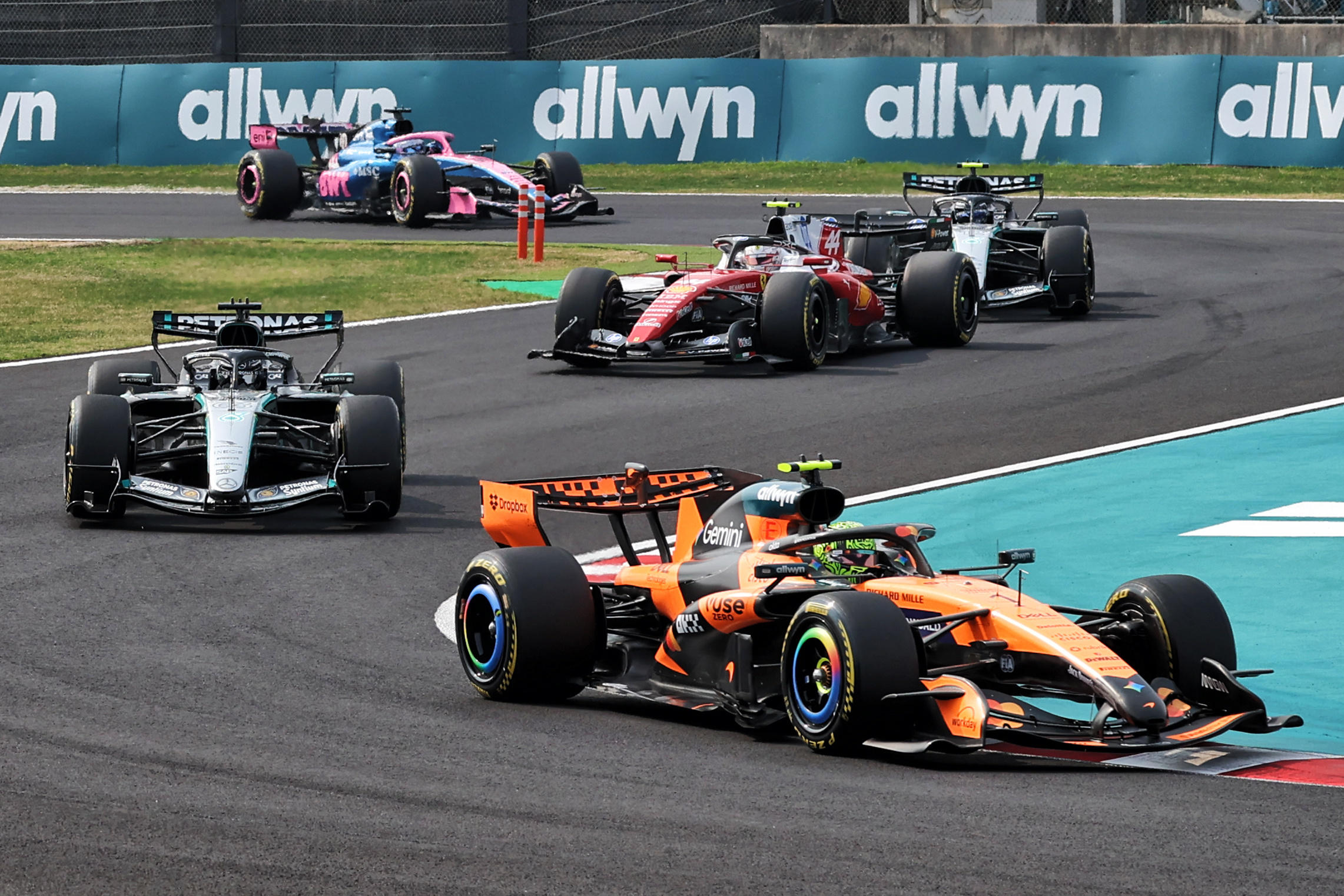
"So we're going to be together. He's the best driver, he's a world champion, multiple world champion, and of course, his voice has to be listened to.
“But of course, he knows that his voice also has a weight. And he needs to respect that weight [because] sometimes some people can take it the wrong way. And this is something that we should not allow to happen.”
Listening without losing control
The balancing act is delicate. Formula 1 must remain open to criticism without appearing reactive; collaborative without surrendering direction.
Domenicali’s stance reflects that tension. He is not shutting down dissent – far from it – but he is framing it within a broader responsibility. Drivers are not just competitors; they are ambassadors of a global product.
Even as speculation grows around Verstappen’s increasing interest in other racing categories, Domenicali brushed aside any suggestion that Formula 1 might lose its appeal.
“I don't know if there is the same way of saying it in UK, but in Italy people believe that the grass of the neighbour is greener,” he pointed out.
“And sometimes when you go on the other side, they say, ’Oh, my God, it's not true’. So respectful of what we have been able to achieve together, but also listening and being very, very open to any kind of remarks that we have done together.
“Without any kind of cap game that everyone is sometimes tempted to do.”
It’s a reminder that while alternative disciplines may tempt, Formula 1 remains a uniquely powerful stage – financially, culturally, and competitively.
Protecting the ‘jewel’ of the sport
For all the noise surrounding the new regulations, the underlying metrics tell a different story. Attendance is strong, television audiences remain robust, and the spectacle – at least from a commercial standpoint – is thriving.
Domenicali himself believes the racing has delivered, even if refinements are needed.
“I think that the racing is very, very good. And the more we talk together, the better it is for the sport. Because they are – and I say this because I'm old but I don't forget what I'm saying – the jewel of our sport,” he said.
“So we need to protect that jewel of our sport, as well as they have to protect the ecosystem which they are in.”
That final point cuts to the heart of the matter. Drivers like Verstappen are central to Formula 1’s appeal – its “jewel,” as Domenicali puts it. But with that status comes responsibility.
The message is not to stay silent. It’s to speak with awareness.
Because in Formula 1’s new era, the battle is no longer just on track. It’s also about shaping the narrative of what the sport is, and what it should become.
Keep up to date with all the F1 news via X and Facebook