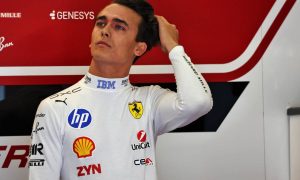


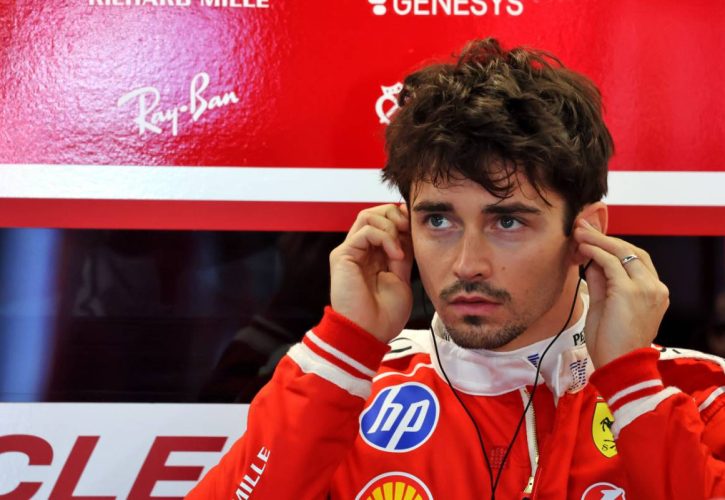


Charles Leclerc qualified fourth for Sunday’s Japanese Grand Prix, but the Ferrari was anything but happy with the result – or rather how it had been achieved and the shortfall it suggested.
The performance triggered after the session a furious outburst from the Monegasque that cut straight to the heart of the sport’s current identity crisis.
For Leclerc, the "pinnacle of motorsport" – and qualifying in particular – has become a glorified exercise in restraint, a system that punishes the daring and neuters the elite.
A battle against the system
The Scuderia charger’s frustration wasn't simmering – it was boiling over. As soon as the checkered flag fell on Q3, Leclerc launched a scathing critique of the current regulations that dictate how hybrid power is deployed.
For the eight-time Grand Prix winner, the cockpit has become a cage of compromises where the throttle is no longer a tool for speed, but a trigger for electronic penalties.
“I honestly cannot stand these rules in qualifying,” he fumed, his voice crackling with indignation. “It’s a fucking joke. I go faster in corners, I do on throttle earlier, fuck’s sake I lose everything in the straight.”
The mechanics of his ire are simple: under the current energy recovery rules, pushing too hard in the twisty bits often leads to "clipping" on the straights, where the battery runs dry and leaves the driver a sitting duck.
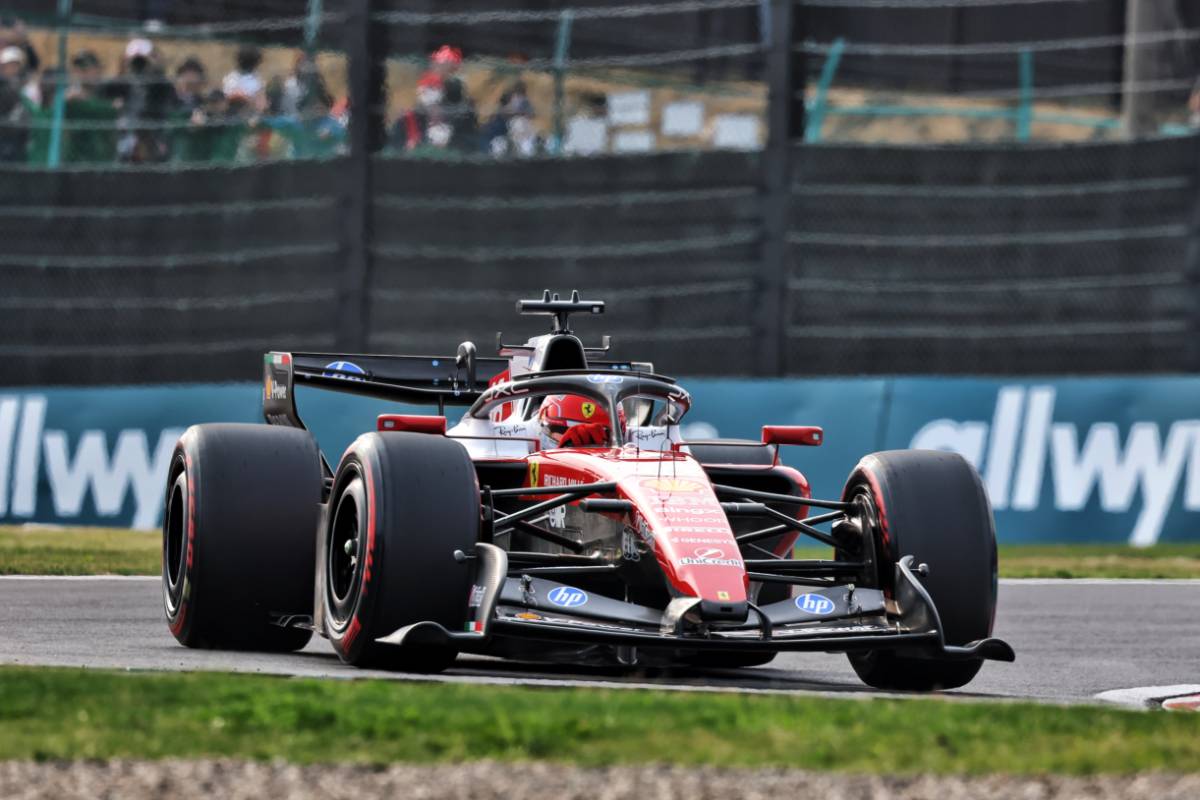
It has turned the art of the qualifying lap into a mathematical tightrope walk rather than a flat-out sprint.
“It’s very frustrating because coming [into] Q3 – at least myself and that’s how I approached qualifying since forever – you go into that last lap and you try things that are a little bit above whatever you’ve tried before,” Leclerc explained.
“And when you do that, the system needs to re-optimise everything while you are driving, basically.”
The death of the limit-pushers
Leclerc’s argument strikes at the heart of the sport’s identity. If a driver finds an extra tenth of a second by dancing on the edge of a snap-oversteer, the current software-driven regulations effectively claw that time back by starving the engine of electrical boost on the next straight.
It is a feedback loop that rewards the conservative and "destroys" the aggressive.
“So, for some reason, whenever I get to Q3, I start losing time in the straights," he lamented. "So I make time in corners, I lose time in straights, and this is very frustrating because you never really put a lap together because you’re always compromising one thing for another.”
The Ferrari driver didn't stop at his own garage, suggesting that the entire grid is suffering under a regime that prioritizes battery health over driver heroics.
“I think for everybody, going into Q3 is just not the nicest feeling,” he added. “Because we want to be at the limit of those cars and whenever you play with those limits, not only you pay the price of a small snap, but you also pay triple the price in the straight.”
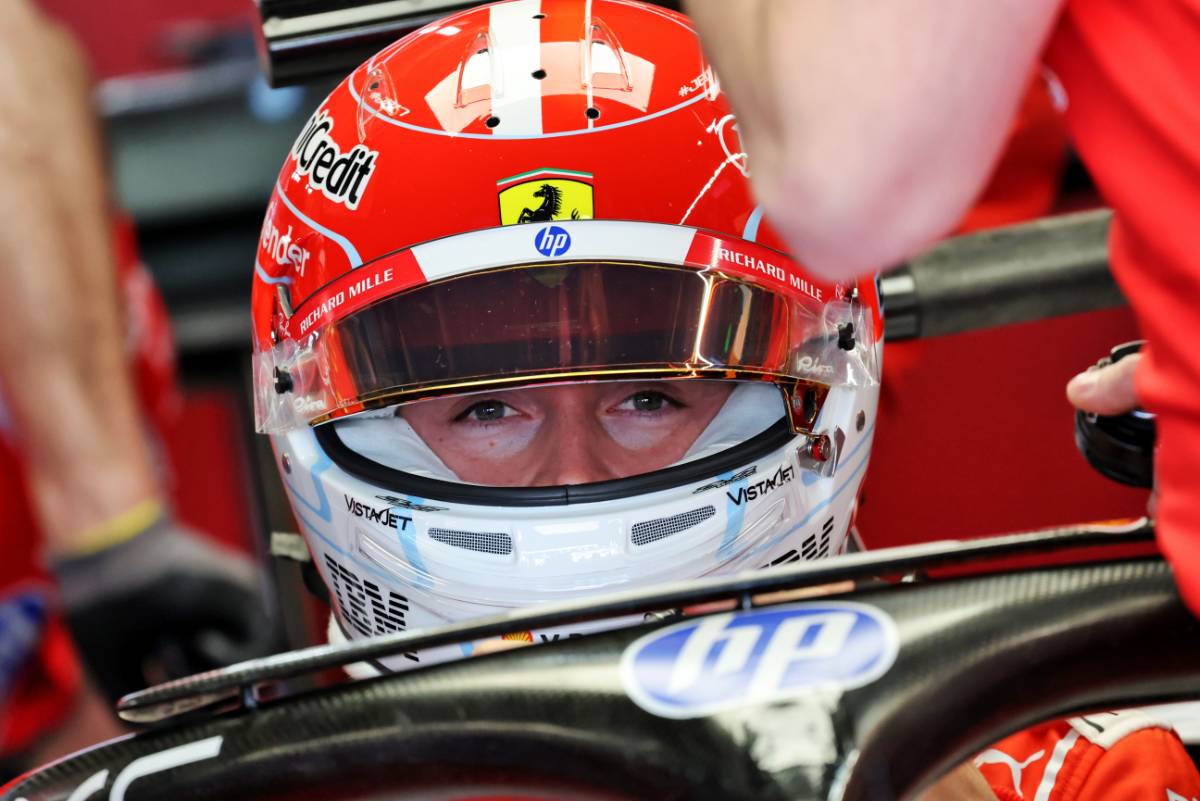
For a driver whose career was built on "sending it" in the final moments of qualifying, the current technical landscape feels like a betrayal of the sport's DNA.
“This is very frustrating because qualifying is all about us trying to find the limit and to play with the limits, and at the moment whenever you play with the limit you get destroyed in the straights," he continued.
"So you’ve got to stay right underneath it, which is an art in itself, and all the good drivers need to make the difference anyway, but I think it’s less rewarding for the drivers that like to really push over it. Most of the time in Q3 that’s paid off, but not with these cars.”
While Leclerc acknowledged that the struggle is universal, he hinted that Ferrari might be bringing a knife to a gunfight in the energy-management war.
“I feel for some reasons that we are a little more exposed to that compared to maybe the Mercedes engine which is something that we need to look at,” he said.
Despite his rage at the machinery, Leclerc remained defiant regarding his own performance. He refused to let the technical constraints overshadow a lap he felt was otherwise stellar.
“It’s a little bit frustrating, but it’s the way it is for everybody," he concluded. "I also know that the FIA is obviously trying to understand what are the things we can do to fix those issues going forward, because it’s still something that everybody has.
“Apart from that, I was actually very happy with my lap. I had a moment in turn eight but actually this didn’t have any implications in whatever I have had later on, like engine, power unit-wise, it didn’t have an influence.”
Leclerc starts fourth tomorrow, but his words have ensured that the focus isn't on where he sits on the grid, but on the broken system he’s being forced to drive in.
Keep up to date with all the F1 news via X and Facebook