

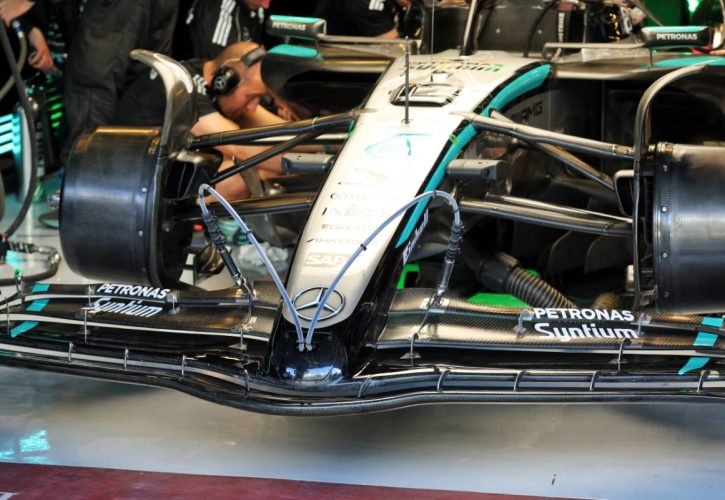


Mercedes wasted little time peeling back the curtain on Formula 1’s next era, rolling out a striking prototype front wing during Tuesday’s post-season test in Abu Dhabi.
While all 10 teams turned laps at the Yas Marina Circuit to evaluate Pirelli’s developing 2026 tyres, it was the Silver Arrows who quietly stole attention by venturing further into the future than anyone expected.
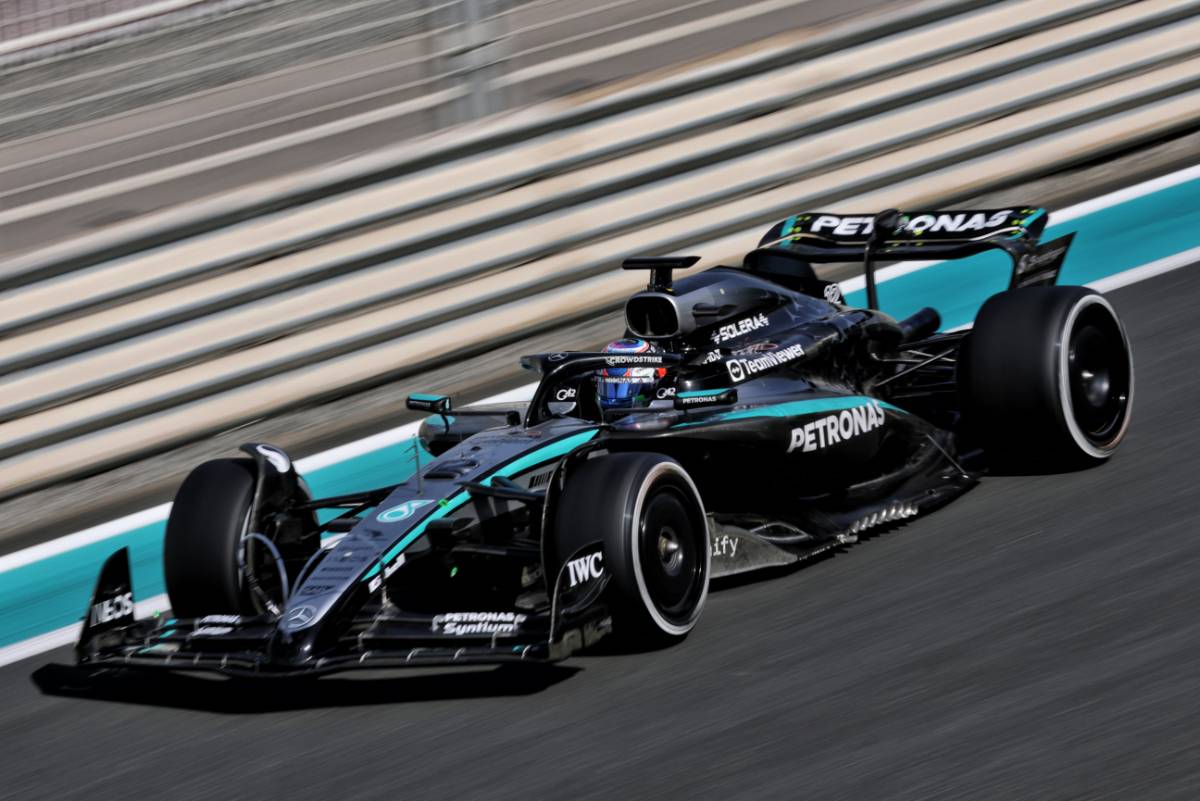
The team’s modified W16 mule car – driven by Kimi Antonelli – carried the most conspicuous clue yet of what Formula 1’s seismic 2026 aerodynamic shift may look like.
A First Look at Active Aero’s Future
To give Pirelli data that better reflects the lower-downforce philosophy coming next season, teams ran 2025 chassis trimmed to mimic the performance levels expected under the next rulebook. That meant Italian GP-style downforce, altered ride heights, and even new-spec rims.
But the FIA added an intriguing wrinkle: teams were permitted to test certain prototype components, including front wings. And with DRS set to disappear in 2026 – replaced by fully active aerodynamics –those wings will become movable for the first time.
Mercedes embraced the opportunity with unusual boldness. Their mule car featured a rudimentary “Straight Line Mode” mechanism, allowing the front wing to flatten on the straights and slash drag.
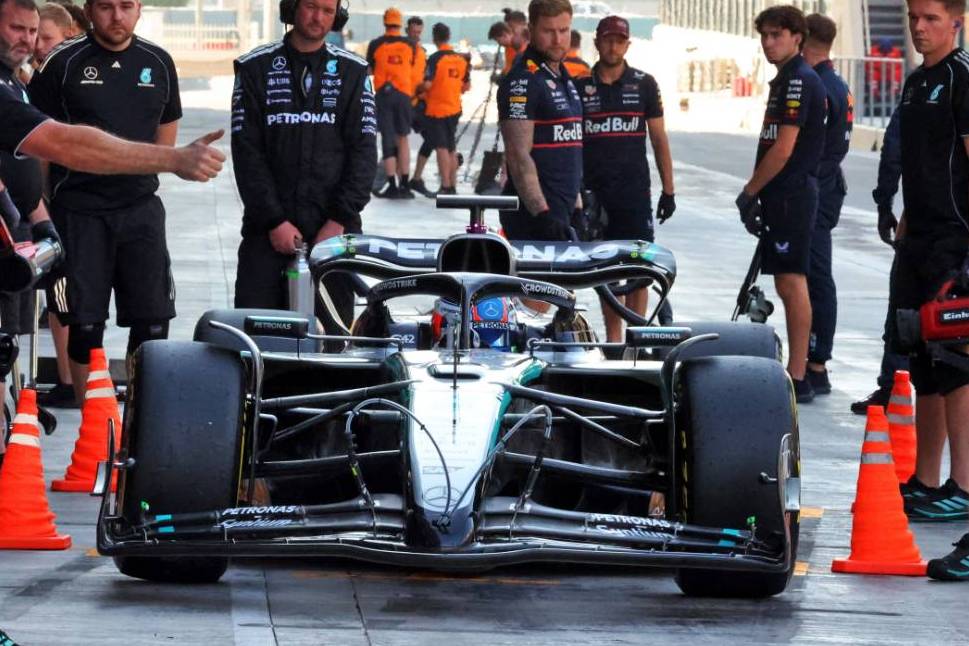
The system, with its exposed tubing linking the nose to the upper elements, is far from the sleek final product expected in 2026 – but it marks the sport’s first publicly seen step toward active front aero.
Ferrari, having trialled its own early concept during a private test, also brought a prototype to Abu Dhabi. The comparison between cars running with and without such systems is proving extremely valuable to Pirelli as it refines the next-generation tyres.
Pirelli: ‘Really useful to compare’
Pirelli’s Head of Motorsport, Mario Isola, welcomed the FIA’s decision to allow the technology to be tested in the wild.
“Talking about the front Straight Line Mode, the FIA gave the opportunity to the teams to develop a system that was replicating this on the front wing. In that case, obviously, they don't have to comply with the speed limit restriction,” Isola explained, referring to the roughly 300 km/h straight-line cap imposed on mule cars to protect the tyres.
He added that being able to evaluate the behaviour of cars with and without the new mechanism has already helped accelerate tyre development.
“It's also useful for us because you can compare a car that is running without the system with a car that is running with the system.
“When we did the first test with Ferrari with the system, it was really useful to understand and to compare this test with all the other tests, in terms of load and what we achieved, to understand and to make the other tests more representative.”
While the active aero on display at Mercedes is primitive, Tuesday’s experiment offered the clearest indication yet of how dramatically different Formula 1’s cars will look – and behave – in 2026.
For the Brackley squad, the test was an early chance to understand how the complex systems might integrate into their future designs. But for Pirelli, it provided a rare window into how tyres respond to shifting aerodynamic loads.
For the rest of the paddock, it served as a subtle reminder: the race for 2026 has already begun, and Mercedes may have just taken the first real step into the next era.
Keep up to date with all the F1 news via X and Facebook