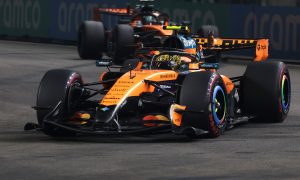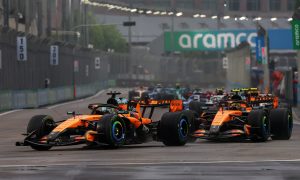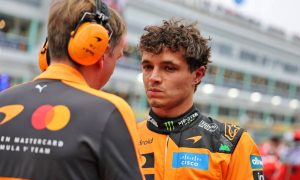


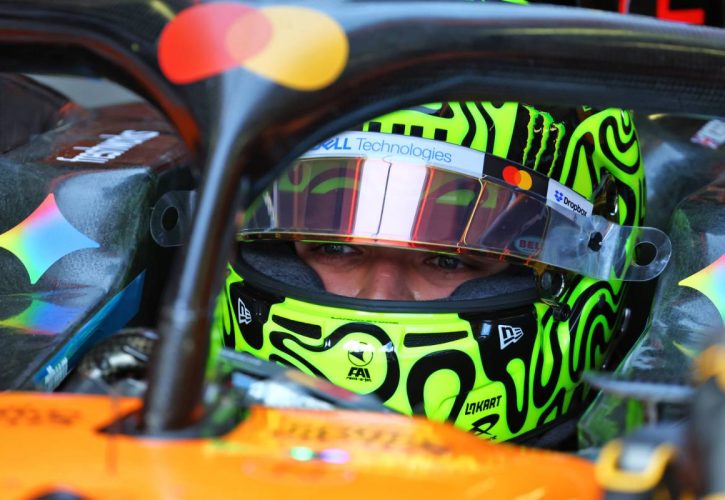


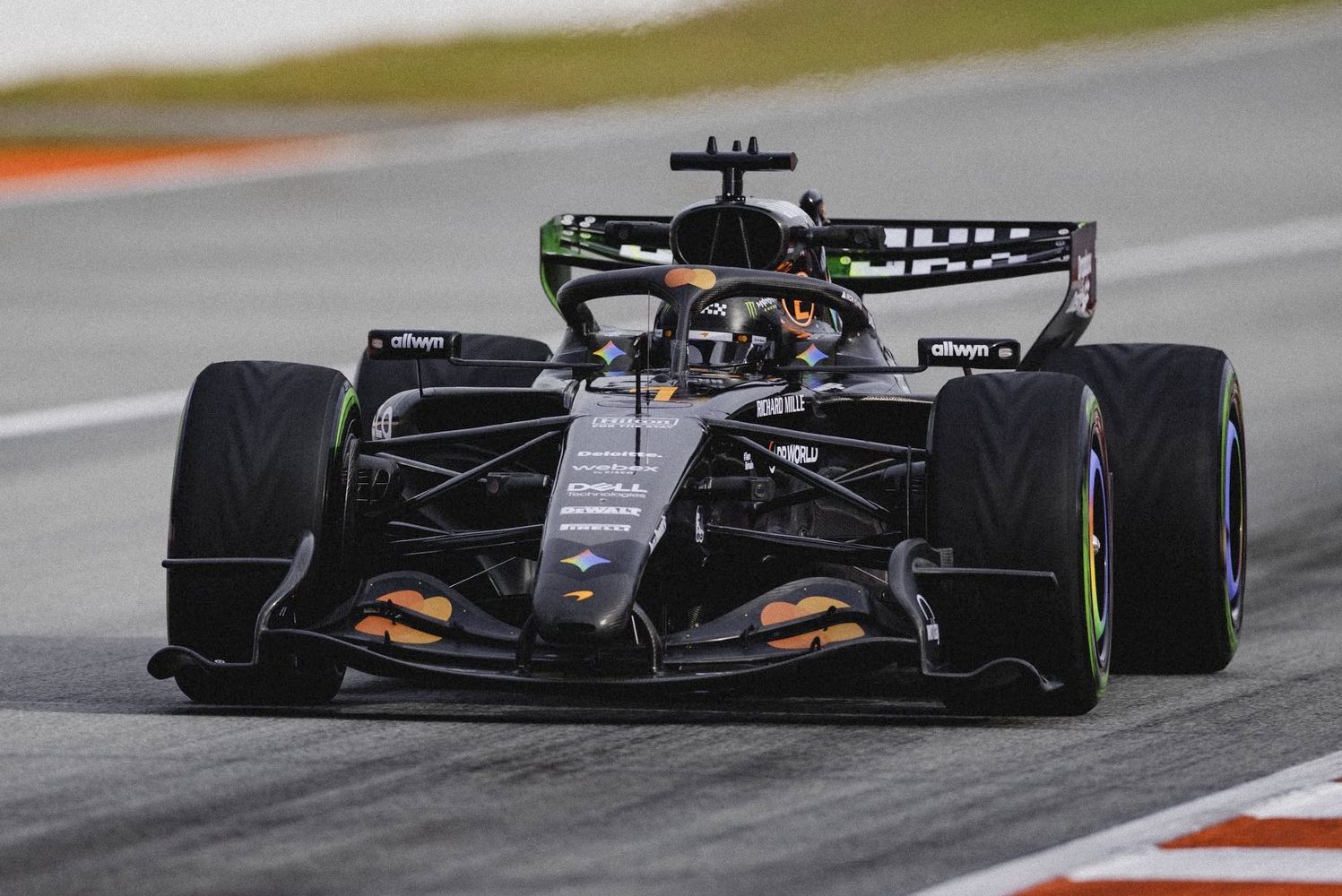
After sampling the 2026 machinery during last week’s Barcelona shakedown, Lando Norris is left with a clear impression: fans might want to buckle up for racing that feels less scripted and a lot more “chaotic” in 2026.
With slimmer, lighter cars, a near-equal split between electric and combustion power, active aerodynamics, and the abolition of DRS in favor of a push-button Boost Mode, F1 is attempting its boldest reset in years.
The promise is closer, cleaner, more strategic racing. The risk, according to Norris, is something far less predictable.
A Button That Could Blow the Field Wide Open
At the center of the McLaren driver’s contention is the new Overtake – or Boost – Mode, a system that allows drivers to unleash maximum power at will, provided they have enough battery energy stored.
Unlike DRS, which was confined to designated zones, this new weapon can be deployed almost anywhere, turning straight lines into potential ambush points.
Norris believes that freedom could be both electrifying and destabilizing.
“You can have almost more chaotic racing, depending on when people use the boost button,” he explained.
“Because there's a lot of straights and places, say even in Barcelona, where you don't really deploy the battery that much – say between Turn 5 to Turn 7.
“But if you use boost, you gain a good amount of horsepower and you can overtake someone into Turn 7, which you'd never normally see before.
“The only thing is then you're screwed down to Turn 10. But you'll be able to force people more in different positions and create racing potentially in better ways than you have been able to in the past. And I think that's probably a better thing, a good thing.”
In other words, the new system could turn once-predictable sections of track into surprise passing hotspots – but with consequences.
Use too much energy at the wrong moment and a driver could find themselves vulnerable just corners later, turning tactical bravery into strategic self-sabotage.
The Rise of the ‘Yo-Yo’ Duel
That vulnerability is precisely what worries Norris. Boost Mode isn’t just an attacking tool; it’s a defensive shield, too. Drivers can deploy it to hold position as easily as they can to snatch one.
The catch? Battery reserves are finite, and recovery takes time. That delicate balance, Norris predicts, could create a constant back-and-forth rhythm rarely seen in modern F1.
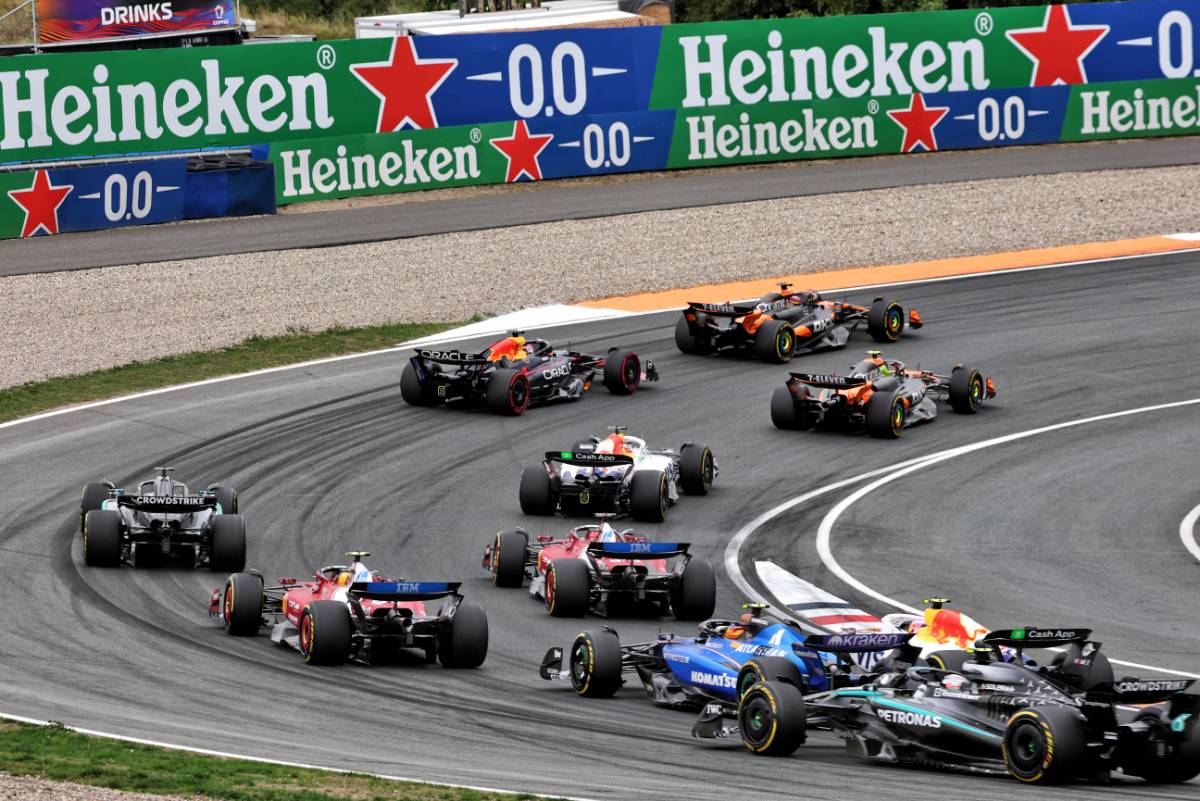
“You're going to see potentially someone overtake, and maybe not even because they're much quicker, but just be able to overtake,” he said. “But then [they] have a consequence of a lap or two trying to recover the battery in the correct way.
"As soon as you get overtaken and you're behind that car, that's crucial because you'll be able to get five, 10km/h more on a straight, which is almost like what DRS was in some ways.
“So yeah, you'll see more yo-yoing, more moves with extra speed, but then that person might have to defend more than what you've seen in the past, and that will create more chaos, which is great for you guys.”
For fans, that “yo-yoing” could mean relentless action – overtakes followed by counter-attacks, momentum swings, and duels that stretch across multiple laps instead of ending in a single decisive move.
For drivers and engineers, however, it introduces a new layer of energy management chess played at 300 km/h.
Experimentation Before the Real Fireworks
The Barcelona outing offered only a teaser, a controlled glimpse rather than a full-blooded fight.
The real laboratory will be Bahrain’s upcoming test sessions, where teams are expected to push the new systems harder, probing the limits of battery deployment strategies and aerodynamic tricks.
Only when the lights go out in Australia for the season opener will the true character of this regulation overhaul reveal itself. Will it deliver the tight, tactical spectacle the rulemakers envisioned – or the glorious disorder Norris hints at?
Either way, Formula 1’s future is shaping up to be louder, faster, and potentially far less orderly than anyone anticipated. Chaos, it seems, might just be the new competitive advantage.
Keep up to date with all the F1 news via X and Facebook