




Formula 1’s 2026 regulations have sent designers scrambling to rethink every centimeter of the car, and McLaren chief designer Rob Marshall has been front and center in tackling the challenges for the team’s MCL40.
At the team’s Bahrain launch on Monday, Marshall explained how the radical rule changes – smaller, lighter cars, tougher crash tests, and active aerodynamics – have reshaped the way McLaren thinks about design.
“The car is so much shorter,” Marshall said. “So, a lot of the packaging for radiators and electrical boxes, which were typically scattered around the car - finding homes for those has been very difficult. There's just less space to put them all. What's helped us out is the fuel tank is a bit smaller.”
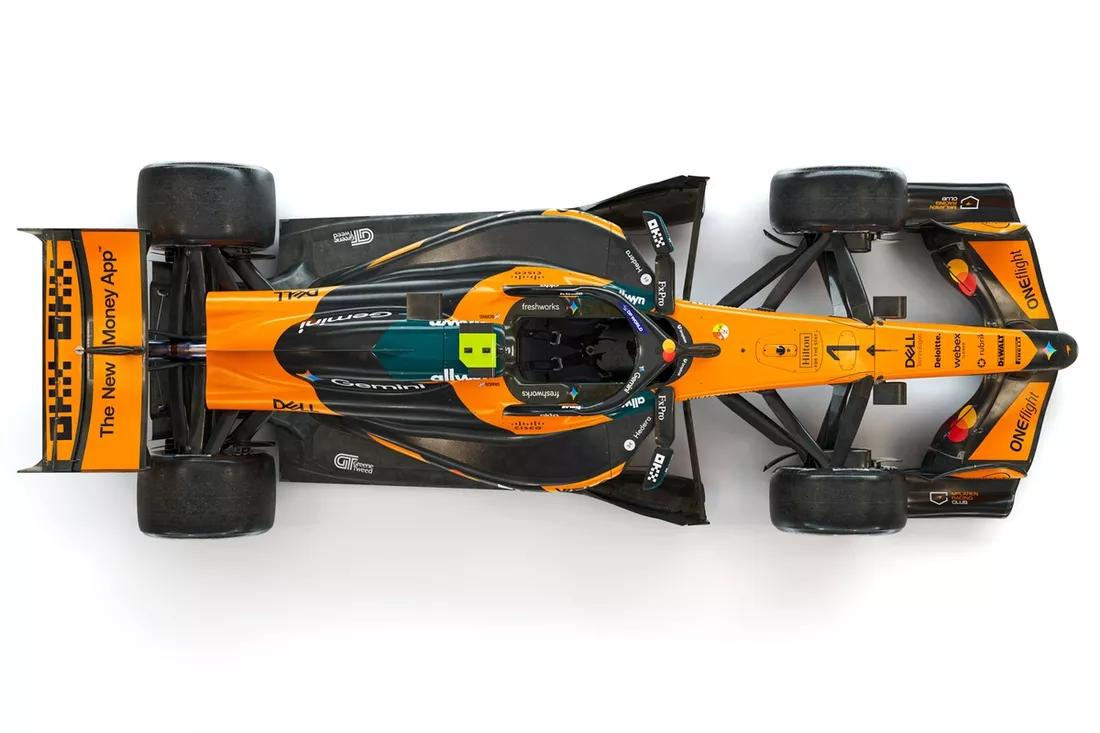
Indeed, the MCL40 reflects a generation of cars that are 200mm shorter in wheelbase and 100mm narrower, with a minimum weight reduced to 768kg. The tighter packaging is meant to make the cars nimbler and less turbulent, but as Marshall points out, the consequences for designers are far from trivial.
Safety Gets 'Brutal'
Beyond tighter dimensions, 2026 has also ushered in far stricter safety rules. Marshall highlighted the radically revised frontal crash structure, designed to protect drivers even after an initial impact.
“The crash structure is basically all new again,” he said. “The regulations have changed this year where we need to make sure that after a small shunt that's enough to knock the front wing off - maybe the front half of the nose - the remaining part still serves its function as saving the driver in a secondary crash against another barrier.
©McLaren
“So that's significantly complicated to the design work going into the nose.
“As we go rearward, we've got the main body of the chassis. Again, all new regulations, much tougher homologation requirements, so the crash tests and the squeezes that go into the chassis are quite brutal this year. A lot of effort and research has gone into trying to make the car able to withstand those.”
The result is a car that not only looks futuristic but is also engineered to survive multiple layers of impact – a task that has taxed even McLaren’s seasoned design team.
Active Aero and a New Front Wing Philosophy
The 2026 rules have also opened the door for active aerodynamic solutions, giving teams freedom to experiment with movable front and rear wing components. Marshall highlighted how McLaren has approached the challenge.
“The new front wing is still sort of arrowhead like the previous generation, but it's a bit lower and has a much broader and wider footplate,” he explained. “The front wing is now actuated much like the old DRS.

©McLaren
“These new cars have got a straight-line mode where both the front and rear wings will move their flaps to reduce the drag on the car and help the car get down the straights faster.
“There's quite a lot of freedom on how you actuate that. I think we'll see different solutions from different cars on the grid.
“The rear wing is similar-ish to last year's. The actuation mechanism is a bit like old-school DRS, but it's now mounted on two pylons. It will now operate in conjunction with the front wing.”
Read also:
Papaya reloaded: McLaren reveals livery for new-era MCL40
Keep up to date with all the F1 news via X and Facebook