

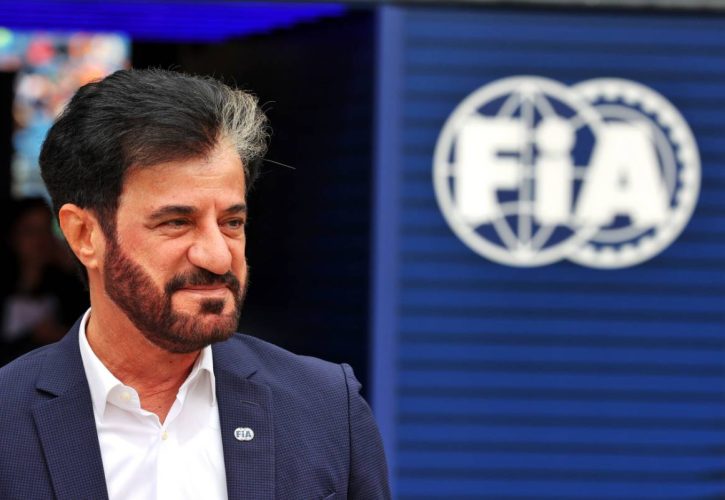


In a move that could radically reshape the future of Formula 1, FIA president Mohammed Ben Sulayem has boldly declared that a return to V8 engines is not just a hopeful ambition – but an inevitable reality.
Speaking earlier this month at Silverstone ahead of the British Grand Prix, Ben Sulayem surprised many in the paddock by doubling down on plans to revive naturally aspirated V8s in the sport, potentially as soon as 2029, despite previous opposition from key engine manufacturers – including newcomer Audi – invested in F1’s hybrid-electric direction.
Formula 1 is gearing up for a major shift in 2026, with the current V6 hybrid engines transitioning to a more balanced split between internal combustion and electric power.
This decision was cemented after an emergency meeting at the Bahrain Grand Prix last April, spurred by rumors of a potential return to V10 engines, an idea also promoted by Ben Sulayem.
Formula 1’s manufacturers – Mercedes, Ferrari, Honda, Audi and Red Bull Powertrains – are all banking on electrification as the path forward, making Ben Sulayem’s renewed push for V8s all the more unexpected.
“To us, the V8 is happening,” Ben Sulayem stated firmly. “With the teams now, I’m very optimistic, happy about it. FOM [Formula 1 Management] are supporting, the teams are realising it is the right way.”
Be Sulayem’s comments suggest a growing alignment among stakeholders, despite earlier resistance – and no public comments from any of F1’s OEMs supporting the FIA president’s claim – as he envisions a return to the simpler, more visceral engines that defined F1’s past.
Cost, Relevance, and a Tight Timeline
Ben Sulayem didn’t shy away from addressing the challenges of this ambitious plan, particularly the financial implications amid rising fuel costs. He acknowledged that a hybrid element might still be necessary but stressed the need for urgency.
“We need to do it soon. You need three years, so hopefully by 2029 we have something there, but the fuel is also very expensive, and we have to be very careful with that. Transmissions are very expensive,” he said.
“The current engine is so complicated, you have no idea, and it is costly. R&D is reaching $200 million, and the engine is costing approximately $1.8 million to $2.1 million, so if we go with a straight V8, let’s see.”
©Mercedes
The FIA president argued that V8s make sense both economically and commercially, pointing out their relevance to road cars.
“Many of the manufacturers produce V8s in their cars, so commercially it’s correct,” he said. “How much is it? The target is more than 50 percent [cheaper] in everything.”
This cost-cutting ambition could ease the financial burden on teams and make the sport more sustainable, a key consideration as F1 navigates its future.
A Broader Vision for F1’s Future
Ben Sulayem’s comments weren’t limited to engines. He also hinted at expanding the grid, expressing openness to a 12th entrant despite resistance from existing teams.
With Cadillac set to join in 2026 after a contentious approval process for the TWG Group (originally Andretti), Ben Sulayem emphasized a cautious but progressive approach.
“The time will come when we feel it is right to open an expression of interest,” he said.
“We are not here to upset other teams. It won’t be just go and do it for the sake of doing it. It has to be worth it for us. The team has to add value to sustaining the business of Formula 1.”
As Formula 1 stands at a crossroads, Ben Sulayem’s vision for V8 engines and a potentially expanded grid has sparked intrigue and debate.
Will the sport embrace the thunderous return of V8s by 2029, or will manufacturer pushback derail the plan? For now, the FIA president’s bold stance has set the stage for a high-stakes battle over F1’s technological and commercial future.
Keep up to date with all the F1 news via X and Facebook