

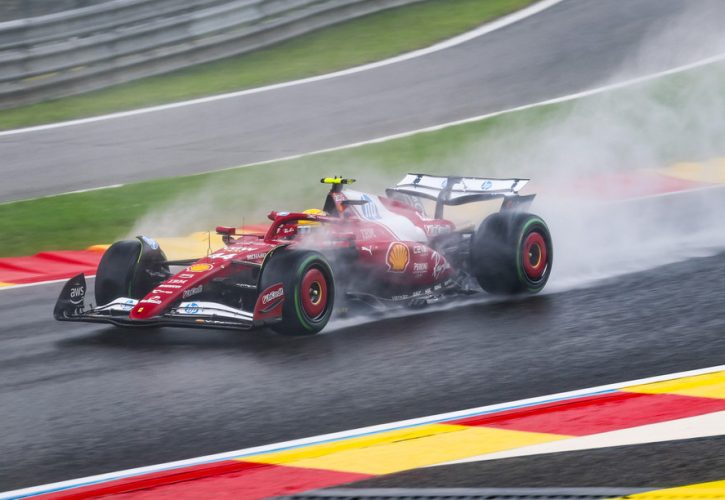


Last weekend’s Belgian Grand Prix at Spa-Francorchamps left Sky F1 commentator Martin Brundle – as well as many others in the paddock – with a pressing question: will Formula 1 fans ever again witness a “classic rainy” race?
The majestic Ardennes circuit, known for its unpredictable weather, saw a lengthy delay to proceedings due to heavy rain followed by multiple laps behind the Safety Car, sparking a fiery debate among drivers, commentators and fans alike about whether Race Control’s caution had gone too far.
Brundle’s reflections, paired with strong views on the topic from the likes of Max Verstappen and Lewis Hamilton, have reignited discussions about the balance between safety and the thrill of wet-weather racing.
“Will we ever have a classic rainy race again?”
In his post-race Sky Sports F1 column, Brundle expressed the growing concerns of many, noting that the prolonged caution “significantly dried” the track, altering race strategies.
“Like many drivers and commentators, and especially fans, Max was very unhappy that once again race control delayed and slowed proceedings until the point where the track was significantly drying,” he wrote.
“Those who had chosen a wet wing level because of the forecast of guaranteed rain on Sunday felt unfairly disadvantaged.”
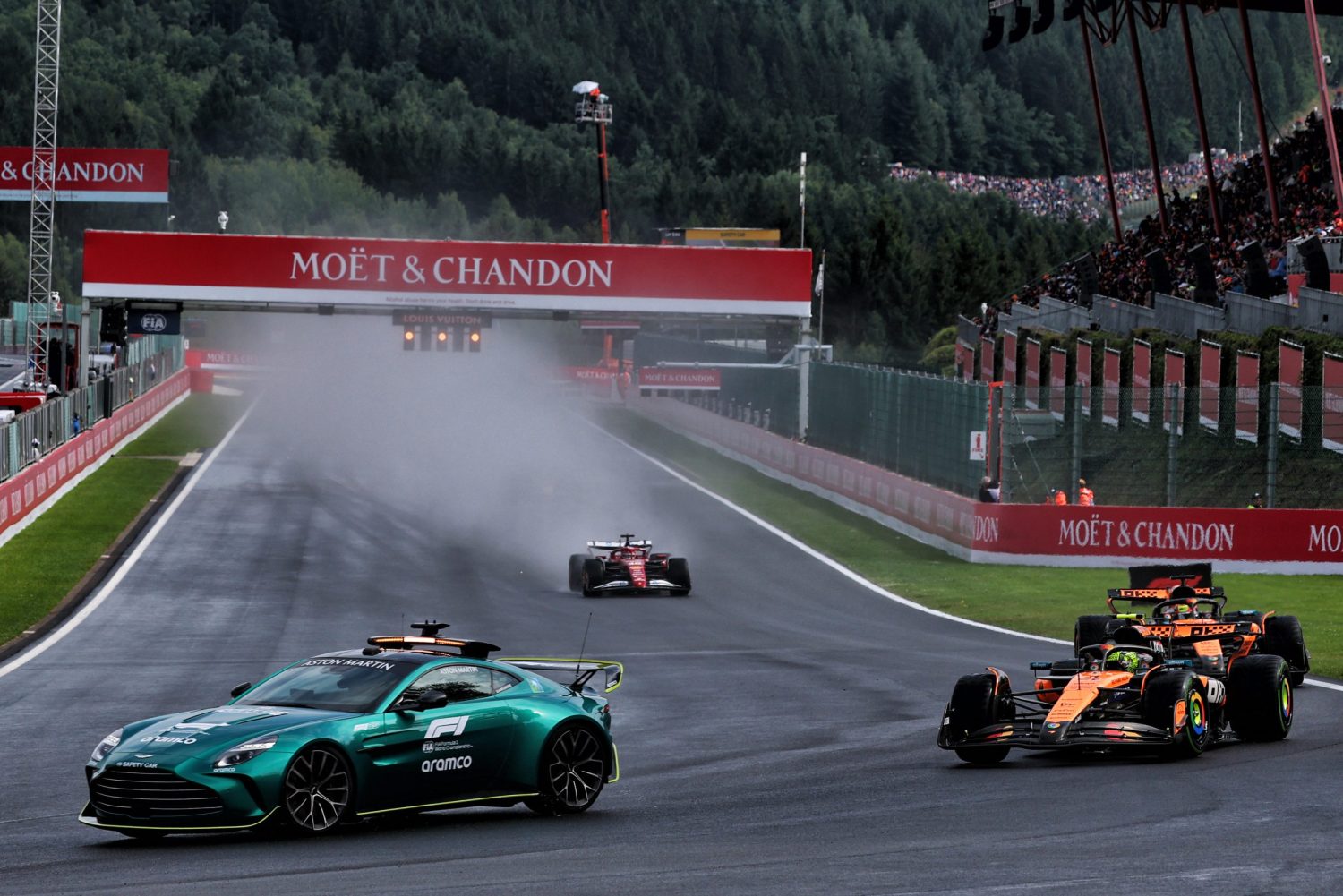
Brundle highlighted a key irony in today’s race management philosophy – the near-total redundancy of the full wet tyre.
“Pretty much everyone on the planet who watches F1 was very reasonably asking why we bother to have full wet tyres anymore, because extreme caution over visibility means they will hardly ever be used,” he said.
His central question inevitably struck a nostalgic chord for fans of classic wet-weather battles.
“Furthermore, will we ever have a classic rainy F1 race again?”
Brundle urged the sport to clarify whether recent over-cautious trends stem from internal FIA directives or simply a change in attitude from race officials.
“We must get to the bottom of this and understand if there are any recent internal FIA mandates on this subject, or whether race control is simply being too cautious of its own volition,” he said.
“There are inherent risks in being a racing driver, and we can’t simply edit those out by only effectively racing in the dry.
“It’s up to the driver to manage the cars and risks in all reasonable conditions, but the reference point of what’s reasonable has moved to extremely risk-averse.”
Keep up to date with all the F1 news via X and Facebook