


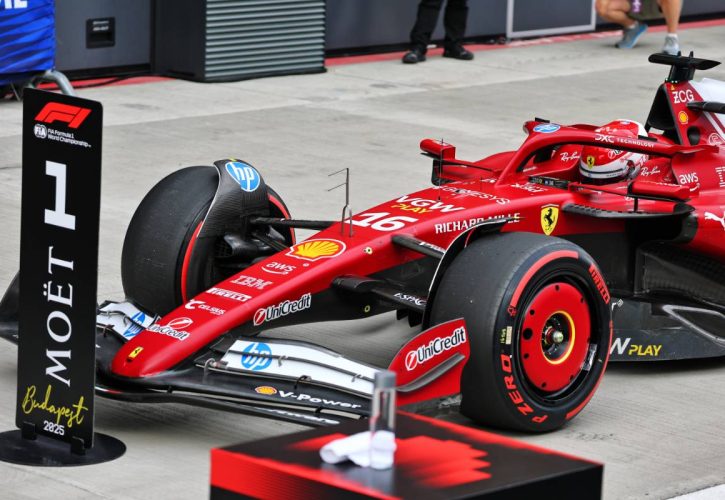


As Formula 1 barrels toward its radical 2026 regulations, Ferrari team principal Fred Vasseur has dropped a tantalizing hint: the new rules could unleash a season of chaos, with engine performance taking center stage and a potential chassis loophole opening the door to a Brawn GP-style fairytale story.
Next year will see F1 roll out a bold new blueprint, featuring a 50-50 V6 hybrid engine with increased electrification, active aerodynamics, and a host of sporting regulation tweaks.
It’s a recipe for unpredictability, and Vasseur isn’t ruling out a repeat of 2009, when Brawn GP rose from the ashes of Honda’s defunct team to dominate with both titles.
“Nobody can predict,” he told The Race. “I think nobody predicted in 2009 that you will have Brawn four tenths faster than everybody. They were coming from nowhere.
“You don’t know also, because it’s the first time that we have had such a big change of tyres, fuel, engine, chassis.
“The sporting regulations are different with the energy deployment and so on, and all of them are crucial.”
Engines Take Center Stage
The 2026 power units will feature a 50-50 split between combustion and electric power, with drivers forced to manage energy deployment every lap. That, Vasseur says, makes the engine’s characteristics more important than ever.
“If you have a look today, when you speak about the engine, 90% of the performance is about just pure power,” he explained.

“Next year, I think much more will be about driveability, turbo lag and so on. It means that perhaps the guy who will have the most powerful engine will have also the best for driveability and the best for turbo lag and so on, but perhaps not.
“Perhaps it’s the kind of season where you could have one engine performing [best] in Monza, and some other engine performing in Monaco or Budapest.
“It’s back to the turbo and [normally] aspirated engine era. This, I think, for F1 is exciting.”
Chassis Loopholes on the Horizon?
Engines won’t be the only factor. Vasseur believes F1’s notoriously clever engineers could once again find a design exploit, just as Brawn did with its infamous double diffuser back in the day.
“When we are speaking about the engine, it’s much more about reliability, and trying to do a good usage of the engine, good operation and so on,” he said.
“But you don’t make the difference with the engine anymore. Next year, it’s another story.
“If someone is doing a better job on the tyres, the impact on the performance, even if it’s half a second, you won’t compensate just with the power of the engine [currently].
“So there will be some similarities with what we are doing today, except that you will put the engine into the equation.
“You could have also some loophole on the chassis side, as we had the double diffuser or whatever – which could open up some opportunities.”
Ferrari’s No-Silver-Bullet Philosophy
Ferrari’s SF-25 has fallen short against McLaren’s dominant MCL39 this season, leaving Vasseur under no illusions about what’s required. He insists success in 2026 won’t come from a single breakthrough, but from grinding improvements everywhere.
“We have to keep the same approach,” he stressed. “McLaren are doing a fantastic job this season, but in terms of potential they are two to two-and-a-half tenths ahead.
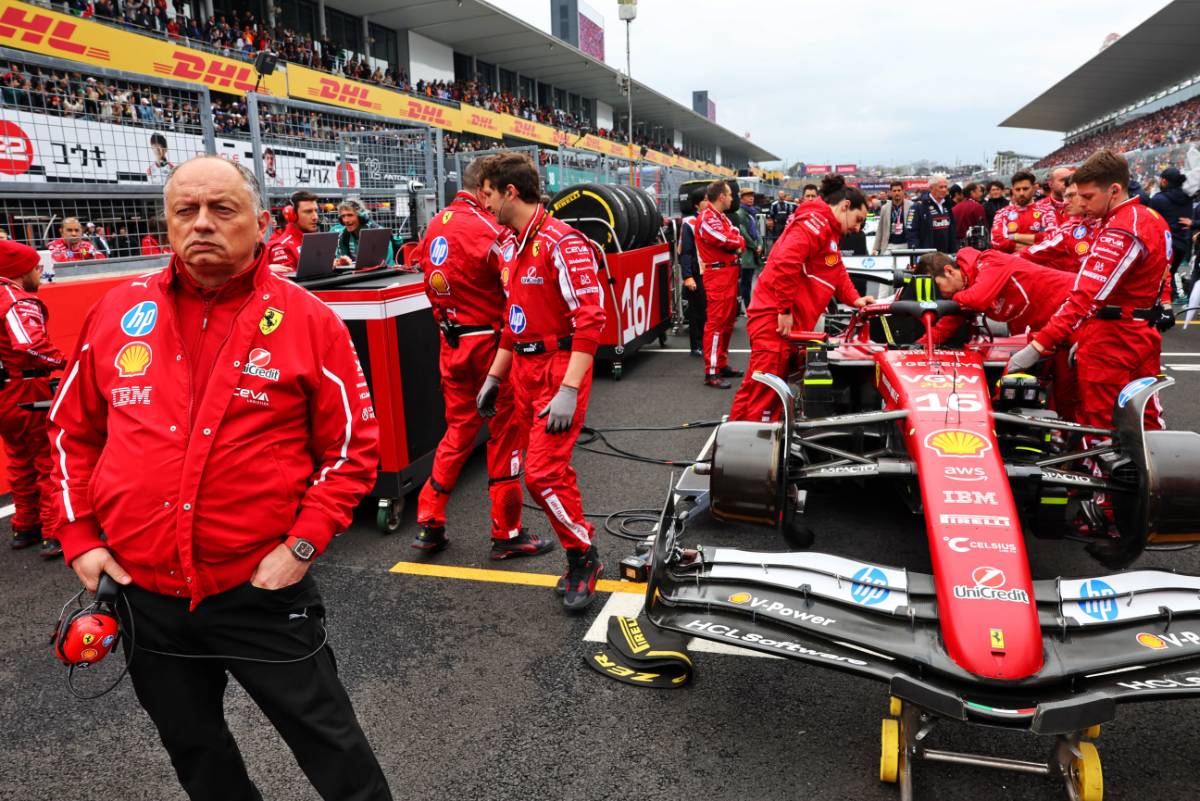
“But it’s more that we have 10 items on the car at two hundredths of a second that we have to improve. It’s not that they have a magic bullet that has three tenths.
“So we need to keep this mindset. It’s not that we have to change someone who will bring us something magic, it is that we need to improve in every single area. I think we have this mentality today.”
And in trademark Vasseur fashion, he added a note of caution against complacency:
“I think that if at one stage I’m convinced that we are there, it’s the beginning of the end.”
Read also: Mekies admits Red Bull 2026 engine gamble ‘as crazy as it gets’
Keep up to date with all the F1 news via X and Facebook