


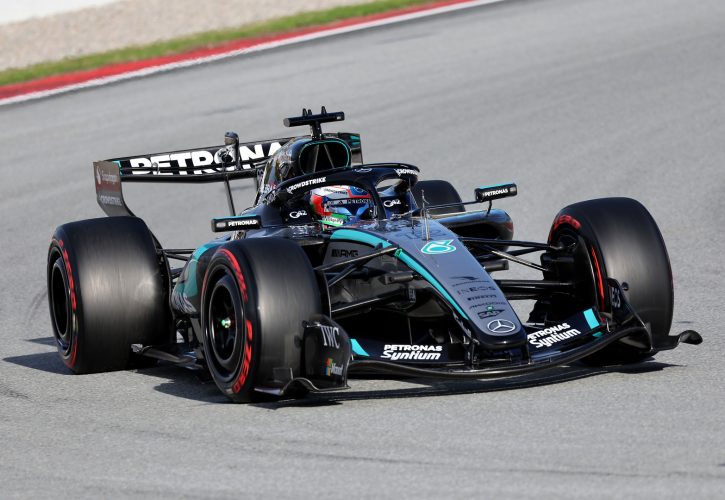


Behind closed doors and in hurried conference calls, Mercedes’ rivals are scrambling to forge a united front over Formula 1’s simmering compression ratio controversy – and they want a resolution before next month’s season-opening Australian Grand Prix.
The mission sounds simple: change how engines are checked. The reality is anything but.
At the heart of the dispute lies a suspicion that Mercedes has discovered a clever interpretation of the regulations governing engine compression ratios – specifically the 16:1 ceiling written into the rulebook.
The current rules stipulate that compliance checks are performed at ambient temperature. But rivals fear that while Mercedes passes those cold inspections, its power unit may operate at a higher ratio once the engine is fully up to temperature on track.
So far, there is no smoking gun. But in Formula 1, perception alone can be combustible.
A Rulebook Under the Microscope
Over recent weeks, discussions among manufacturers have intensified, evolving from murmurs within the F1 community to formal meetings with the FIA.
Technical delegates convened early in the week, followed by a session of the Power Unit Advisory Committee (PUAC) on Thursday+. The expectation in some corners was that these gatherings might yield an immediate shift in procedure.
They did not.
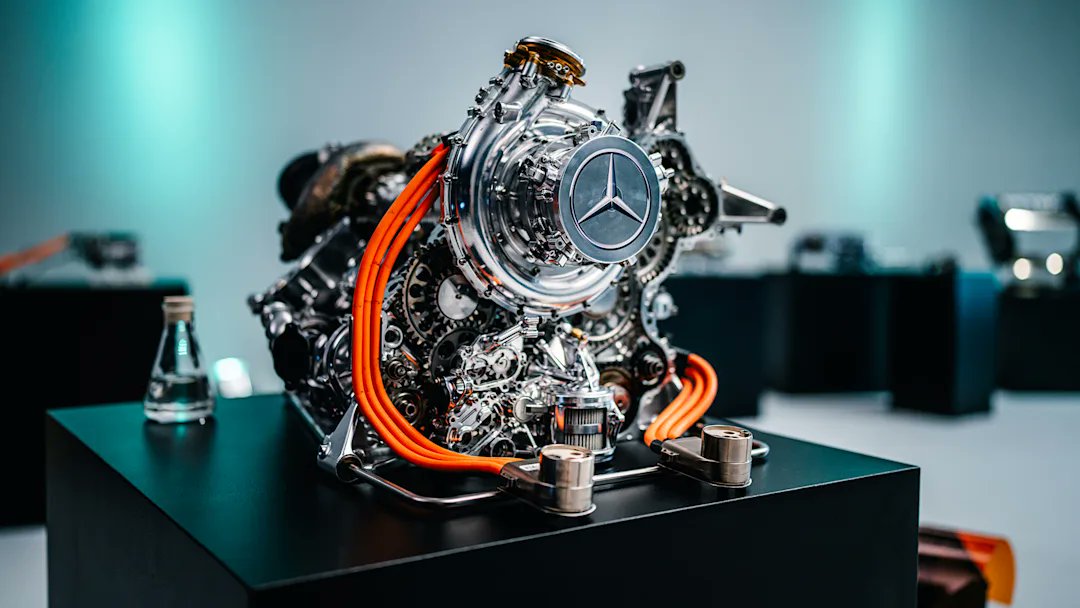
According to a report from The Race, the meetings concluded with the status quo intact: compression ratio checks remain as currently defined – measured in ambient conditions, just as the regulations specify.
Yet rather than dousing the fire, the lack of change appears to have poured fuel on it.
Mercedes’ rivals manufacturers are now working independently of official decisions, attempting to craft a joint proposal that would mandate checks while engines are hot. Their aim is to secure agreement among themselves first, then present a united proposal to the PUAC in hopes of forcing a vote before Melbourne.
The Politics of Power
The stakes are enormous, not just technically but politically. For any immediate amendment to pass, the sport requires a super-majority of engine manufacturers – four out of the current five – alongside the approval of both the FIA and Formula One Management. Historically, the FIA and FOM vote as a bloc, making their stance decisive.
Ferrari, Audi and Honda were the earliest and most vocal critics, even co-authoring a letter to the governing body. Now, crucially, Red Bull is believed to be edging toward their camp. That potential alignment of four manufacturers could, in theory, unlock the voting numbers needed for a swift rule tweak.
Red Bull’s position is particularly intriguing. It was previously understood to have explored the same regulatory interpretation as Mercedes, possibly seeking similar gains. Its apparent pivot suggests either limited success or a strategic desire to close a loophole before a rival exploits it further.
Several technical solutions are on the table. One proposal involves installing sensors to measure compression ratios while cars are running on track.
Another suggests mandatory testing in garages when engines reach operating temperature. Both options would fundamentally alter how compliance is verified – and potentially reshape the competitive order overnight.
Mercedes Stands Firm
Mercedes, for its part, is unmoved. Team principal Toto Wolff has repeatedly emphasized that his outfit is operating squarely within the rules as written and interpreted by the FIA.
“The power unit is legal,” told reporters in Brackley earlier this week. “The power unit corresponds to how the regulations are written, and the power unit corresponds to how the checks are being done.
“The power unit corresponds to how these things are measured in any other vehicle. Everything else [the chances of a protest] I can't judge upon.
©Alpine
“That’s how we see the world today, and that’s what the FIA said. That’s what the president of the FIA said, and he knows a bit about that. In that respect, let’s wait and see. But we feel robust.”
Wolff’s confidence is rooted in more than rhetoric. The 2026 power unit rules were amended last October to explicitly underline that measurements are taken at ambient temperature – a clarification many interpreted as cementing Mercedes’ position.
Any sudden reversal by the FIA now would be both politically awkward and technically disruptive. On Friday, reports on social media suggested that Mercedes would take legal action against the governing body should it change F1’s engine rules. But the rumor is considered wide of the mark.
Timing Is Everything
Complicating matters further is the looming deadline of March 1, when final homologation of power units locks designs into place. After that date, meaningful changes become virtually impossible. Even if a new measurement protocol were approved, manufacturers would have no time to redesign hardware to comply.
That reality makes a pre-Australia rule shift unlikely, despite the urgency of the opposition’s efforts. The more plausible scenario is a longer-term adjustment, potentially from 2027 onward – a solution that would cool tempers without detonating the 2026 competitive balance before a wheel has turned in anger.

©Mercedes
Wolff, however, has little patience for the distraction.
“I just don’t understand that some teams concentrate more on the others and keep arguing a case that is very clear and transparent,” he said.
“Communication with the FIA was very positive all along. And it’s not only on compression ratio, but on other things too.
“Specifically in that area, it’s very clear what the regulations say. It’s very clear what the standard procedures are on any motors, even outside of F1.”
For now, the engines remain legal, the rules unchanged, and the paddock restless. Melbourne looms not just as the start of a new season, but as a potential flashpoint in a technical war that could define the era before the first lights even go out.
Read also:
Wolff calls out Mercedes engine rivals: ‘Get your sh*it together!’
Keep up to date with all the F1 news via X and Facebook