

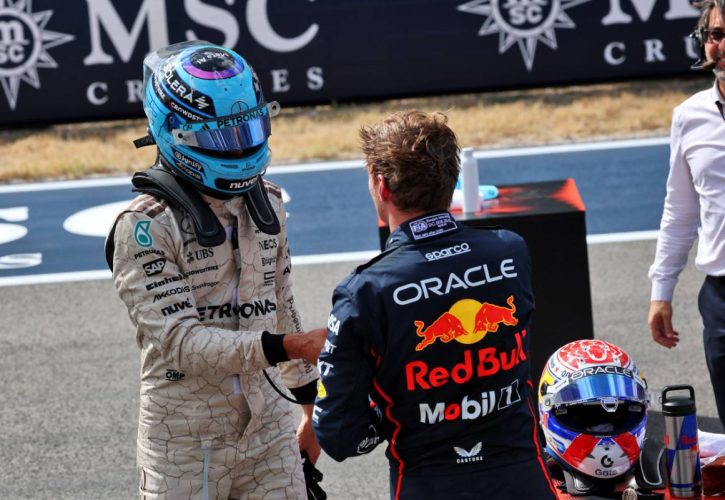


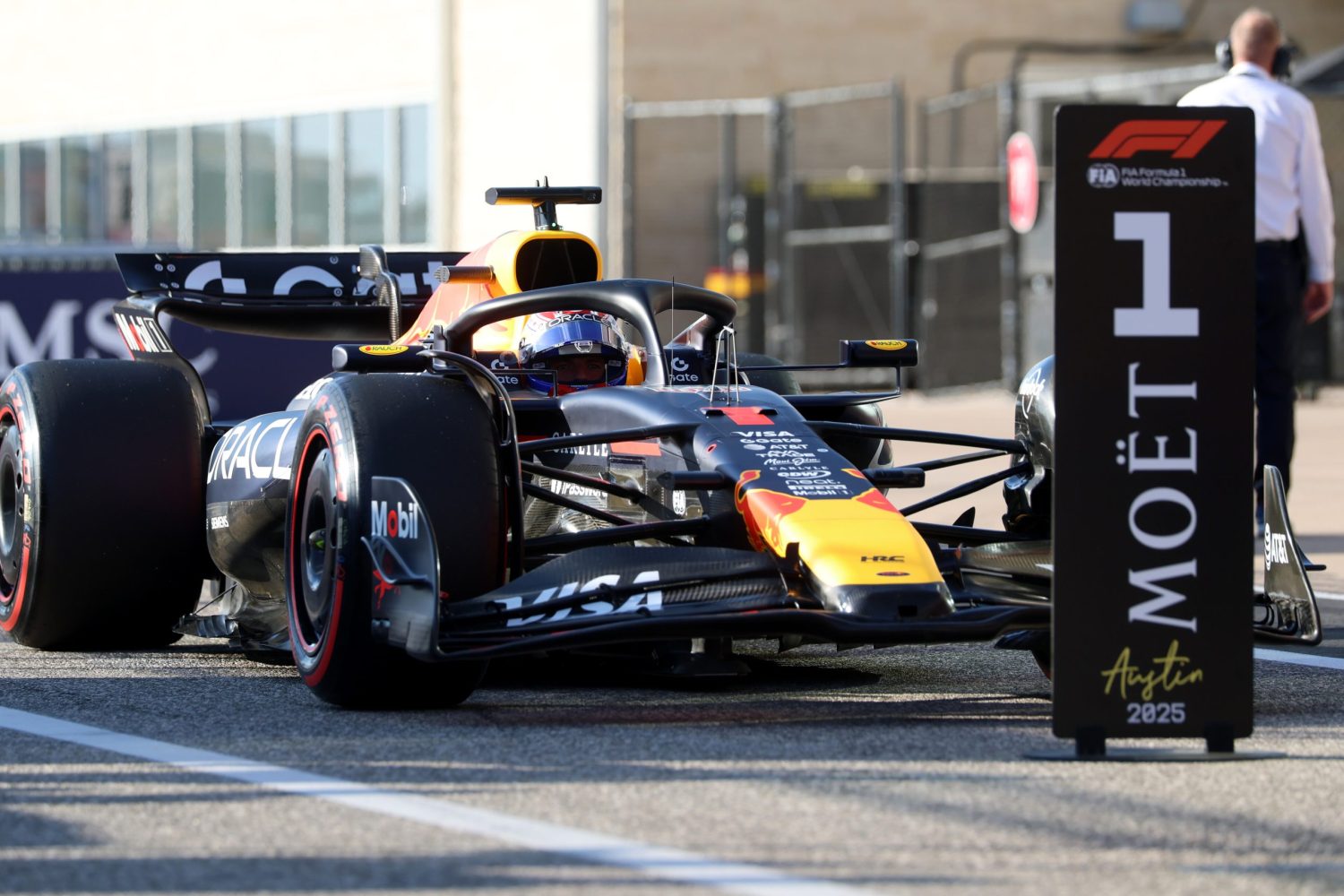
George Russell believes Red Bull’s formidable speed in qualifying for the US Grand Prix was no mystery, arguing that Max Verstappen’s dominant lap at the Circuit of the Americas reflected the aerodynamic sweet spot of the RB21 rather than an inspire setup tweak.
While Red Bull’s performance looked inconsistent earlier in the day – Verstappen and his engineers lamenting a nervous rear end and higher-than-expected tyre wear in the Sprint – the team turned things around when it mattered most.
The reigning world champion produced a faultless pole lap, with Russell placing fourth and suggesting that the difference came down to aerodynamic behavior under peak load.
“Max was obviously super quick. It's not the first time we've seen them being super strong in qualifying on high-speed tracks,” Russell said.
“They were on pole in Silverstone, on pole in Suzuka, and on pole here. They seem to have really good downforce when the car is really low to the ground, which is what you have in the high-speed corners.”
©RedBull
In Russell’s view, Red Bull’s car excels when its floor is working as close as legally possible to the tarmac – the sweet spot where ground-effect aerodynamics generate the most suction. During qualifying, when cars are light and driven at maximum commitment, that trait gives the RB21 an edge Mercedes has yet to match.
Why Red Bull’s Advantage May Fade In the Race
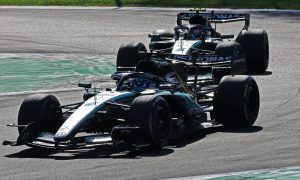
Russell was far closer to Verstappen in the Sprint race, to the point where he even attempted a bold overtake at one stage. That experience helped shape his theory that Red Bull’s strength peaks in qualifying but softens in race trim.
“I think their aero map is very good when the car is very low to the ground. And you have that in the very high-speed corners. For us, it's the opposite, we're very bad in these conditions,” he explained.
Read also:
“In the race, you're going through the high-speed corners maybe 20 kilometres or so slower. That means the car is higher, so we're not dropping off the cliff and everything converges.”
In other words, as cornering speeds dip and ride heights increase, Red Bull’s high-speed advantage becomes less dominant. Russell believes that dynamic was visible throughout the Sprint, where Verstappen couldn’t pull away significantly from the Briton.
Eyes on the Podium Battle
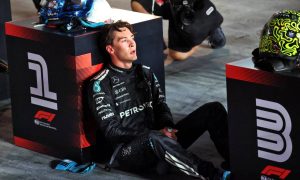
Lining up fourth on the grid, Russell is optimistic Mercedes can stay in contention for a strong finish – provided they can manage tyres and traffic through Turn 1.
“I hope we can fight for the podium,” he said. “There are obviously a lot of different teams around us. Oscar is out of position, and I expect him to be fast, so he needs to get around Turn 1 first.”
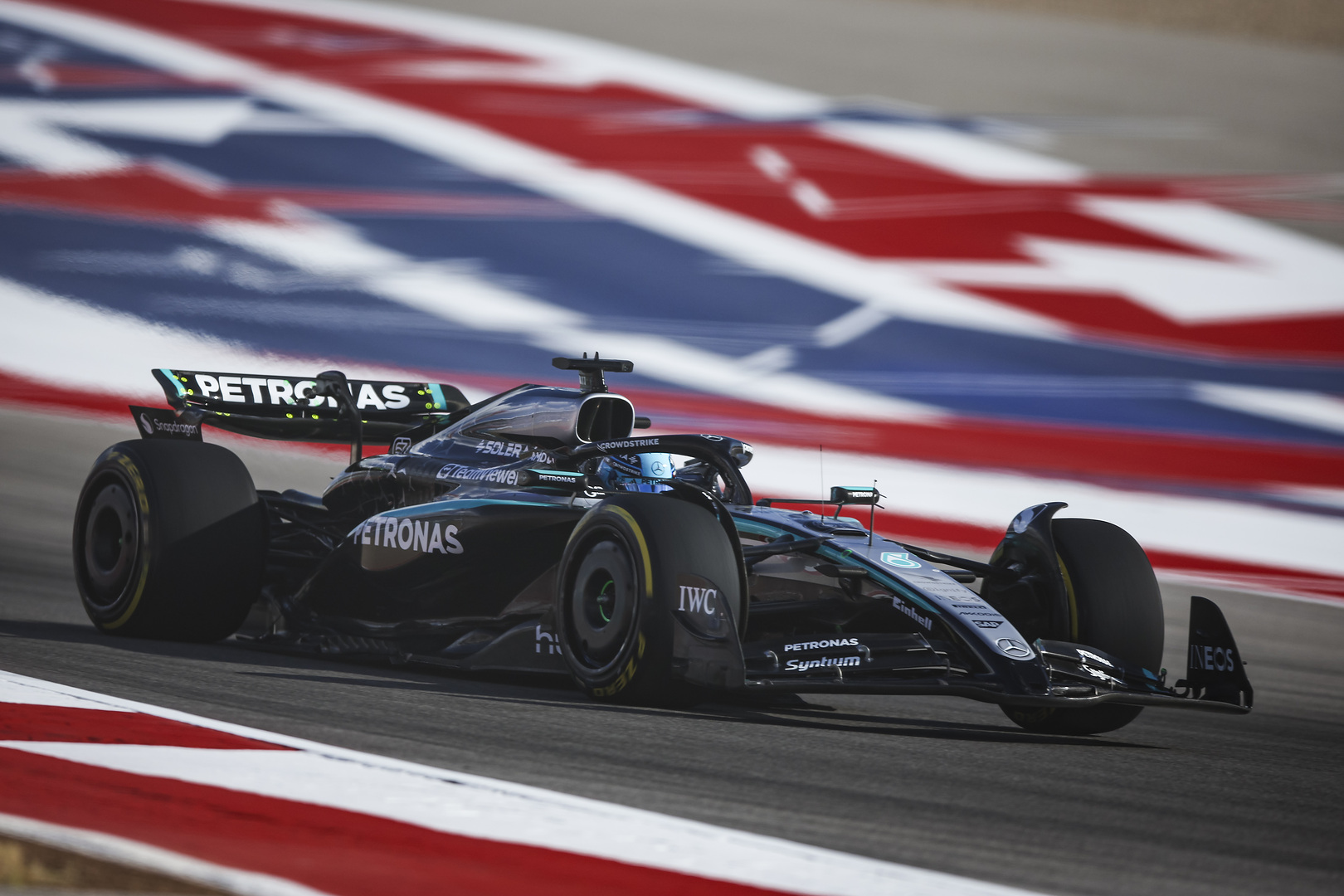
While McLaren’s lack of Sprint data was seen as a setback, Russell downplayed its impact, pointing out that the short race didn’t yield meaningful long-run insights.
“We finished two and a half seconds in front of a Williams,” he said. “We would have expected more performance than that, and we haven't seen what McLaren is capable of.
“We always know that they're pretty special in those hot conditions. During the sprint race, what did we do, maybe 10 or 11 laps. Tomorrow we've got 55 laps to do.”
With longer stints and rising track temperatures expected, Russell predicts a more complex race dynamic — one where Verstappen’s qualifying brilliance may not translate to unchallenged supremacy.
Keep up to date with all the F1 news via X and Facebook