





Valtteri Bottas may be on course for a comeback with Cadillac in Formula 1’s 2026 season, but the Finn will not start with a clean slate.
The Finn is expected to spearhead the American manufacturer’s new project alongside fellow veteran Sergio Perez, although neither driver has been confirmed by Cadillac.
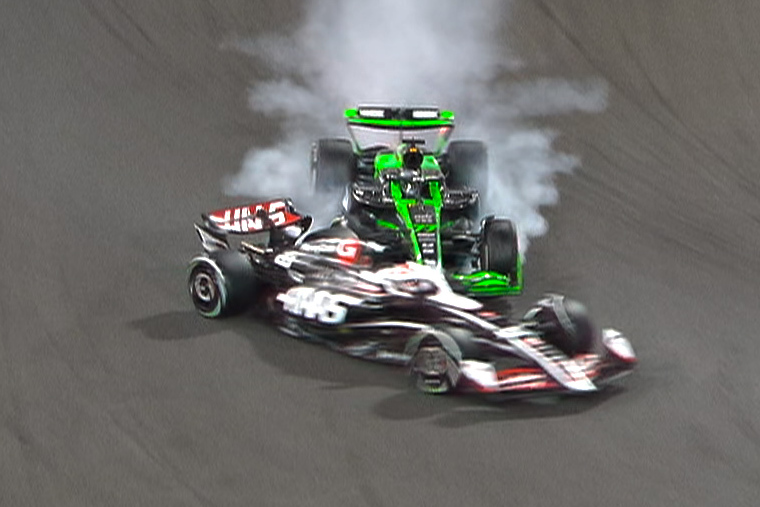
However, the FIA has stated that a five-place grid penalty Bottas received at the 2024 Abu Dhabi Grand Prix remains active, and he will be required to serve it at the first race he contests upon his return.
The former Sauber driver was handed the sanction at Yas Marina after a collision with Kevin Magnussen, with stewards ruling that he would face “a drop of five grid positions for the next race in which the driver participates.”
That punishment has yet to be served, as Bottas lost his Sauber seat for 2025 and instead joined Mercedes in a reserve capacity. Because he has not contested a race since the Abu Dhabi incident, the penalty effectively carried over into his period on the sidelines.
©Formula1
The question of whether Bottas would need to serve the penalty when he returns became more complex this year due to an amendment in the sporting regulations.
Rule Change Doesn’t Apply Retroactively
The FIA’s updated rulebook now includes a time limit for grid drop sanctions, stipulating that such penalties must be served “at the driver’s next Sprint or Race in which the driver participates in the subsequent twelve (12) month period.”
Some observers believed this change meant Bottas’ sanction had expired. However, the FIA has clarified that the revision only applies to new penalties issued after the regulation change, not to sanctions already handed out under the old rules.
“Currently the penalty will stand, as there is no mechanism to retroactively amend the penalty that was applied under the regulations in force at the time,” an FIA spokesperson told The Race.
“The change of regulation [for 2026] is intended to avoid similar anomalous situations in future.”
While the FIA’s regulatory adjustment is designed to prevent long-delayed penalties from lingering in the future, Bottas’ case stands as a rare example of how the timing of rule changes can leave a driver caught between two eras of Formula 1 governance.
Keep up to date with all the F1 news via X and Facebook