




Lewis Hamilton has won world titles with speed, skill and steel nerves. At almost 41, he is now also winning a quieter battle: against time, stiffness, and the slow creep of wear that comes with two decades in Formula 1.
His weapon of choice? Discipline. And, most painfully, ice.
Entering his 20th F1 season – his second with Ferrari – the seven-time world champion has opened up about how his physical routine has changed as he’s aged, evolving from instinctive fitness to something far more deliberate.
The aim is simple: stay competitive in a sport that rarely forgives decline.
“It’s shifted, progressed, evolved,” Hamilton explained, talking to Men’s Health.
What was once optional is now essential. What could be skipped is now scheduled. And what hurts most is, inevitably, the thing he refuses to compromise on.
Morning Miles and Cold Resolve
Hamilton no longer trains like a carefree twenty-something fresh into the paddock. These days, every morning begins the same way – and not with a stopwatch.
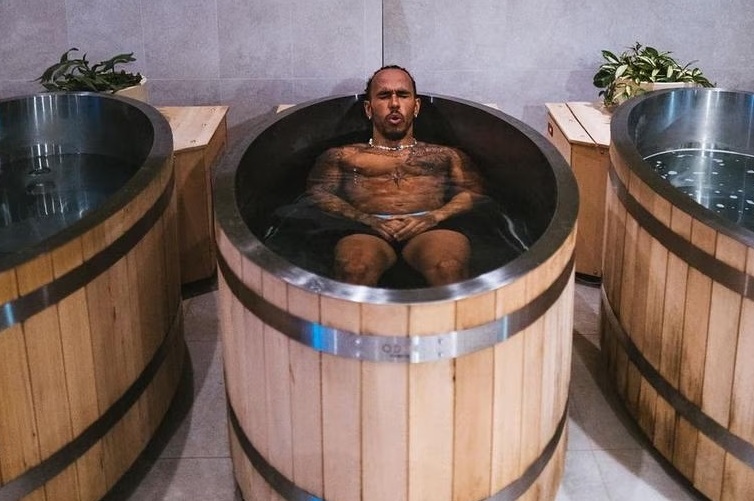
“I still love to run – I ran this morning. I did a run which varies between six and eight miles. Then ice bath. But before all that, stretching is the first thing I do as soon as I get out of bed.”
The order matters. Stretch first. Run next. Freeze later. It’s a routine designed to keep muscles loose, weight under control and recovery front of mind – something Hamilton admits he once ignored.
His afternoons, when the calendar allows, are lighter on brute force and heavier on control.
“In the afternoon, I might do a HIIT session, but I can’t really do too much weights because otherwise I get too heavy. So mostly it’s Pilates and yoga.”
It’s a far cry from the early years, when raw fitness and youth did much of the heavy lifting. Now, longevity is engineered.
Despite a schedule that stretches far beyond racing – fashion, music, advocacy – Hamilton insists there are lines he will not cross when it comes to training. Asked what he refuses to skip, his answer was immediate.
“Ice baths. Recovery is something that I never really focused on in the past. I would just do the workout and then go on with my day,” he said.
“So stretching and ice baths – those are the two things that I force myself to do.”
Force is the operative word. Ice baths are not embraced; they are endured. But Hamilton believes the discomfort is part of the point.
Training The Mind as Much as The Body
For Hamilton, physical preparation bleeds naturally into mental resilience – an increasingly important edge across a relentless 24-race season.
“When I was younger, I think the training was really my therapy – and it still kind of is, particularly the runs,” Hamilton said. “That's where I get most of my thinking done.”

Over time, he has added new tools to that mental toolkit.
“Adding things like yoga, adding things like breathwork. Breathwork has probably taken the longest to get into because it takes time. Then meditation.”
Even here, the ice bath plays its part – not just as recovery, but as rehearsal.
“I think the ice bath helps with that, too, because you need to learn to breathe and overcome the thoughts of wanting to give up, wanting to get out. Those things really help me stay positive through the year.”
In a paddock obsessed with lap times and data traces, Hamilton’s routine offers a quieter insight into elite performance.
At 40, and deep into his Ferrari chapter, the seven-time world champion is still chasing marginal gains –one stretch, one breath, one freezing plunge at a time.
Keep up to date with all the F1 news via X and Facebook