




Andy Cowell knows better than most how Formula 1’s next great power struggle begins – because he’s been on the winning side of it before.
The former architect of Mercedes’ hybrid-era domination recently weighed in on the first major technical flashpoint of the 2026 regulations, as questions swirl around a potential engine advantage for Mercedes and Red Bull-Ford linked to a controversial compression-ratio loophole.
And while Cowell no longer wears silver, his words carry extra weight given his role in delivering eight consecutive constructors’ titles at Mercedes between 2014 and 2021.
Now Aston Martin’s chief strategy officer, the British engineer finds himself in the unusual position of commenting on his old team’s potential edge – just as rivals grow increasingly uneasy and the FIA struggles to land on a fix.
A Familiar Controversy in a New Era
At the centre of the debate is engine compression ratio, a hot topic as the sport transitions to radically new power units in 2026.
Mercedes is believed to have found a way to effectively run its internal combustion engine at operating temperatures at a higher ratio than the 16:1 limit outlined in the regulations and measured when the engine is cold — unlocking a performance gain rumoured to be worth up to three tenths of a second per lap.
Cowell, speaking earlier this week at Honda’s 2026 power unit launch, framed the row as classic Formula 1 behaviour.
“The topic of compression ratio, there’s always a topic that bubbles up when new regulations come into place,” he said.

Rather than criticising Mercedes’ approach, Cowell appeared sympathetic to the mindset that once defined his own work at Brixworth – push every line of the rulebook until it pushes back.
“And every competitor reads the regulations and pushes performance to the limit,” he added.
“Compression ratio is clearly a key thermal efficiency enabling aspect of an internal combustion engine, so you always push it to the limit.
“I’m sure every single power unit manufacturer is doing that. The FIA have the job to make sure that everybody interprets the regulations in a fair and equal way.”
It’s a calm assessment – but one that subtly underlines how uncomfortable the situation has become.
FIA Stalemate Raises the Stakes
That responsibility Cowell points to is now under intense scrutiny. Despite a high-level meeting last Thursday between the FIA and Formula 1’s engine manufacturers, no solution has yet been agreed to address the compression-ratio loophole.
With power units already homologated, any meaningful hardware intervention appears off the table for 2026.
©Mercedes
The result? A growing belief that Mercedes and Red Bull-Ford could carry a baked-in advantage into the new era, at least until regulations are revisited in 2027.
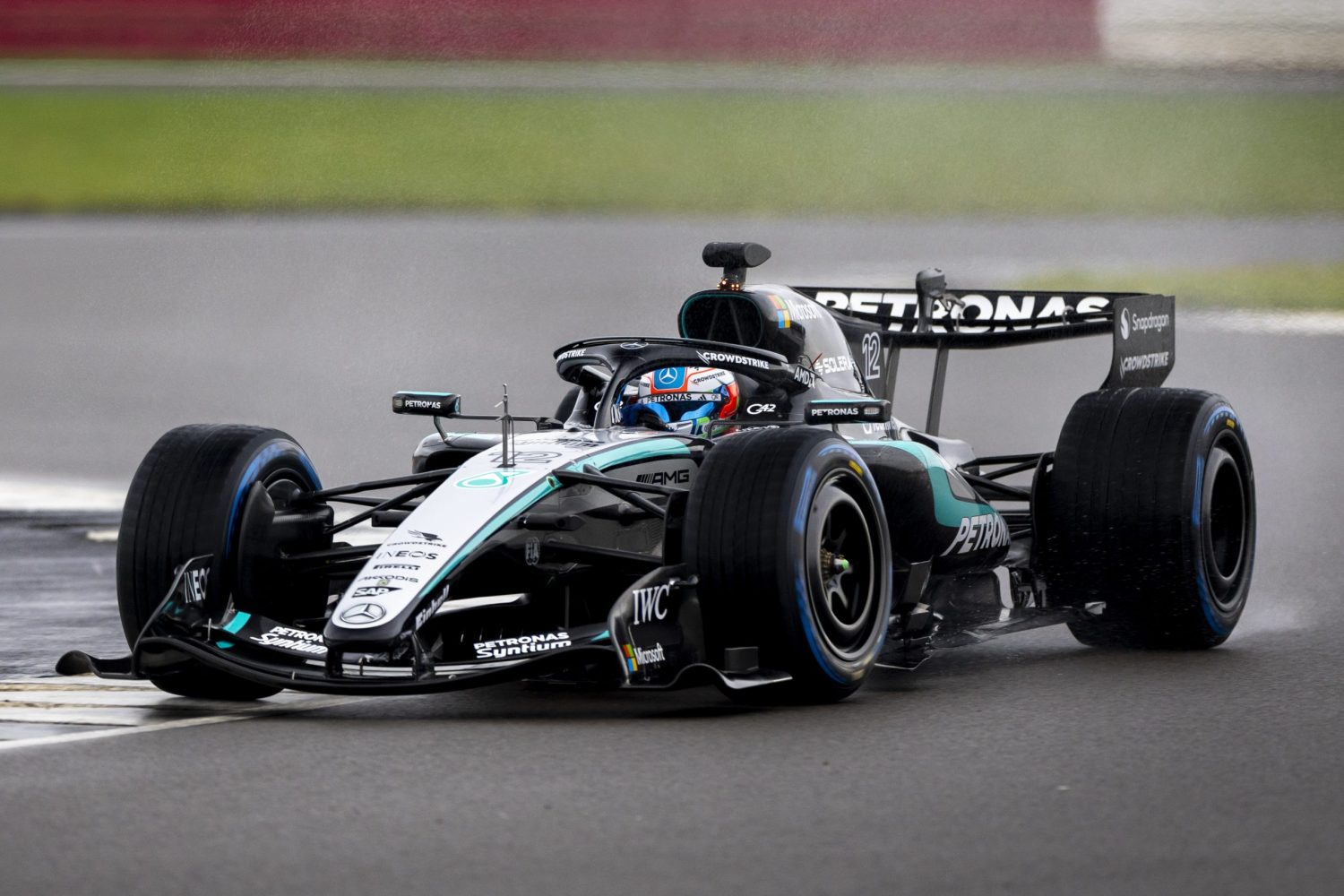
Mercedes, for its part, has already put its 2026 challenger through its paces, completing a 200km shakedown of the W17 at Silverstone following the digital reveal of the car.
Read also:
Rivals, meanwhile, are left balancing frustration with realism – knowing that innovation rewarded is innovation protected in modern F1.
Cowell’s comments may sound diplomatic, but they land with a sting. He’s seen this movie before. And history suggests that when Mercedes starts a new technical cycle ahead of the curve, the rest of the paddock is usually the one playing catch-up.
Keep up to date with all the F1 news via X and Facebook