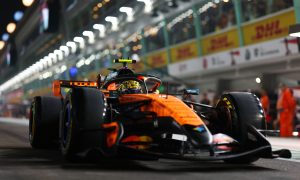


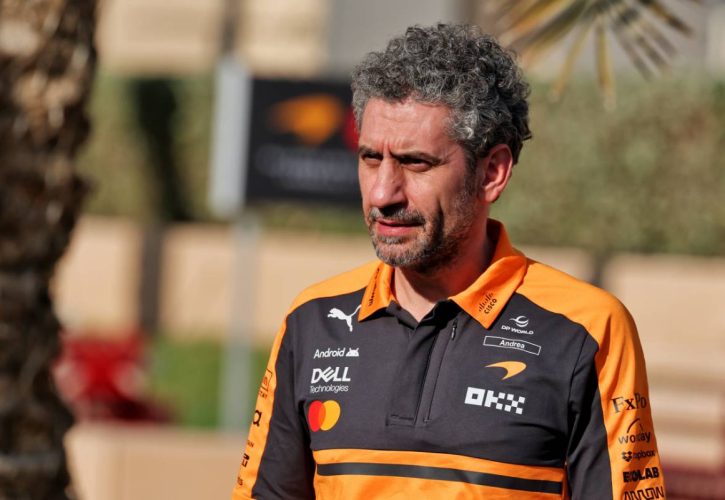


McLaren team boss Andrea Stella has called on the FIA to urgently revise three key safety aspects of Formula 1’s 2026 regulations, warning that preventable risks are already becoming visible before a single competitive lap has been raced.
As the first week of pre-season testing in Bahrain drew to a close on Friday, the focus shifted from lap times to a critical reality check.
After observing close-running scenarios this week, Stella believes the sport is flirting with danger in areas that could be corrected with relatively minor technical adjustments ahead of next month’s season opener in Melbourne.
Race Starts: A Risky Grid Scenario
One of Stella’s primary concerns centres on the new race-start procedures, which have become more complex due to the removal of the MGU-H element on F1’s new-generation power units.
Drivers are now required to hold higher revs for longer periods on the grid to avoid turbo lag, increasing the likelihood of inconsistent launches – particularly dangerous for those starting further back.
Speaking after Friday’s running in Bahrain, Stella warned:
"We need to make sure that the race start procedure allows all cars to have the power unit ready to go because the grid is not the place in which you want to have cars slow in taking off the grid."
His argument is not about performance parity but about preventing stationary or sluggish cars from becoming obstacles at the most congested and vulnerable moment of a race.
Close-Following Without DRS
Stella’s second and third points relate to the way F1’s new-era cars interact at high speed. The 2026 regulations have significantly altered energy deployment, leading to a phenomenon where cars may "harvest" energy by slowing down abruptly on straights.
Combined with a lack of traditional DRS in certain phases, cars are following each other with razor-thin speed differentials, creating a recipe for massive closing-speed accidents.
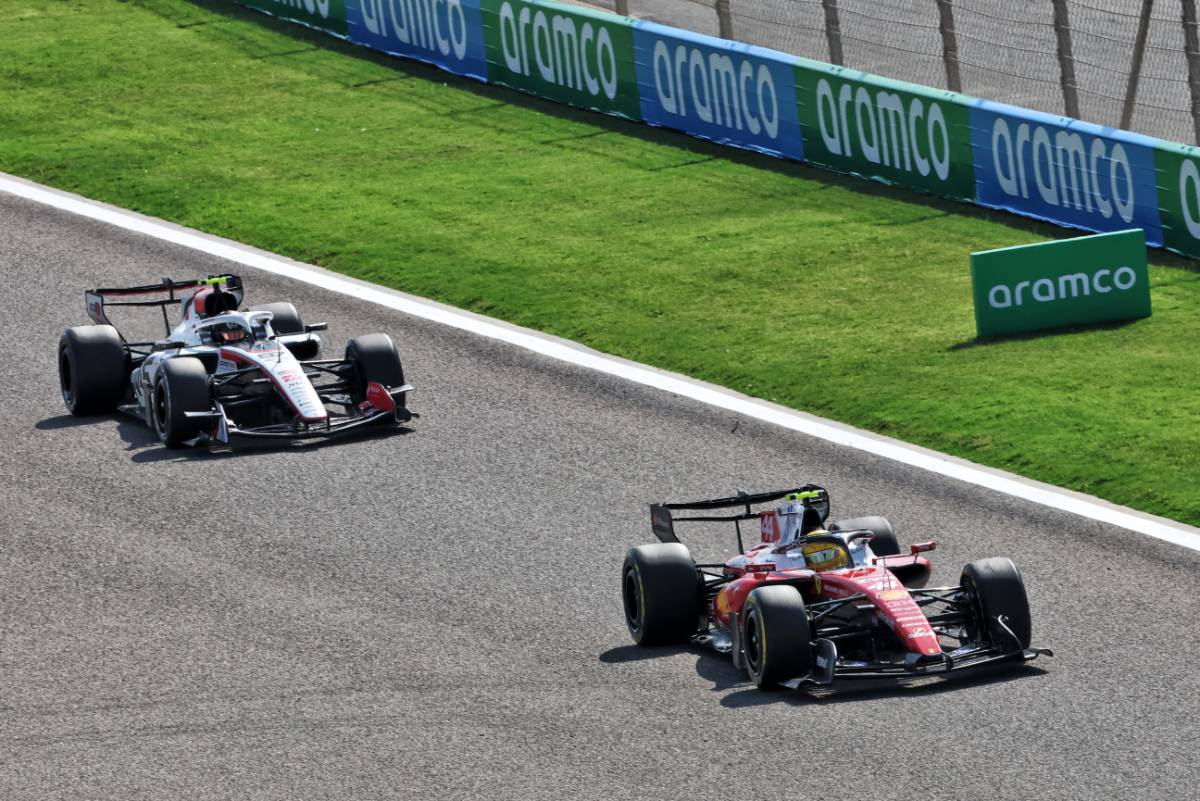
Stella drew a chilling parallel to two of the most famous aerial accidents in F1 history: Mark Webber’s 2010 Valencia flip and Riccardo Patrese’s 1992 Estoril crash.
"This may not be an ideal situation when you follow closely, and this can give rise to a situation like we have seen before a few times like Webber in Valencia, Patrese in Portugal, and a few more that definitely we don't want to see anymore in Formula 1,” he explained.
The McLaren boss argues that "lift and coasting" – a byproduct of current battery limitations – is creating dangerous speed deltas. He proposes a simple tweak to battery power availability to deter this behavior and keep closing speeds manageable.
Safety Over Self-Interest
While technical changes this late in the game usually trigger fierce political resistance from teams protecting their competitive advantage, Stella insists that this is a rare moment where the stopwatch must be ignored in favor of safety.
"We're not talking about how fast you are in qualifying,” the Italian argued. “We are not talking about what's your race pace. We are talking about safety on the grid.
“There's some topics which are simply bigger than the competitive interest. And for me, having safety on the grid, which can be achieved with a simple adjustment, is just a no-brainer. It's just a bigger interest."
With the F1 Commission set to meet next week, Stella is demanding that these "simple" adjustments be ratified immediately to ensure the Australian Grand Prix starts on a safe footing.
"I think it's imperative. I think it's imperative because it's possible and it's simple,” he concluded.
“We should not complicate what is simple and we should not postpone what is possible immediately. Therefore, I think it's something that we should definitely achieve before Australia."
Keep up to date with all the F1 news via X and Facebook