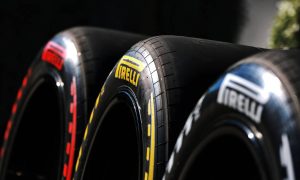


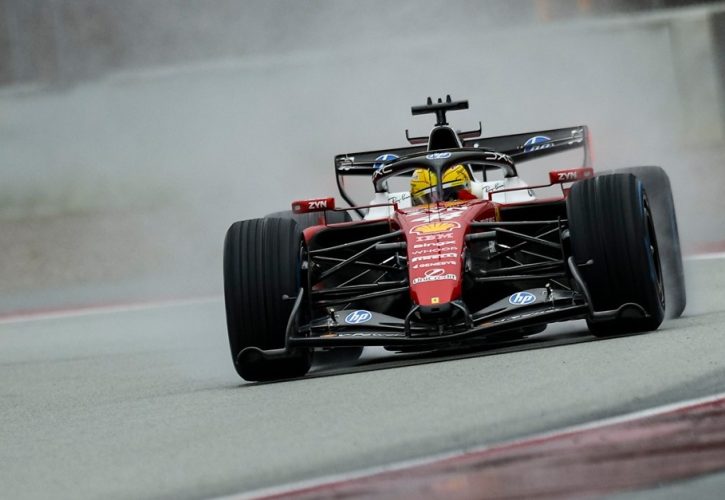


In a sport obsessed with marginal gains and perfect conditions, Pirelli has chosen one of the least obvious places on the calendar to go hunting for rain.
At the end of February – in the middle of the desert – the Italian manufacturer’s will attempt something that sounds almost contradictory: a full-scale wet-weather tyre test in Bahrain!
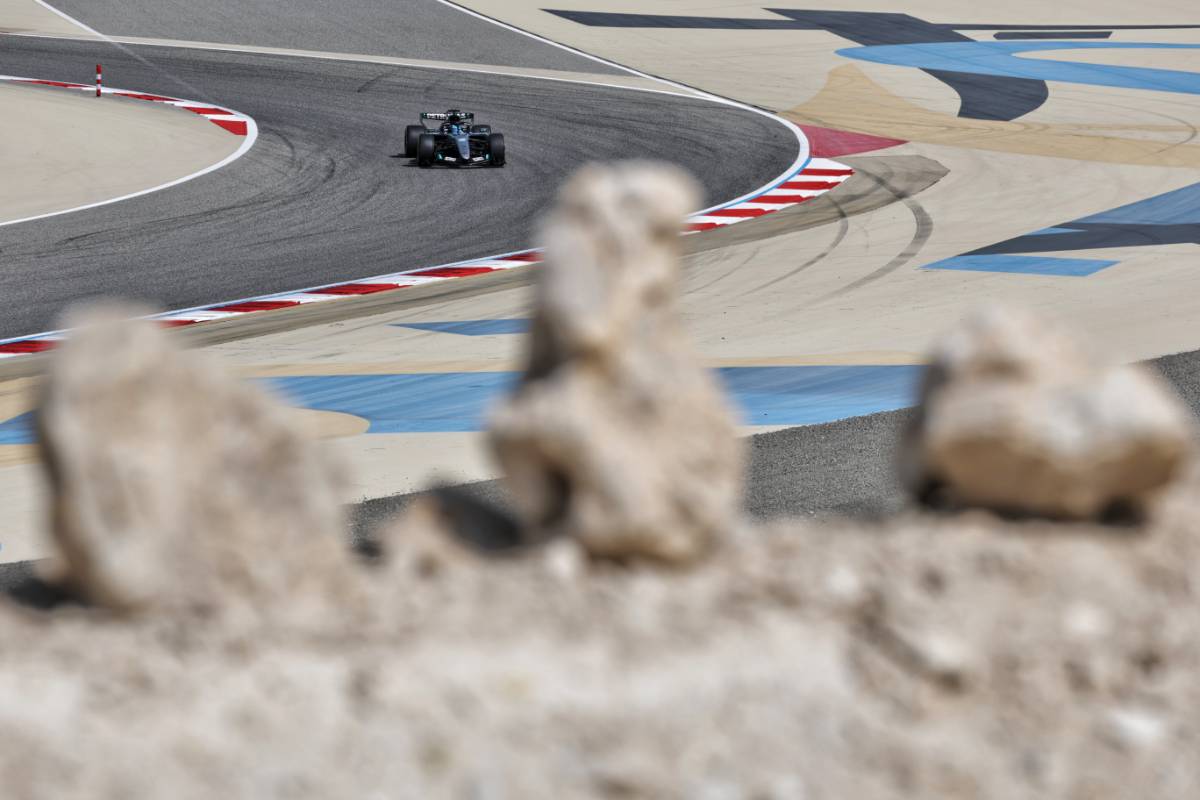
Sand, heat, and shimmering horizons, not puddles and spray usually come to mind when visualizing F1 cars running around Sakhir. Yet beneath the paradox lies a carefully calculated plan.
Chasing Water in the Desert
Unlike European circuits such as Ferrari’s private Fiorano track, Circuit Paul Ricard or Magny-Cours – all equipped with permanent sprinkler systems – Bahrain does not naturally lend itself to artificial downpours.
But what it lacks in water infrastructure, it more than compensates for in severity.
For Pirelli, that harsh asphalt is the attraction. The company wants tyres to suffer, to stretch their limits, to reveal weaknesses under controlled yet extreme circumstances.
A wet test on a high-degradation surface is a rarity in Formula 1, and rarity is precisely what makes it valuable.
Speaking during pre-season running at the circuit, Pirelli motorsport chief Mario Isola laid out the unusual strategy with candid enthusiasm.
"We are trying to organise a wet [test] here in Bahrain,” he told reporters.
"I am very confident because the track has an idea on how to wet the full circuit, not with the tanks but with another [sprinkler] system. And if they do that properly, we have an opportunity to test on a high-severity circuit in wet conditions.
"This is something that doesn't happen very often. So we have this opportunity, we want to use it in the best possible way.
“I have to say that the people of Bahrain are always very cooperative when we ask for strange requests. I called them and said: 'What if we plan a wet test in Bahrain? 'Yes, of course you can. Let us think about it.’
“[It's not easy, because] we need consistency in the water level, because clearly the risk is that the inconsistency in water level is more important than the difference in prototypes.”
Improving F1’s Most Questioned Tyre
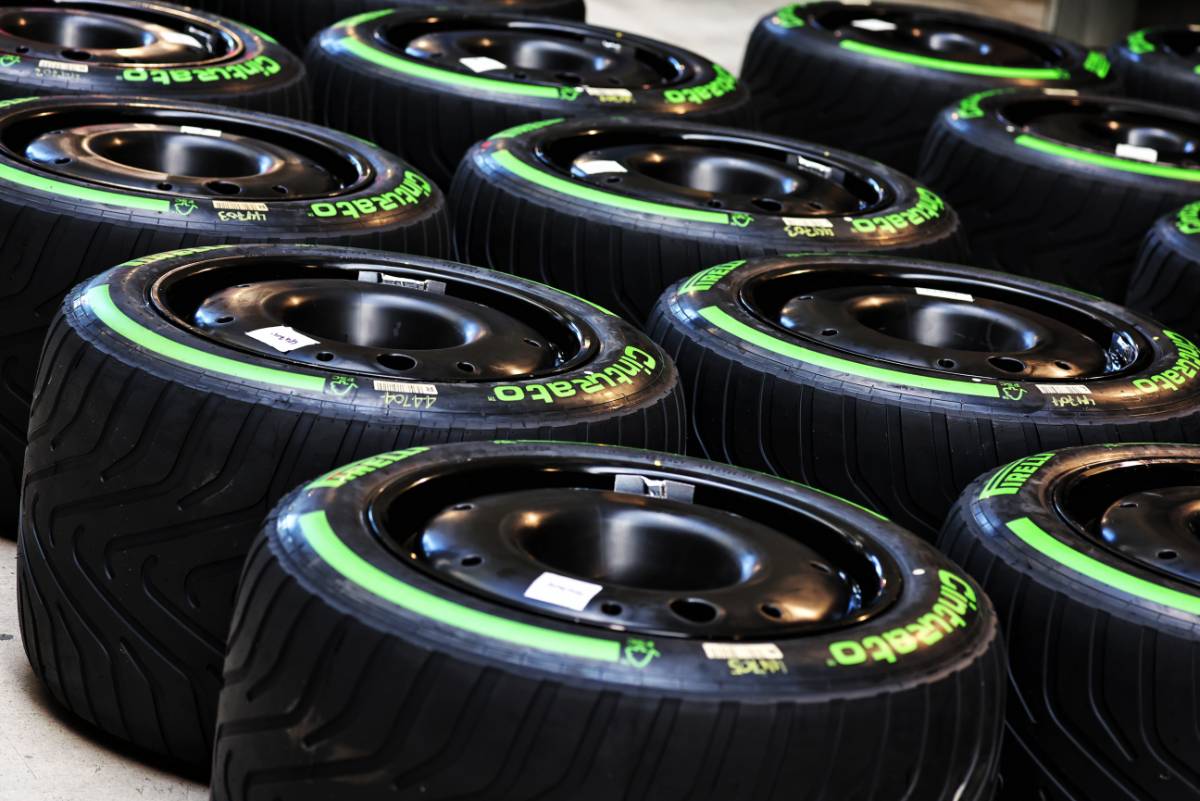
The motivation behind the desert drizzle is not spectacle – it is necessity. Formula 1’s full wet compound has become one of the sport’s most debated pieces of equipment, used sparingly and often criticised for being too extreme to deploy unless conditions are already borderline unsafe.
In many races, teams leap straight from slicks to intermediates, bypassing the full wets entirely.
Pirelli wants to change that dynamic by narrowing the performance gap between tyre types, making the full wet a realistic strategic option rather than a last resort.
“What we have tried to do is to reduce the crossover time between the wet and intermediate in order to make the wet tyre more usable," Isola explained.
“The point is that if you are in a race condition and the expectation is for the track to dry, they will put on an intermediate because they want to minimise the number of pitstops.”
And so, in a twist that only Formula 1 could make logical, engineers will soon be praying for puddles beneath desert skies.
It is a scene that feels almost theatrical – sprinklers hissing under the Bahraini sun, mechanics watching water bead on scorching asphalt – all in pursuit of a tyre that can finally thrive when the heavens open elsewhere on the calendar.
Keep up to date with all the F1 news via X and Facebook